
How Long Does It Take to Manufacture a Stuffed Animal?
For brands, e-commerce sellers, or IP owners looking to customize plush toys, one of the most frequently asked questions is: “How long does it take to manufacture a stuffed animal?”
Whether it’s for a new product launch, a seasonal promotion, or a brand campaign, the production timeline directly affects the overall plan.
In general, the manufacturing lead time for plush toys usually ranges from 2 to 8 weeks. The exact duration depends on whether the product is fully customized, the complexity of the design, the order quantity, and the factory’s production capacity.
Below, we will break down each stage of the plush toy production process based on real manufacturing workflows, helping you clearly understand the key time points involved.
What is the Average Production Lead Time for Plush Toys?
According to industry experiences, the production lead time for plush toys is not fixed and varies greatly depending on the type of product and the degree of customization involved in the process. Generally speaking, the production lead time for plush toys can be divided into the following three common scenarios:
In stock or standard plush toys: 7-14 days
The products are based on available designs and molds. The quality of fabrics and other materials is also standardized. There is no need to spend more time developing a sample and reconfirming several times. The manufacturer just arranges the production according to the production order. This method is very suitable in emergency situations.
Basic custom plush toys (existing design, simple craftsmanship): around 3–4 weeks
Basic customizations mainly involve changes that are required if there is an existing or proven design, including aspects such as changes of color, designs of embroidered logos, accessories, among others. Even though the design is not fully from scratch, the process still adheres to the same rules, including confirmation of the samples, mass production, which takes a long period of time.
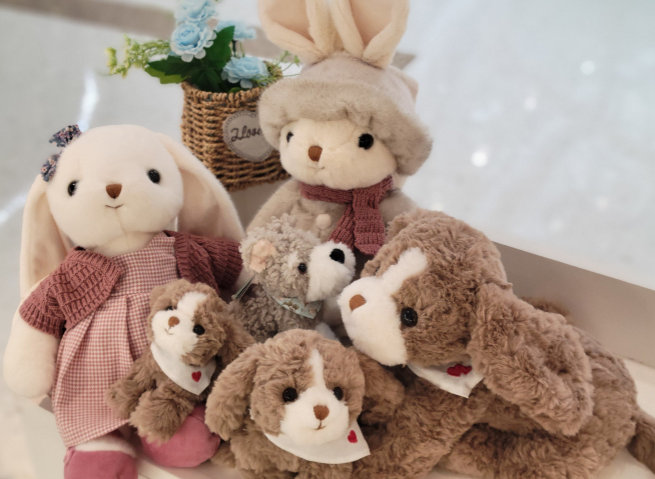
Fully custom plush toys (new design, complex structure): around 5–8 weeks
This is the most common scenario for IP-based and original brand plush toys. The process typically includes design evaluation, pattern making, sample development and revisions, fabric sourcing, and mass production. If the design is complex, includes multiple accessories, or requires a high level of detail and accuracy, the overall timeline may extend further.
In general, the higher the level of customization, the more communication, sampling, and approval steps are required, which naturally leads to a longer production cycle. Therefore, early planning and initiating the customization process as soon as possible are key to keeping the project on track.
Plush Toy Manufacturing Process and Timeline Breakdown
In order to understand the production lead time, the key point here is not just the total number of weeks, but rather understanding exactly the time taken per stage of the plush toy manufacturing process. Plush toys cannot be considered a plain assembly-line product because the processes are very detail-oriented and heavily involve communication and confirmations. A further explanation of the processes involved in the plush toy creation is as follows:
1. Design Confirmation and File Communication (Approx. 1–3 Days)
This is the starting point of the customization process. At this stage, the client typically provides or confirms:
- Design drawings, renderings, or reference images
- Finished size and proportion requirements
- Color schemes and fabric specifications
- Requirements for embroidery, printing, face, or special accessories
Thus, a factory can quickly evaluate feasibility and move forward if design files are clear and requirements are well-defined. On the other side of things, details such as unclear proportions, color references, or production methods will often need several rounds of clarifications and can silently stretch the overall timeline. Clear upfront communication directly influences the efficiency of all subsequent steps.
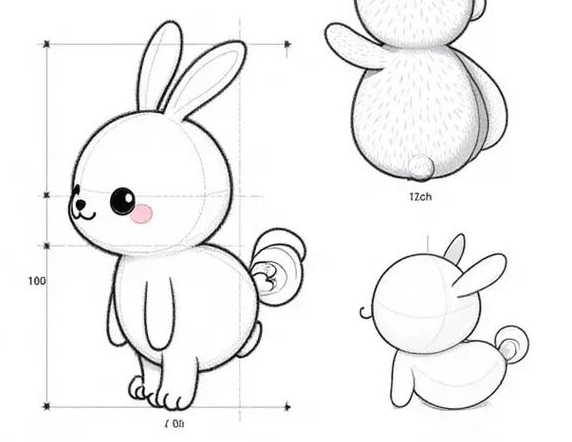
2. Sample Development (Approx. 5–10 Days)
Sampling is the most critical—and often underestimated—stage in custom plush toy production. A sample is not only used to confirm appearance but also to validate structure, safety, and mass-production feasibility.
Sample development typically includes:
- Pattern making and structural breakdown
- Fabric cutting and component preparation
- Sewing, stuffing, and basic shaping
- Visual proportion, texture, and detail adjustments
If the sample is approved on the first round, the timeline remains relatively short. In reality, however, samples often require revisions based on client feedback—such as adjusting proportions, facial expressions, or color details. Each revision usually adds an additional 2–5 days, making the number of sample revisions a major factor affecting the overall lead time.
3. Fabric and Material Preparation (Approx. 3–7 Days)
Once the sample is approved, the factory moves into material preparation, which includes:
- Fabric sourcing or custom fabric production
- Preparation of stuffing, accessories, and trims
- Production of hang tags, care labels, and packaging materials
If standard fabrics and materials are used, this stage is relatively predictable. However, custom fabrics, special colors, or eco-friendly materials often require extra lead time, which can further extend the schedule. Material selection is therefore a key factor in delivery planning.
4. Mass Production (Approx. 10–25 Days)
Mass production is the most time-consuming stage in the entire process. The duration mainly depends on:
- Order quantity
- Product structure and craftsmanship complexity
- Production season (peak vs. off-season)
For example, small orders with simple designs can be completed relatively quickly, while large-volume orders or plush toys with complex structures and multiple accessories require more time. Additionally, during peak seasons such as Christmas or major promotional periods, factory capacity is often stretched, resulting in longer production timelines.
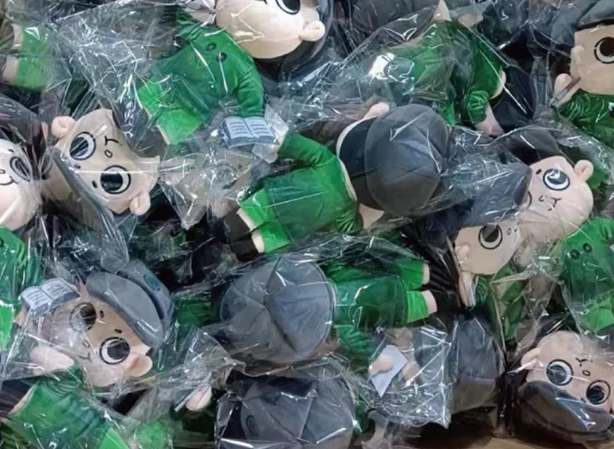
5. Quality Inspection and Packaging (Approx. 2–5 Days)
Before shipment, professional plush toy manufacturers conduct systematic quality checks and packaging verification, including:
- Visual and workmanship inspection
- Stitch strength and safety testing
- Stuffing uniformity and hand-feel evaluation
- Packaging methods, labeling, and carton confirmation
Although this stage does not take long, it plays a critical role in ensuring product quality, minimizing after-sales issues, and maintaining customer satisfaction, making it an essential step for any responsible manufacturer.
What Factors Affect Plush Toy Production Time?
The production timeline for plush toys is influenced by multiple factors, not just factory efficiency. Even with the same manufacturer, lead times can vary significantly from project to project. The key factors include:
Level of customization (shape, fabric, craftsmanship)
The higher the level of customization, the more complex the production process becomes. Custom shapes, specially developed fabrics, 3D embroidery, or multiple accessories all increase the time required for design confirmation, sampling, and manufacturing.
Order quantity
Small-batch orders are generally more flexible to schedule, while large-volume orders require longer production cycles. When production must be completed in multiple batches, the overall lead time naturally extends.
Design complexity
More complex designs involve more difficult pattern making, structural breakdown, and sewing processes. Intricate facial expressions, unique proportions, or multi-color paneling add technical difficulty and time at both the sampling and mass production stages.
Material availability
Using standard, in-stock fabrics and accessories allows production to start quickly. However, custom fabrics, special colors, eco-friendly materials, or specified suppliers often require additional sourcing or manufacturing time.
Number of sample revisions
Whether a sample can be approved in one round has a major impact on the timeline. Each revision requires pattern adjustments, remaking the sample, and reconfirmation, directly extending the overall production schedule.
Peak production seasons
In the days immediately ahead of peak seasons such as Christmas, Valentine’s Day, or Children’s Day, the order volume for factories is quite high and the production schedules are even tighter to complete a relatively simple product.
Overall, it can be seen that repetitive changes in designs during the early stages of the process constitute one of the main causes of delays in production. Requirements and changes must be clearly defined during the early stages of the process, and changes must be clearly documented in order to keep the process on track.
Can Plush Toy Production Be Accelerated?
The answer is yes, but under certain conditions. Though certain stages in the process have to be carried out along a preset schedule, planning and coordinating the process should enable it to be done even faster. The following practices should be effective in speeding up production:
Provide clear and complete design materials
Include accurate dimensions, colors, fabrics, facial features, and accessory specifications. The more complete and precise the design files, the more efficiently the factory can handle evaluation, sampling, and production.
Minimize unnecessary sample revisions
Fewer sample confirmations lead to a smoother workflow. Clearly defining proportions, expressions, and colors at the design stage helps avoid repeated adjustments.
Prioritize existing fabrics
Using in-stock fabrics or standard trims allows production to begin immediately, avoiding delays from custom fabric production or color matching, which can save several days or even over a week.
Confirm packaging and labeling in advance
Finalizing hang tags, care labels, outer boxes, and packaging methods before production prevents delays caused by packaging inconsistencies after mass production.
Work with an experienced plush toy manufacturer
Experienced manufacturers can optimize production workflows, arrange schedules efficiently, and anticipate potential issues, shortening lead times while maintaining quality.
It is important to note that over-compressing the timeline may affect product quality or increase the risk of errors, so reasonable scheduling is key to ensuring both quality and on-time delivery.
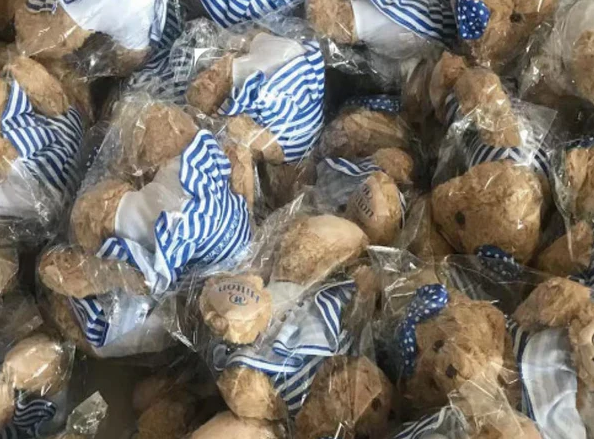
How Long Does It Usually Take for Chinese Factories to Produce Plush Toys?
China is one of the most mature plush toy manufacturing hubs in the world, offering several advantages:
Complete supply chain system
Fabrics, trims, stuffing, and accessories can be quickly sourced or customized locally, avoiding delays from international procurement.
Professional sampling teams
Most factories have experienced sample-making teams capable of quickly producing patterns, samples, and revisions, significantly shortening the early-stage approval process.
Flexible production line setup
In addition, factories may have many adjustable production lines, which can be scheduled according to the size and complexity of orders.
Accordingly, in comparison with many other regions, not only does the custom-made plush toy business in China provide a faster turnaround but also more effective cost management as well as quality management. For the brand, the e-commerce business, or for the IP owners, working with a Chinese factory has advantages such as faster turnaround, cost management, and delivery guarantees.
How Implementer Helps Shorten Plush Toy Production Lead Time
As a factory specializing in custom plush toy manufacturing, Implementer has multiple advantages that help significantly reduce production timelines while ensuring high quality and reliability:
In-house sampling team
By handling sample development internally, we eliminate delays and miscommunication that often occur with outsourcing, speeding up the approval process.
Mature fabric and accessory supply chain
Our well-established network of materials ensures quick sourcing of fabrics, trims, stuffing, and accessories, avoiding production delays caused by material shortages.
Standardized approval process
Clear, step-by-step confirmation procedures minimize the chances of repeated revisions, allowing projects to move smoothly from design to mass production.
Rapid Turnaround
We are dedicated to the fastest turnaround times in the industry, with production completed in as little as 1–2 weeks.
Combining efficient processes, experienced teams, and global-standard quality assurance, Implementer ensures that your plush toy projects are delivered faster, safer, and with peace of mind, from concept to finished product.
Summary
The production lead time of the plush toys is not a constant figure, as it is based on the various processes of the manufacturing cycle. It is important to have a good time plan to efficiently finish a custom project with the help of a proper manufacturer.
During the process of planning to develop custom plush toys, it is quite imperative to have a grasp of the production timeline; this will lay a good foundation for the eventual success of the project. Implementer is a professional and specialized stuffed toy manufacturer; as a custom plush toy maker, they can help you develop your plush toy ideas safely, efficiently, and speedily.