
Challenge Coin Finishes: Colors, Plating & Enamel
Challenge coin finishes play a big role in customization. They affect the coin’s overall look and how it feels in hand. That’s why many buyers compare metal surface colors and enamel filling options before making a decision. Actually, the metal surface color, enamel technique and design structure combined determine the final appearance of a challenge coin.
So that purchasing staff, event organizers, companies may better understand the visual features of different metal hues such as gold, silver, copper, rose gold and diverse enamel techniques such as hard enamel, soft enamel, to make better selections according to their design plans. This article discusses the selection logic of the challenge coin surface effects from the basic principles, popular metal colors, enamel process comparison and purchase reference variables.
What Are Challenge Coin Finishes?
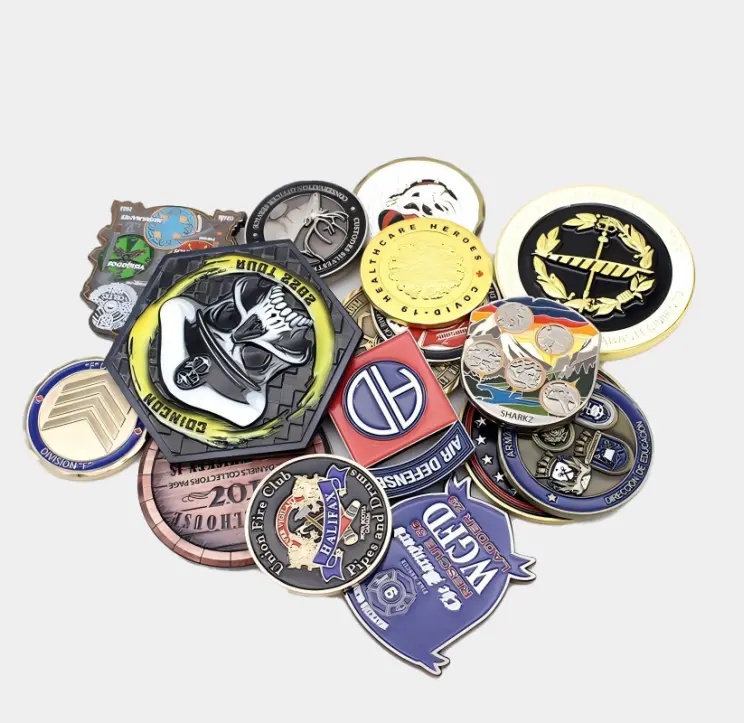
To select the proper surface effect for your challenge coin, you first need to grasp the primary dimensions that influence the final visual appearance of a challenge coin:
Metal Plating / Color: The color displayed by metal surface treatment, such as gold, silver, copper or rose gold. The challenge coin’s overall metal texture and visual style are a different color.
Enamel Filling: Color is poured into indentations bordered by a metal design. The visual layering between color areas and metal lines is influenced by the filling procedure and the ultimate height.
Surface Design: The raised, recessed and relief elements on a challenge coin impact the three dimensional sensation and tactile sense of the pattern. The precise way of presentation should be chosen with mold design and production process together.
Having knowledge of these characteristics helps buyers to explain design requirements and intended appearance to manufacturers more clearly.
Common Metal Colors for Challenge Coins
Metal surface color is an important factor affecting the visual style of a challenge coin. Different metal colors have their own characteristics in visual expression and matching:
Gold Challenge Coin Finish
Gold challenge coin finish is a relatively common color choice in traditional challenge coins. It has a bright shine and excellent visual recognition, which is extremely ideal for projects that wish to convey a traditional, sturdy, high-gloss visual style. When used with dark enamel colors such as deep blue, dark red, or black, it can also make the contours of the metal lines more clearly distinct.
Silver Challenge Coin Finish
The silver challenge coin finish adds a clean and brilliant modern metal touch. It is bright in color and sharp in visual effect, good for the project that wants to present modern, succinct or technology visual style. Silver naturally goes well with cool hues such as blue and purple, as well as black and white colors, making the picture layering evident.
Copper Challenge Coin Finish
Copper challenge coin finish is a warm tone red copper metal sheen with a unique vintage and industrial look. It is perfect for applications that wish to achieve a retro, rustic or unique visual design. In addition, the overall visual color coordination is relatively high. Earth-toned enamels such as dark green, earthy yellow, warm white are combined.
Rose Gold Challenge Coin Finish
Rose gold challenge coin finish mixes gold with a soft pink hue for a trendy, super-recognizable and soft metal feel. It works well for applications that wish to convey a stylish, sophisticated, or refined visual esthetic. Combined with macaron hues or neutral tones, it can create a polished graphic visual impact.
When planning custom commemorative coins for a team or company, reasonably choosing the metal base color according to the brand design drawing helps improve the overall visual coordination of the finished product.
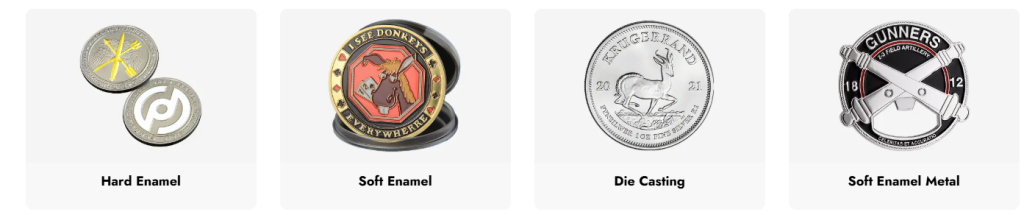
Hard Enamel vs. Soft Enamel Challenge Coins
In addition to metal color, the enamel process is also a key factor determining the surface touch and visual layering of a challenge coin. The two common types are hard enamel challenge coins and soft enamel challenge coins.
Hard Enamel Finish
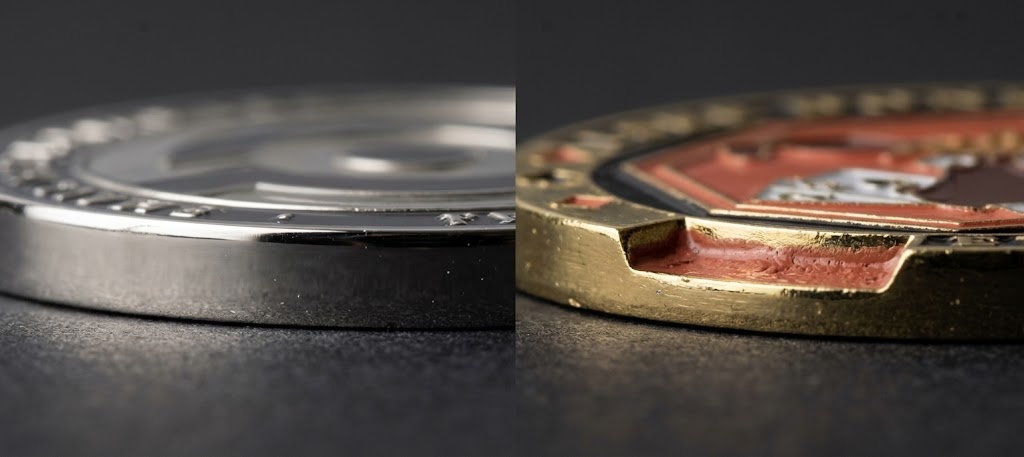
The hard enamel technique usually involves filling, curing, sanding and polishing to get the finished color areas almost level with the metal margins. This gives the final items a flatter appearance in comparison with soft enamel where there is a definite sunken effect.
Surface touch: The whole surface is quite flat, and it is not easy to clearly feel the height difference between the color portions and the metal borders while contacting.
Visual effect: The color areas and metal outlines provide a rather continuous surface, resulting in an overall smooth and clean look.
Process features: Color filling and polishing after that, which makes the surface reasonably level and is suited for the design that wants to eliminate the tactile effects of raised and recessed parts.
Soft Enamel Finish
The soft enamel process creates raised borders and sunken sections on the metal pattern and fills color into the recessed areas. After the paint is cured, the color regions are generally lower than the surrounding metal lines, thus there is a noticeable height difference.
Surface touch: Raised metal lines and recessed color sections are perceived to be at different heights.
Visual Effect: The metal outlines and regions filled with color create a distinct contrast and make the pattern appear more layered and pronounced.
Process features: The elevated look of the metal borders is kept, with crisp contours and color block divides.
How to Choose the Right Challenge Coin Finish
When facing different combinations of metal colors and enamel processes, buyers can evaluate and choose from the following perspectives:
Design Features
Soft Enamel: This could be an option if the design aims to accentuate the height difference between the metal borders and color areas.
If a continuous visual impression between colors and metal lines is desired, and overall surface flatness is more critical, hard enamel can be an option.
If the design involves small text, fine lines or multiple color divisions, the factory should check before production whether the design features are compatible for the filling process used.
Color Combination
High contrast matching: Dark enamel colors such as black and deep blue combined with gold or silver metal lines generally offer stronger picture and text recognition.
Matching the same color family: Warm-toned designs can explore matching with copper or rose gold surfaces to make the overall color perception more consistent.
Visual Style
Stable and traditional: The surface of gold can produce a classic and eye-catching metallic visual effect.
Modern and concise: Silver is a good surface choice for projects that want a bright and clean look.
Retro and distinctive: A copper surface can give a warm-toned, retro look.
Soft and refined A rose gold surface fits for designs that seek to portray a soft metal tone.
Intended Uses
If it is used for business presents, anniversary celebrations or recognition activities, the visual effect of hard enamel or soft enamel can be evaluated according to the needs of design.
Soft enamel brings rich layering while hard enamel has a flat feel. Both can satisfy different display needs, whether for team activities, club badges or everyday remembrance display.
What to Consider Before Ordering Custom Challenge Coins
Before finalizing challenge coin finishes and submitting for production, it is recommended to pay attention to the following practical details in the purchasing process:
Coin Specifications
The larger and more intricate a challenge coin design is, the greater impact it will have on the overall appearance. When you confirm the artwork, review the layout and drawing details.
Front and Back Design
The front and back images, text, and surface color requirements need to be communicated and confirmed with the factory in advance regarding process feasibility.
Color Matching
For enamel filling, Pantone (PMS) color numbers can be provided as color references to help manufacturers understand the design requirements. Metal surface colors should be confirmed based on color samples or physical samples provided by the factory, because screen display effects may not accurately reproduce the actual metal luster.
Sample Approval
Before mass production, sample approval is an effective way to check metal color, polishing effect, and color-filling details.
Packaging & Storage
Packaging methods must also be provided for in the purchasing plan. Depending on shipping, display and storage requirements, numerous forms can be selected such PVC bags, coin capsules, velvet pouches, velvet boxes or display stands.
Conclusion
The appropriate choice of challenge coin finishes needs a thorough review of the interplay between the metal color, the manner of enamel filling and the design pattern. The metal in a variety of colors creates distinct visual effects, from gold, silver and copper to rose gold. The major differences between hard enamel and soft enamel are surface flatness and stacking of patterns.
For custom purchasing projects, validating the design specifics, color requirements, surface effects and packaging techniques in advance can help limit the difference between the design draft and the final finished product. Implementer delivers unique challenge coins with options for metal color, enamel technique, and packaging, and particular manufacturing plans can be established according to the project design needs.