
5 Panel vs 6 Panel Hat: Which Is Better for Custom Designs?
The fundamental difference between a 5 panel vs 6 panel hat is the construction of the crown and the placement of the front seams. A 5-panel cap normally features a wide front panel with no center seam, but a 6-panel cap usually has two front panels with a center seam. If you are looking for a custom design, the greatest choice will rely on the artwork, silhouette you want and embellishment method.
When sourcing personalized hats for a brand or corporation, the way printed or embroidered artwork shows on the end product is directly determined by panel construction. The relationship between front-panel seams, useable front-panel space and crown profile can be understood, allowing purchasers to correctly judge the end outcome before placing an order and avoid rework in production due to the mismatch between structure and design.
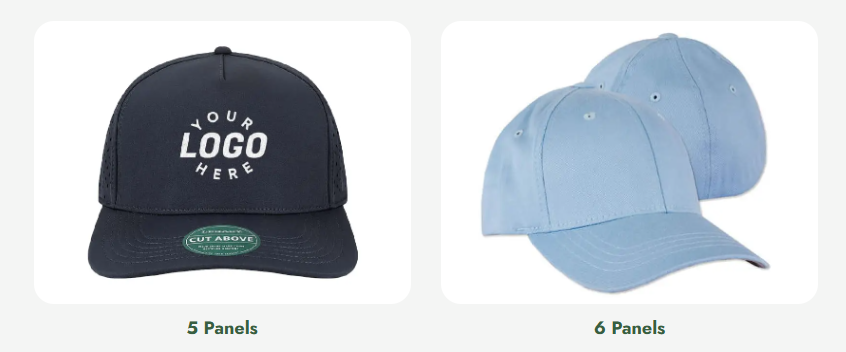
What Is the Difference Between a 5-Panel and 6-Panel Hat?
For quick reference, the table below summarizes the main differences between the two hat styles in terms of structure and customization planning.
| Comparison | 5-Panel Hat | 6-Panel Hat |
| Front construction | Usually one wide front panel without a center seam | Usually composed of two front panels with a vertical center seam |
| Front artwork | The front panel is generally less affected by a center seam | Design and artwork layout need to account for the position of the center seam |
| Crown appearance | Appearance varies by specific cut, often flat or a modern streetwear silhouette | Typically presents a classic rounded baseball cap silhouette |
| Decoration planning | Focus on front panel shape and fabric support | Focus on seam position and artwork stitch/alignment effects |
| Best selection method | Match based on the specific artwork layout and actual product structure | Match based on the specific artwork layout and actual product structure |
It should be noted that panel count is not the only indicator of decoration compatibility. The specific fabric, internal buckram support in the crown, and the factory’s specific production methods can all affect the final customization result.
How Does Panel Construction Affect Custom Hat Designs?
The way you physically build a hat directly affects how a design file translates into a finished product. Before picking a form of embellishment, artwork must be developed to accommodate front-panel space and seam placement.
Front Panel Space and Seam Placement
When creating patches, the right hat patch size is dependent on the hat’s specs and the artwork’s shape, as panel width, crown curvature, and seam placement all influence the final visual proportions.
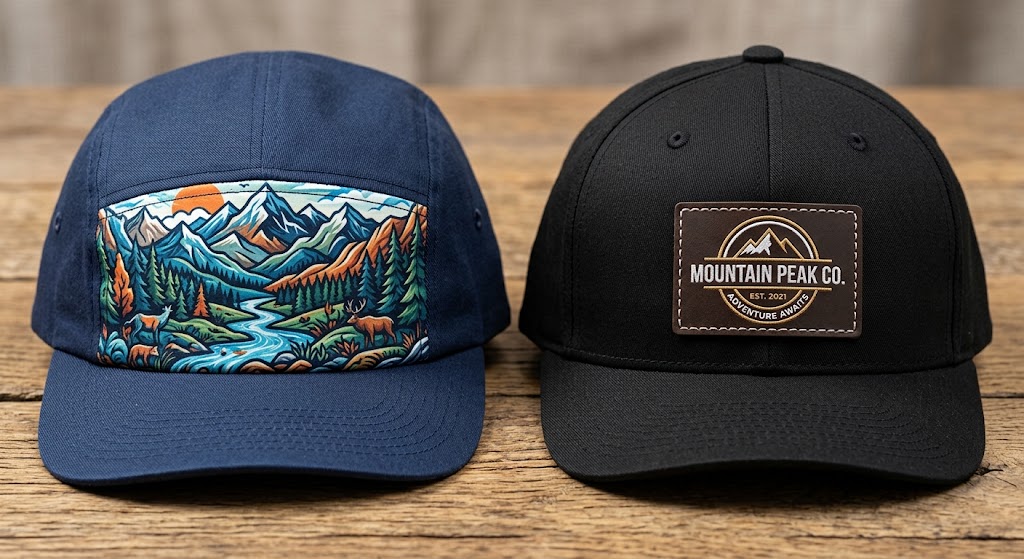
There is no vertical center-seam constraint so designers can plan larger patches or designs on a 5-panel hat inside a somewhat continuous front-panel region. When designing on a 6 panel hat, the center seam must be taken into mind in the arrangement to prevent vital text or small details from falling directly into the seam channel.
Embroidery, Printing, and Patches
There are distinct considerations while working with panel construction depending on the decorative method:
Embroidery 6 panel hat embroidery requires planning for seam placement and stitch effects prior to stitching. This is especially true for text or small items that cross seams. A 5 panel hat has a flat front panel that is better suited to high density embroidery.
Printing: Very dependent on surface flatness. The 5-panel hat has a continuous front panel, which gives a smoother printing surface that works well with large-area screen printing or digital printing.
Patches: Whether leather patches, woven labels, or PVC patches, the shape and edges of the patch must fit the crown curve of the corresponding hat style to avoid edge lifting caused by a curvature mismatch.
Does Panel Count Affect Hat Fit and Crown Shape?
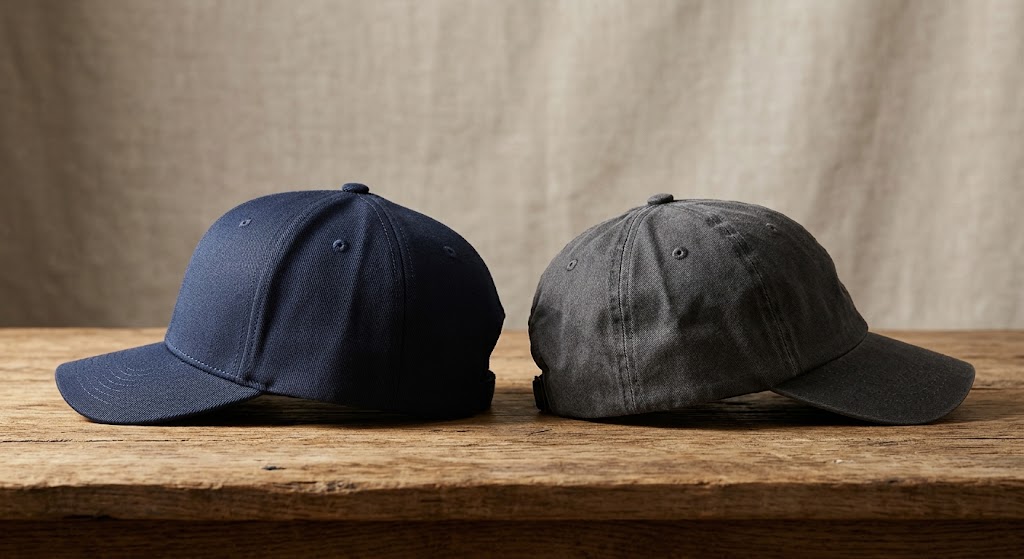
During customization, there is a common misconception: that a 5-panel hat must be unstructured and a 6-panel hat must be structured. In fact, panel count and crown stiffness are two completely independent dimensions.
Panel Count Is Not the Same as Hat Structure
Panel count is only one part of cap construction. The amount of support inside the crown is a separate consideration, which is why structured and unstructured hats can have different shapes and wearing characteristics even when their panel layouts are similar.
A 5-panel hat can also be made structured by adding rigid shaping fabric to the front panel; a 6-panel hat can also remove front-panel support to create a soft, close-fitting unstructured dad hat. When evaluating crown shape, priority should be given to the product’s support structure rather than relying solely on panel count.
Crown Height, Brim Shape, and Overall Silhouette
Besides the panel construction and interior support, crown height (high/mid/low profile) and brim curvature (flat/curved brim) also make a big difference in the way the hat appears on the head. These specifications should be compared with the styles under consideration.
Which Hat Style Works Best With Each Panel Layout?
After clarifying artwork and decoration requirements, you can choose the appropriate hat category according to the following specific scenarios:
When to Consider a 5-Panel Hat
When a project has the following characteristics, a 5-panel hat can be evaluated first:
The design requires a relatively complete front-panel area without interruption by a center seam.
The artwork tends to be wider, or the front panel is designed to be the absolute main focus of the entire visual design.
The project specifically requires a trendy streetwear style or a specific 5 panel camp cap shape.
For projects requiring a specific front-panel arrangement, taking a look at the available custom dad hats can help limit down the alternatives, as the product page shows both 5-panel and 6-panel versions.
When to Consider a 6-Panel Hat
If your project contains the following criteria, then a 6-panel hat is a better fit:
The concept wants a classic baseball cap look and shape.
The artwork can be suitably designed to avoid the middle seam, or the seam can be included into the overall visual scheme.
The purchase is based on the specs of a classic team sports cap or a standard corporate giveaway cap.
When a project calls for a known baseball-cap profile, custom baseball caps provide a useful starting point for comparing panel layout, brim shape and other possible modification options.
How to Choose the Right Panel Layout Before Ordering Custom Hats
Before making a formal order, it is advisable to go through the below checklist to make sure mass production is up to your expectation:
Artwork definition: Look for little lettering and if it needs to cross center seam.
Choose crown silhouette: Indicate the crown height, tilt angle, and structural rigidity.
Choose the decoration method: Choose the best approach to embroider, print, or patch, according to the complexity of the artwork and the properties of the cloth.
Check the real product specifications: Don’t only go by the product name, check with the provider to see the actual panel setup and characteristics for the intended hat style.
Approve a physical sample: Check the seam alignment, position of artwork and finished visual effect on the actual sample before mass production.
Hat construction includes more than just panel count; crown profile, visor form, fabric and decoration options all contribute to the finished design. The description of Pukka’s hat anatomy and customization demonstrates how panel layout meshes with these other design selections.
Final Thoughts: Choose the Panel Layout Around the Design
The choice between a 5-panel and 6-panel hat depends on the desired crown form, front panel setup, and embellishment needs. A 5-panel crown typically gives a more uninterrupted front area; a 6-panel crown usually has a center seam to take into account while creating the design. Neither is naturally at an advantage or disadvantage over the other. It is contingent upon the construction of the hat and the artwork.
Implementer offers a variety of custom hat solutions with different panels for organizations seeking custom headgear. It is important to match product specs with the design before production. Confirming samples and checking current styles helps to verify the hat style chosen will fit the needs of the project visually and practically.