
Custom Embroidery and Branding for Plush Toys
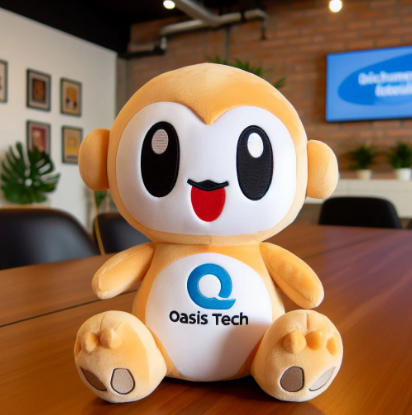
In today’s competitive market for toys and promotional merchandise, plush toys have evolved from simple playthings into real branding tools. One of the most effective ways to boost the charm and identity of a plush toy is custom embroidery and branding. This method not only improves the appearance but also supports brand recognition and customer loyalty.
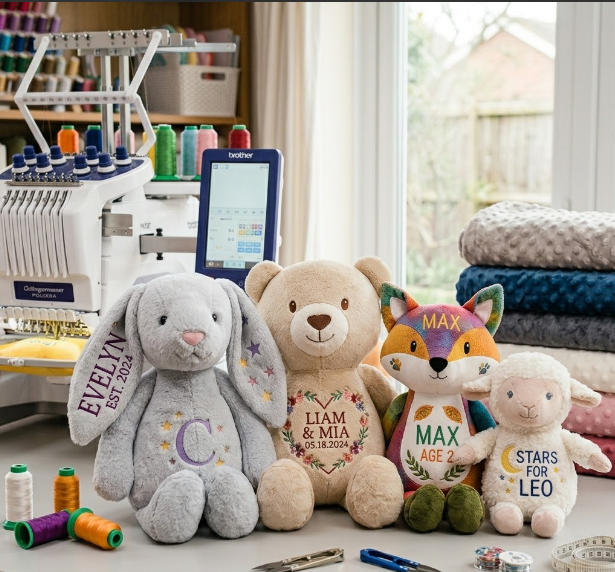
Why Custom Embroidery on Plush Toys Become Popular
Custom embroidery involves stitching designs, logos, or text right onto the plush fabric. Unlike printed labels or patches, embroidery is durable, tactile, and eye-catching, so it works well for long-term promotional items and personal gifts. Whether it’s a corporate giveaway, a charity campaign, or a collectible toy, embroidery still brings a sense of refinement and distinctiveness to the final product.
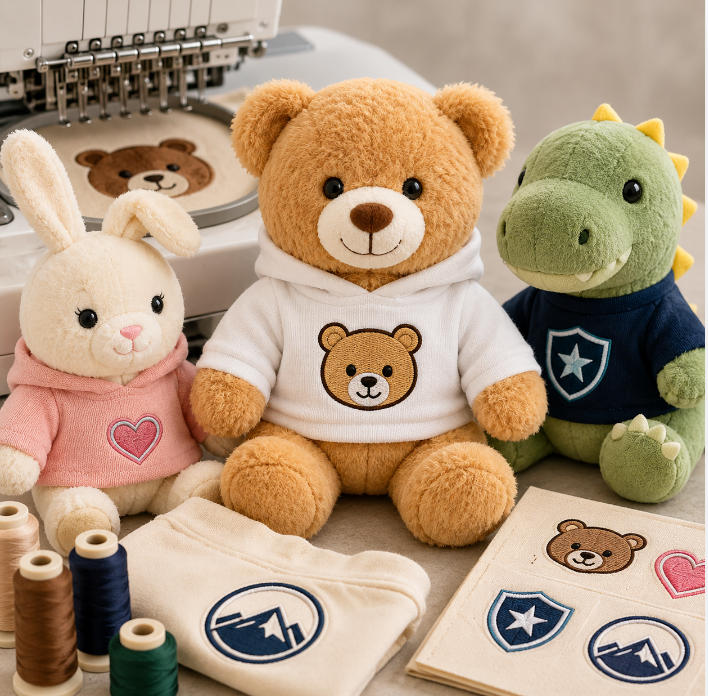
Advantages of Customized Embroidered Plush Toys
- Enhanced Brand Recognition: embroidered logos, mascots, or small messages leave a long visual trace. It is different from stickers or printed artwork that can fade or peel off after time, with embroidery your brand stays in plain sight, helping businesses or organizations stay on peoples mind.
- Premium Look and Feel: embroidery brings texture, depth, and a more handcrafted nuance to plush toys. That improved style makes the toy look higher quality, and it can feel collectible, even for adults not just children.
- Long-Lasting Durability: the stitched patterns are made to resist everyday scuffs and heavy use. Embroidery can handle regular handling, washing, and long periods of display, so it works well for toys that are meant to last.
- Personalization and Emotional Connection: with customized embroidery you can add names, short messages, or special icons. This small but meaningful touch strengthens the bond, so the toy becomes a valued gift or a keepsake.
- Versatility in Design: with modern embroidery technology you can push intricate motifs, different shades, and even metallic threads, so the result feels flexible, and yes it makes it easier to craft designs that look unique, and also match a person or a brand identity.
- Effective Marketing Tool: branded plush toys work as real, touchable promotional assets. They are useful as corporate gifts, event merchandise, or promotional items, and they often leave a positive, lasting impression on customers, partners, and that matters.
- Eco-Friendly Option: when you compare embroidery to printed designs that may need chemical inks, embroidery becomes a low-impact way to add logos and layouts, which supports a more sustainable approach to toy customization.

Applications of Custom Embroidered and Branded Plush Toys
This chart provides the key ways custom embroidered and branded plush toys are used across corporate, retail, entertainment, and personal contexts.
| Application Area | Description | Examples |
| Corporate Gifts | Personalized plush toys with company logos used as gifts for employees or clients | Logo-embroidered mascots, custom plush keychains |
| Promotional Items | Branded plush toys used in marketing campaigns to increase brand visibility | Giveaway plush toys at trade shows or events |
| Retail Merchandise | Plush toys with custom embroidery sold as branded products | Character plush with embroidered brand name |
| Event Memorabilia | Souvenirs for special events, conferences, or product launches | Embroidered plush toys commemorating events |
| Fundraising and Charity Campaigns | Custom plush toys sold or donated to raise funds for charitable causes | Charity mascot plush with embroidered logo |
| Theme Parks and Entertainment | Plush toys representing characters or mascots, often with branding | Custom park mascot plush with embroidered details |
| Personalized Gifts for Individuals | Customized plush toys for personal gifting occasions | Birthday or anniversary plush with embroidered name |
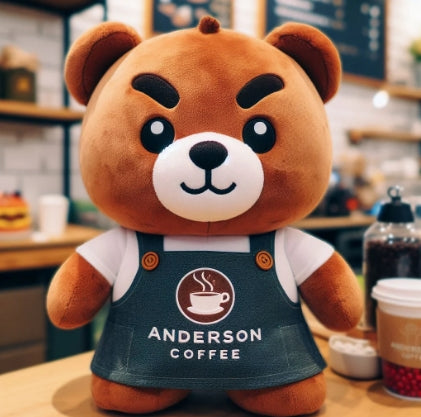
Key Steps of Custom Embroidery on Plush Toys
Achieving the perfect embroidered design on custom plush toys requires careful planning and attention to detail throughout the entire process.
Step 1. Design Concept and Planning
The first stage starts with thinking through the design, I mean actually imagining what it will look like. This is where you select the artwork, the lettering, or the logo that will get embroidered, plus you decide on the right tones, dimensions and where it goes on the plush toy. Designers have to keep in mind the toy’s outline and what it is made of, because some materials especially those that are very soft or fluffy , can need a few tiny adjustments so the stitching keeps its structure and still looks bold.
Step 2. Choosing the Right Material
Material selection for push toys is critical for the success of the embroidery.
This chart offers the key considerations when selecting fabric for custom embroidery, including texture, durability, and ease of stitching, to ensure the final customized plush toy is both attractive and durable.
| Material Type | Texture & Feel | Durability | Ease of Embroidery | Use Cases |
| Plush / Minky Fabric | Ultra-soft, smooth | Medium | Easy with medium-weight thread | Custom stuffed animals, baby plush toys |
| Fleece | Soft, slightly fuzzy | High | Easy to moderate | Character plush, promotional plush |
| Cotton / Cotton Blend | Soft, natural feel | Medium | Easy | Personalized gifts, decorative embroidery |
| Velvet | Smooth, shiny | Medium | Moderate; can be tricky | Premium plush toys, decorative accents |
| Felt | Dense, firm | High | Very easy | Small details, applique designs |
| Polyester / Synthetic Plush | Smooth or short pile | High | Easy to moderate | Commercial plush toys, high-use areas |
| Chenille / Textured Fabric | Fuzzy, textured | Medium | Moderate | Decorative or themed plush, embroidery accents |

Step 3. Digitizing the Design
After the design idea is locked in, it has to be digitized for the embroidery machine. In other words digitization turns the artwork into a file, one that tells the machine stitch paths, direction, and stitch density. This part helps with tuning, so the final result suits the toy’s fabric, and also handles the finer details. With good digitization, even complex scenes or multi-colored layouts show up crisp and true on the finished plush toy.
Step 4. Thread Selection
Selecting the right thread enhances both the durability and visual appeal of the embroidery.
The following chart provides the key considerations when selecting thread for plush toys, including material, durability, color, and optimal use.
| Thread Type | Material | Strength & Durability | Color Options | Example Uses |
| Polyester Thread | Synthetic (Polyester) | High strength, resistant to fraying | Wide range of colors | General plush toys, commercial embroidery, high-stress areas |
| Cotton Thread | Natural (Cotton) | Moderate strength, soft texture | Moderate colors | Soft plush toys, decorative stitching, low-stress areas |
| Rayon Thread | Synthetic (Rayon) | Medium strength, smooth and shiny | Wide range of vibrant colors | Decorative embroidery, detailed logos, visual appeal |
| Nylon Thread | Synthetic (Nylon) | Very high strength, abrasion resistant | Limited colors | Plush toys for children, safety-critical seams, heavy-use areas |
| Metallic Thread | Synthetic/Metal blend | Medium strength, decorative shine | Limited metallic shades | Premium or decorative plush toys, accents, special designs |
| Blended Thread | Cotton/Polyester blend | Balanced strength and softness | Moderate to wide range | Plush toys requiring durability and soft feel |
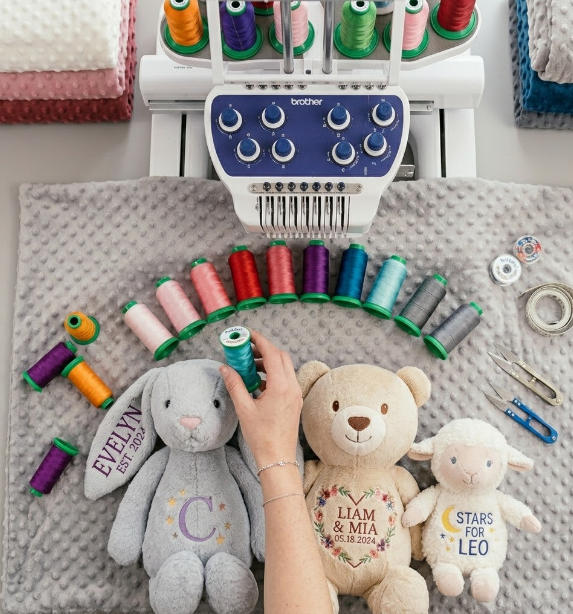
Step 5. Placement and Embroidery Execution
Precise placement of the design matters a lot for looking truly professional. Designers decide where the embroidery should sit, then secure the toy with hoops or clamps, basically stabilizing the fabric so it does not slide around while stitching, because it can get messy. After that, the embroidery machine, or a skilled technician, carries out the design with care. They keep watching the whole run to preserve accuracy , tweak the tension when needed, and handle any small problem right away.
Step 6. Finishing Touches and Presentation
Once the embroidery is done, the plush toy gets a careful quality review. Any surplus threads are trimmed, stabilizers removed if they were used, and the overall look is checked to confirm the pattern is centered, easy to read, and durable enough for everyday handling. Finally, the toys are packaged properly to safeguard the embroidery during shipping or exhibition , so customers or recipients receive something finished that still feels attractive and keeps its quality for a long time.
Final Thoughts
Custom embroidery and branding can take plush toys from pretty ordinary play things to real, effective marketing assets, and at the same time, to beloved keepsakes. When creativity is paired with strong materials, and a careful design approach is used, businesses and individuals can craft plush toys that truly linger in peoples minds. In a world where personal touch and brand awareness matter a lot, embroidered plush toys become a tactile, long-lasting, and genuinely