
Handmade vs. Mass-produced Christmas Plush Toys: How to Make a Choice
Christmas plush toys have turned into a favorite thing for holiday decorating and gift giving, and these small seasonal routines people keep doing. When people are selecting Christmas plush toys, they usually end up weighing handmade designs against mass-produced versions. Both choices can feel appealing, yet they diverge a lot in craftsmanship, customization, cost, the environmental side, and emotional value.
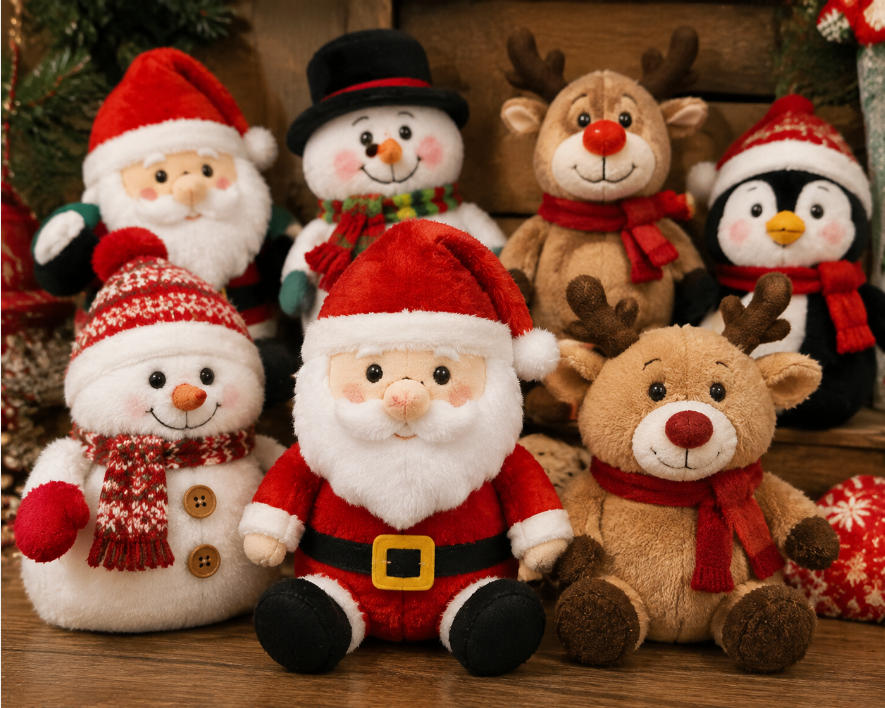
Overview of Handmade Christmas Plush Toys
Handmade Christmas plush toys are made by skilled artisans who go through the whole process, designing first, then cutting, sewing, and decorating. Unlike factory-made goods, these plush toys often end up with unique touches, so each piece ends up not exactly the same as the next one. Even small differences in stitching, the fabric feel, and the decorative accents can give the toy real personality. It also creates this quiet sense of authenticity that people really notice.
One of the biggest advantages of handmade plush toys is their craftsmanship. Makers usually pay close attention to details like facial expressions, clothing design, embroidery, and material selection. A handmade Santa plush toy, for instance, might include carefully sewn outfits, hand-stitched accessories, and customized features that make it feel like a one-of-a-kind holiday keepsake, really unique in practice.
Handmade plush toys also give more opportunities for personalization. Buyers can request particular colors, sizes, character designs, or added personal details such as names, special messages, or custom holiday themes. This is why handmade toys are especially popular for family presents, collectible items, and heartfelt decorations.
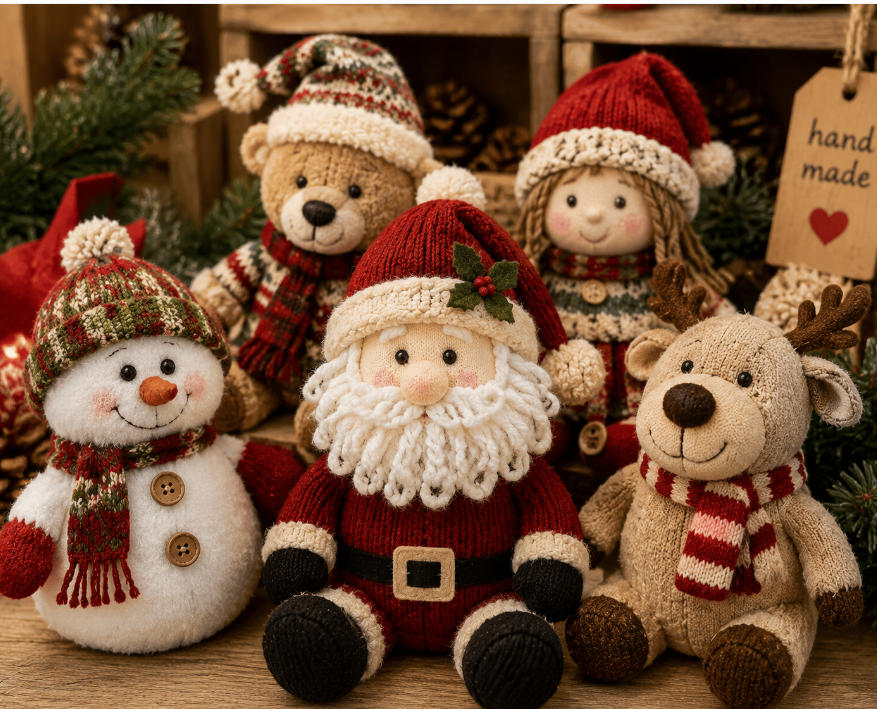
Overview of Mass-produced Christmas Plush Toys
Mass-produced Christmas plush toys are manufactured in large quantities, using standardized production processes. They are widely available in stores and on online markets, so they can be convenient choices for shoppers who need affordable holiday decorations or gifts
A big advantage of this factory-driven approach is cost efficiency. When companies make large batches, they can reduce production expenses, which makes these plush characters more affordable for many consumers. Families might purchase several Christmas plush figures, decorate bigger areas, or buy presents for lots of people without spending a major amount
Mass-produced plush toys also bring a level of consistency. Each product model follows the same design specs, so customers can expect the same size, look, and quality across multiple units. This helps businesses, retailers, event organizers, and families who want matching Christmas decorations or a uniform theme
Also, modern manufacturing tools have made the quality of mass-made plush toys better. With advanced sewing equipment, automated cutting systems, and more careful quality checks in place, the toys tend to hold up longer, feel safer, and look nicer than what older manufacturing methods could manage.
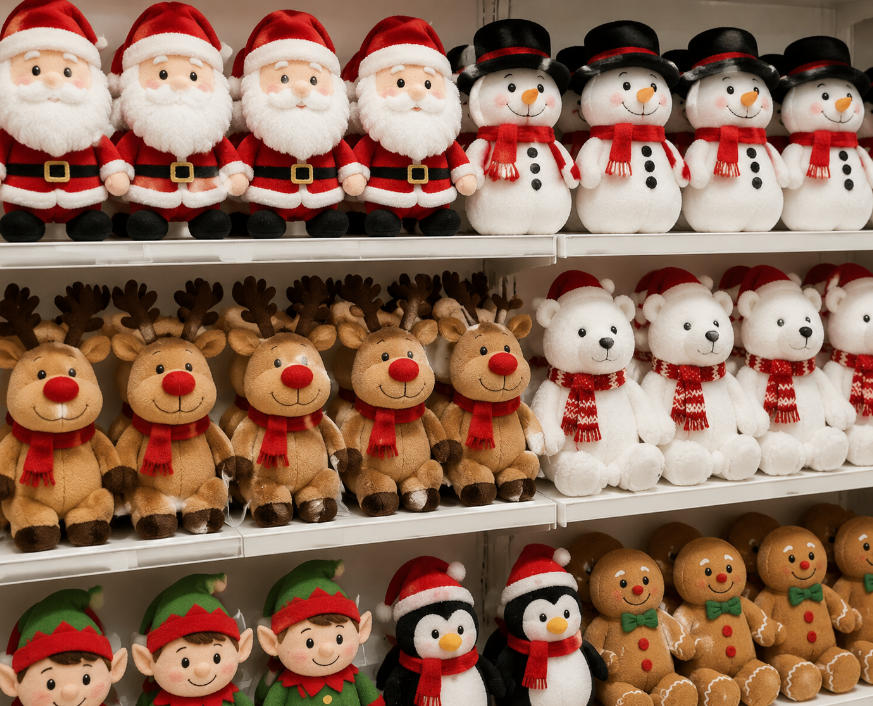
The Comparison Between Handmade and Mass-produced Christmas Plush Toys
| Comparison Factor | Handmade Christmas Plush Toys | Mass-produced Christmas Plush Toys |
| Production Method | Made individually by artisans using manual cutting, sewing, and decorating techniques | Manufactured in factories using automated equipment and standardized processes |
| Uniqueness | Each toy may have unique details, making it more special and collectible | Most toys have identical designs because they are produced in large quantities |
| Craftsmanship | Focuses on detailed stitching, artistic design, and personal craftsmanship | Focuses on efficiency, consistency, and large-scale production |
| Customization | Can be customized with specific colors, sizes, characters, names, or personalized features | Usually available only in fixed designs, sizes, and colors |
| Design Creativity | Offers more creative freedom with unusual shapes, handmade decorations, and artistic styles | Follows popular market trends and commonly preferred Christmas themes |
| Material Selection | Often allows makers to choose premium, specialty, or eco-friendly fabrics | Materials are selected based on cost, availability, and production efficiency |
| Quality Control | Each piece is usually inspected by the maker during production | Quality is controlled through factory inspection systems and production standards |
| Production Speed | Takes more time because each toy requires manual work | Can produce thousands of toys quickly to meet market demand |
| Price Range | Generally higher due to labor, craftsmanship, and customization | Usually lower because of economies of scale |
| Durability | High-quality handmade toys can become long-lasting keepsakes | Durability varies depending on manufacturing quality and materials used |
| Environmental Impact | Small-batch production may reduce waste and support sustainable practices | Large-scale production may create more waste but can improve efficiency through modern processes |
| Emotional Value | Often carries a personal story and feels more meaningful as a gift | Provides nostalgia and holiday memories through familiar designs |
| Availability | Usually available through individual makers, craft shops, or specialty stores | Widely available in supermarkets, retail stores, and online marketplaces |
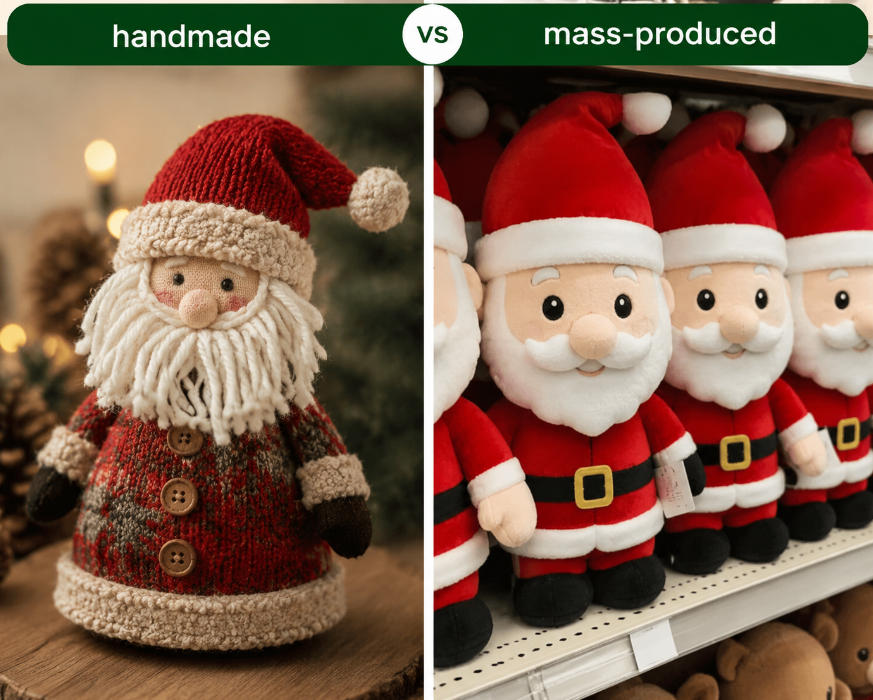
Key Factors to Consider for Choosing Between Handmade and Mass-produced Christmas Plush Toys
1. Purpose and Intended Use
The first factor to consider, is why you are purchasing the Christmas plush toy. The purpose behind it often decides what product characteristics you actually need.
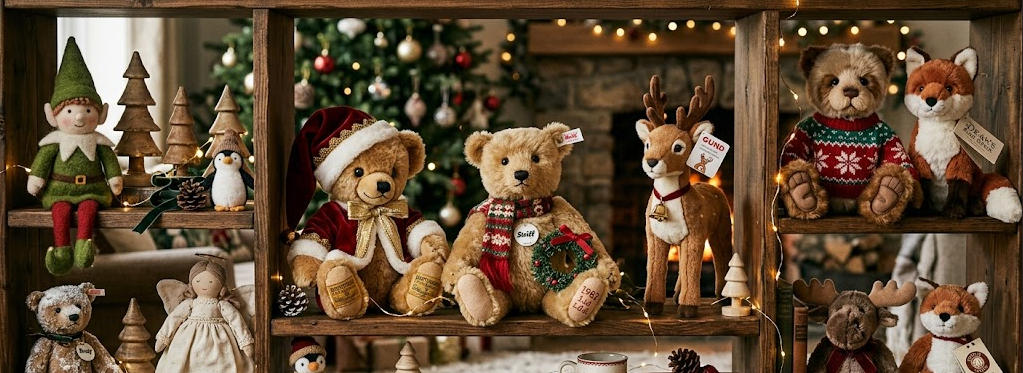
Handmade Christmas plush toys are frequently selected for special moments, personalized gifts, collectible keepsakes or sentimental decorations. Their unique designs and handcrafted details make them ideal for people who want a holiday item that feels personal, and keeps emotional value over time.
Mass-produced Christmas plush toys are usually more practical when you need larger-scale decorating, seasonal giving, commercial displays, or families trying to keep a set of matching decorations. They’re easier to find and more affordable, which helps for everyday holiday use.
If you know how the toy will be used, it becomes easier to decide whether uniqueness matters more, or convenience is the priority.
2. Design Uniqueness and Creativity
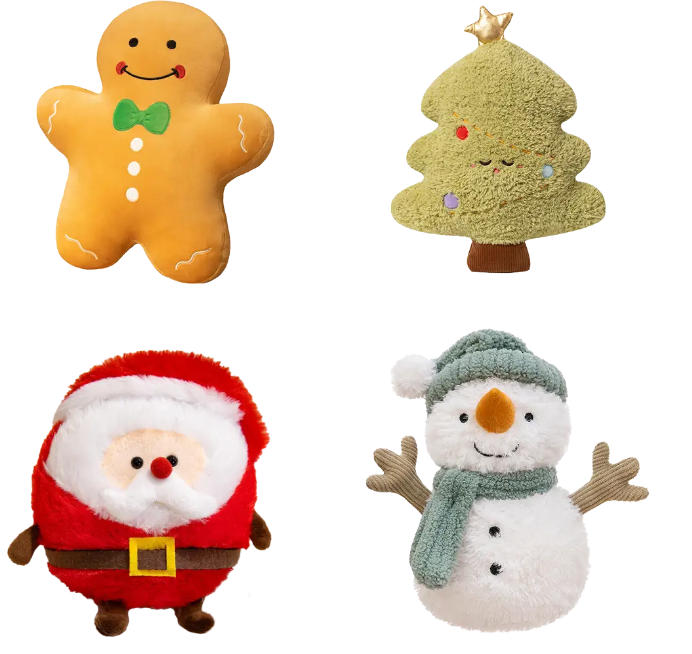
Design is one of the most noticeable gaps between handmade and mass-produced plush toys, honestly. Handmade pieces are made with much more artistic freedom. The creators can try out various fabrics, different shapes, colors and small decorative touches, to get that distinct Christmas character feeling.
Like, a handmade reindeer plush toy might feature special embroidery, clothing that is customized, or a face that looks more particular, not generic. These creative little choices tend to raise both the collectible value and the emotional weight people attach to the toy.
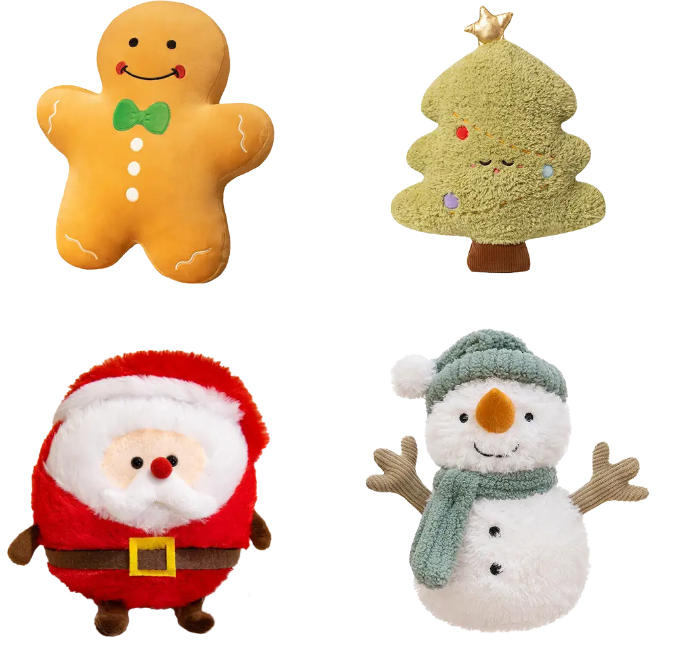
Mass-produced plush toys usually follow well-known market expectations. The manufacturers aim for broader appeal, so they lean toward the familiar figures such as Santa Claus, snowmen, elves, and Christmas animals. Even if the designs are friendly and easy to recognize, they are typically less personalized, with fewer “crafted by choice” moments.
3. Quality and Craftsmanship
Quality matters just as much when you are selecting Christmas plush toys. Often the handmade ones get individual attention throughout the whole production run. Craftspeople check and select their materials, sew the parts together, and then inspect the little details by hand, like it actually matters.
That careful method can lead to outstanding craftsmanship, particularly when the creator has real experience. Handmade plush toys can also feel more personal or sentimental because buyers notice the time, the skill, and the deliberate work put into each piece.
Mass-produced plush toys usually depend on standardized manufacturing steps. Reputable manufacturers use automated equipment and set quality control procedures in place, so the result stays consistent. Still, the end quality can differ quite a bit, depending on the specific brand, the materials used, and the production expectations.
No matter what type you choose, you should look at stitching quality, how soft the fabric feels, what kind of filling is inside, and whether the toy includes appropriate safety features.
4. Customization Options
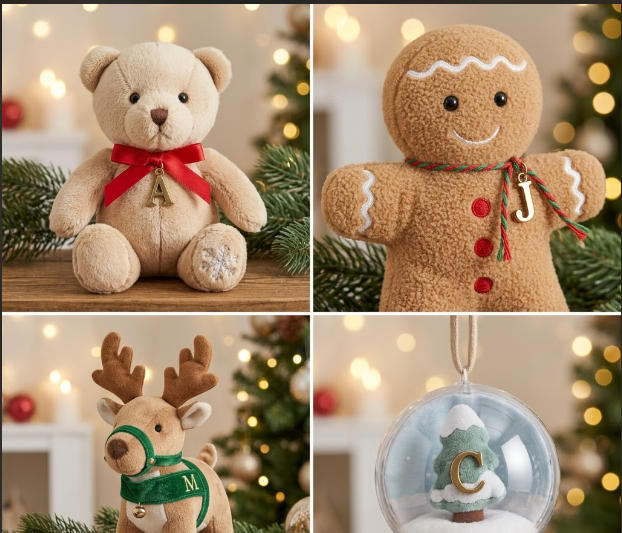
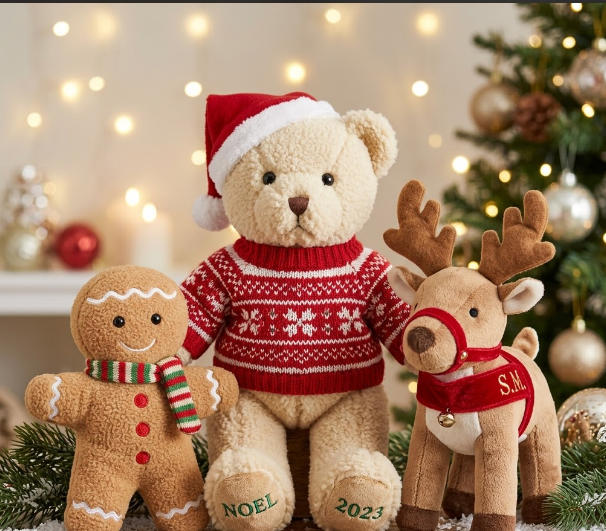
Handmade Christmas plush toys have a real edge in terms of customization. Often, customers can ask for specific designs, shades, sizes, names, or even little personalized messages, which makes the whole thing feel more personal. Because of that, handmade plush toys fit well for unusual gifts and those memorable holiday moments that stick with you.
On the other hand, mass-produced plush toys usually have fewer customization choices. They are made for large-scale production, so buyers mostly pick from what is already available, meaning the model, colors and sizes are already set.
If someone wants custom Christmas plush toys that are made for particular persons, occasions, or themes, the handmade route usually gives much more flexibility.
5. Budget and Price Considerations
Price matters a lot for many shoppers. Handmade Christmas plush toys tend to cost more because they need extra labor, time and specialized know-how. That larger amount often corresponds to the craftsmanship level, the original design approach, and the customized details.
Mass-produced plush toys are often more affordable, since factories make them in big batches and the process runs pretty efficiently. That makes them a convenient buy for customers who need several toys at once or who want to decorate larger areas without spending too much.
Whether it is the best choice usually depends on what the buyer cares about more. If someone values uniqueness and careful craftsmanship, handmade can feel more meaningful. If the goal is low cost and high quantity, mass-produced options win.
6. Production Time and Availability
What is available right now can shape the decision, especially when the holiday season gets busy. Mass-produced Christmas plush toys are commonly stocked in stores and online platforms, so customers can grab them quickly.
Handmade plush toys tend to take more time, because each piece is produced separately, almost one at a time. Also, any special or customized design may need advance ordering.
For last-minute gifts, mass-produced choices are usually easier. For people planning ahead, handmade products can offer qualities that feel more personal and thoughtful.
7. Material Selection and Sustainability
Environmental awareness is getting more important in purchasing decisions. Handmade plush toys may use sustainable materials, recycled fabrics, or small batch production methods that reduce waste, though not always in every case.
Mass-produced plush toys can have a bigger environmental impact because of large-scale manufacturing, packaging, and transportation. Still, many manufacturers are working on sustainability by choosing eco-friendly plush toy materials, using recyclable packaging, and adopting more efficient production practices.
Consumers should look at material quality, production practices, and how long the plush toy lasts when deciding whether it is truly sustainable.
8. Emotional Value and Personal Connection
Christmas plush toys often end up tied to family traditions and holiday memories. Handmade toys usually feel more personal, because they reflect creativity, time, and individual effort.
A handmade plush toy can turn into a cherished little keepsake that ends up being kept on a shelf, or packed away then brought out year after year. It can carry a small narrative about the maker, the moment, or the person who received it, even if nobody says it out loud.
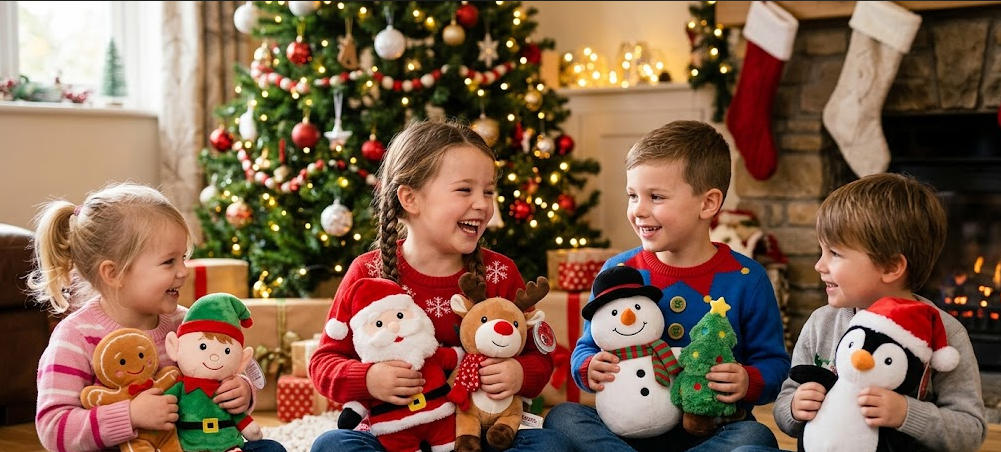
Mass-produced plush toys can also hold a strong emotional pull. A well-known Christmas character picked up during childhood may become a favorite decoration, tied to family gatherings and festive customs.
9. Safety and Reliability
Safety matters a lot when you are buying plush toys for children. Buyers should confirm whether the item really meets the relevant requirements, with secure stitching, safe stuffing materials, and sturdy construction.
Mass-produced toys from reputable custom plush toy manufacturers usually pass standardized safety testing. Handmade plush toys may feel different, depending on how each maker works, so buyers should pick seasoned artisans who use harmless materials and dependable methods.
Summary
- Handmade plush toys are ideal for buyers who value uniqueness, customization, artistic design, and emotional significance. They are excellent choices for special gifts, collectibles, and memorable holiday decorations.
- Mass-produced Christmas plush toys are better suited for customers who prioritize affordability, availability, and consistent designs. They are practical for decorating homes, purchasing multiple gifts, or creating a coordinated holiday display.
Final Thoughts
Handmade and mass-produced Christmas plush toys bring that festive charm and a feeling of happiness in a very real way. But the choice between handmade and mass-produced types depends on personal needs and preferences. Whether it is made by an artisan with careful hands or produced in a modern factory with a steady workflow, the best Christmas plush toy is the one that helps form lasting memories and adds cozy warmth during the holiday season.