
How to Select Materials for Custom Plush Toys
Material selection plays a major part in the design and production of custom plush toys. The materials have a direct impact on the safety and durability of the toy. The choice of fabric affects the feel of the plush and, consequently, the play value; the filling deepens that value, while accessories manipulate not only appearance but also the touch or security of safety. Whether the plush is intended for children, collectors, or promotional purposes, selecting the right materials is essential to achieving both functional and emotional value.

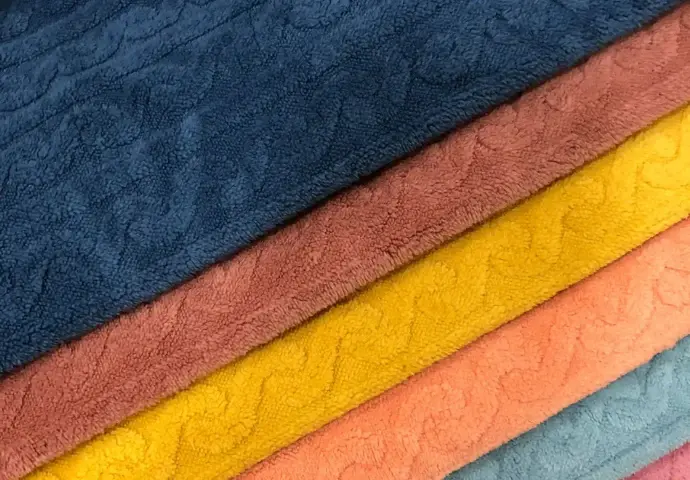
Choosing Fabrics for Custom Plush Toys
This chart provides a clear comparison to help select the most suitable fabric for custom plush toys based on the desired softness, durability, cost, and application.
| Fabric Type | Key Characteristics | Advantages | Limitations | Typical Applications |
| Polyester Plush | Soft, dense synthetic pile | Durable, affordable, colorfast, easy to maintain | Less breathable than natural fibers | Mass-produced plushies, promotional toys |
| Cotton | Natural, smooth, breathable | Skin-friendly, eco-friendly, suitable for sensitive users | Wrinkles easily, less durable without treatment | Baby toys, organic plush |
| Fleece | Lightweight, soft, slightly stretchy | Warm, easy to sew, wrinkle-resistant | Can pill over time, less premium feel | Casual plush toys, blankets |
| Velour | Short pile with a velvety surface | Smooth texture, rich appearance | Higher cost, may wear with heavy use | Premium plush, decorative toys |
| Faux Fur | Long pile, mimics animal fur | Realistic look, very soft, visually appealing | Harder to maintain, shedding risk | Plush animals, collectible items |
| Minky Fabric | Ultra-soft microfiber with short pile | Extremely soft, vibrant colors, luxurious feel | Higher cost, slippery during sewing | High-end plush, plush toys for baby |
| Felt | Non-woven, firm structure | Easy to cut, holds shape well, cost-effective | Not very soft, limited durability | Decorative parts, facial details |
| Velvet | Dense pile with smooth, shiny finish | Elegant appearance, soft touch | Can crush easily, requires careful care | Luxury plush toys, gifts |
| Corduroy | Ribbed texture with distinct lines | Durable, unique texture, wear-resistant | Less soft compared to plush fabrics | Vintage-style or niche plush designs |
Selecting Filling Materials for Custom Plush Toys
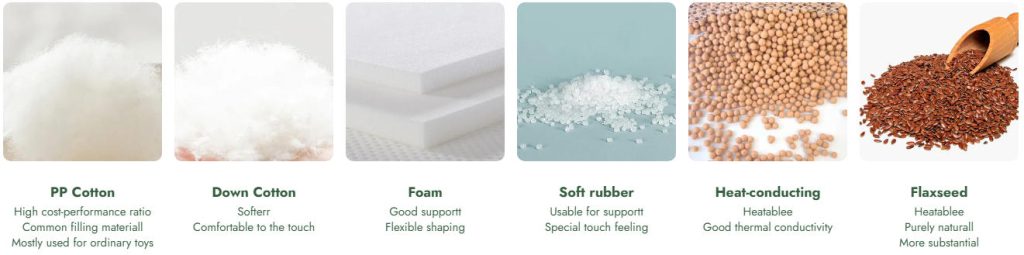
This chart offers the key factors in selecting filling materials for custom plush toy production, helping manufacturers balance comfort, safety, cost and sustainability.
| Filling Material | Key Characteristics | Advantages | Limitations | Typical Applications |
| Polyester Fiberfill | Lightweight, fluffy synthetic fibers | Cost-effective, hypoallergenic, good shape retention | Less eco-friendly unless recycled | Standard plush toys, mass production |
| Recycled Polyester | Made from recycled synthetic materials | Environmentally friendly, soft, sustainable | Slightly higher cost than virgin polyester | Eco-friendly plush toys |
| Cotton Filling | Natural, soft, breathable | Gentle on skin, biodegradable | Can clump over time, less resilient | Baby toys, organic plush |
| Wool | Natural, dense, good insulation | Durable, resilient, natural material | Higher cost, may cause allergies | Premium or traditional plush toys |
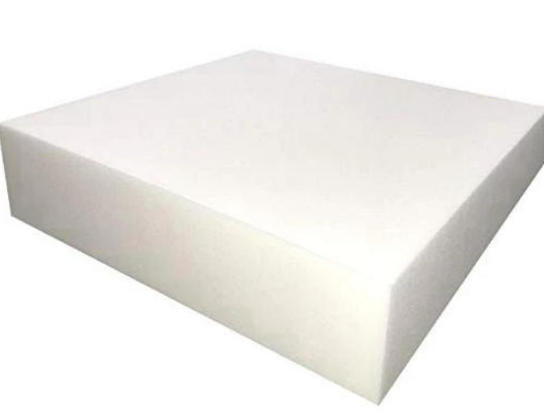
| Memory Foam | Dense, slow-rebound material | Excellent support, maintains shape well | Expensive, heavier than fiberfill | Therapeutic plush, cushions |
| Microbeads (EPS) | Small, lightweight beads | Conforms to shape, unique tactile experience | Leakage risk, less suitable for washing | Sensory toys, stress-relief plush |
| Plastic Pellets (PP) | Small weighted pellets | Adds weight and stability, improves realism | Must be securely enclosed for safety | Weighted plush, seated toys |
| Kapok Fiber | Natural, silky plant-based fiber | Lightweight, sustainable, hypoallergenic | Less widely available, moderate cost | Eco-conscious plush toys |
| Bamboo Fiber | Soft fiber with natural antibacterial properties | Sustainable, breathable, eco-friendly | Limited availability, higher cost | Premium eco-friendly plush |
Material Innovations in Custom Plush Toys
The advent of material advancements is revolutionizing the plush toy industry by giving custom plush manufacturers the opportunity to break from traditional designs and offer products with added functionality, sustainability and user experience. Advances in textile engineering and smart materials are giving rise to new ways that custom plush toys are designed, produced and experienced.
1. Smart Fabrics
Among the most exciting developments in plush toy materials is the use of smart fabrics. These textiles can incorporate conductive threads, sensors, and responsive elements that allow for interactivity. Plush toys fitted with touch-sensitive areas, sound modules, or light-emitting components are a hit for educational and entertainment purposes.
It is based on an ethical consideration to use materials to allow for comfort and plushness; besides the need is there for flexibility, safety, and durability. Materials used in electronic functionalities also need to offer proper heat insulation and resistance.
2. Eco-Friendly Materials
Sufficiently improving sustainability has become a critical element of material innovation for custom plush manufacturing. Recycled polyester fibers originating from plastic waste are widely adopted by manufacturers, while biodegradable materials like organic cotton and fibers from plant such as bamboo and kapok are sorted after materials.
The green’s goal is to reduce the environmental impact by introducing water-based dyes and non-toxic finishings. These eco-friendly materials cannot just support the world in its sustainability mission but also attract conscious consumers with high environmental consciousness in search of responsible products.
3. Antimicrobial and Hypoallergenic Fabrics
According to health and hygiene considerations that grow rapidly, they are antimicrobial and hypoallergenic materials. The antimicrobial textile stops the growth of bacteria and fungi, which is necessary Notable in children’s toys and health-related applications.
Hypoallergenic fills and fabrics provide an elevated barrier against allergic reactions, making these a safer option for sensitive individuals. Such noteworthiness is all the more justified for baby products and clinical settings.
4. Advanced Filling Materials
Advanced filling materials add to the traditional polyester fiberfill, lending them an entirely different range of performance to serve better results. Memory foam, for instance, gel-infused fibers and microbeads are used to make superior plush toys reduced in terms of ergonomics alongside a fantastic tactile experience.
Other fillings like weighte d glass beads or some kind of special pellets are gradually being used more for their comforting and therapeutic purposes. They are usually employed in the creation of special touch sensory cuddly toys to enha nce relaxation and dissolve anxiety.
5. Texture Manufacture
The focus of material innovation lies in the aim of enhancing the sensory appeal of plush toys. By the use of combined materials and finishes, manufacturers are able to generate feel var iations which in turn are stimulating to the touch-and the eyes, too.
Moreover, embossed fabrics, heat-pressed patterns, and multi-layered textiles introduce new levels of intricate more visually stunning feel and design. These advanced features are crucially beneficial toward educational and sensory development toys.
6. Durable and Easy-Maintain Materials
Nowadays, custom plush toys increasingly have to be durable and easy to maintain. Technologies in the areas of stain-resistant coating, water-repellent fabrics, and machine-washable materials answer to these demands.
These high-performance synthetic blends are growing harder and firmer to retain their fabric tightly on full terms and not to change their colors with repeated washing. That’s especially significant for children’s toys that get laundered quite often.
Balancing Cost vs. Quality in Material Selection for Custom Plush Toys
In the custom plush toy industry, material selection is a constant balancing act between cost efficiency and product quality. Manufacturers must carefully evaluate how material choices influence not only production expenses but also the perceived value, durability, and safety of the final product.
1. Understanding Cost Drivers in Material Selection
Material costs in plush toy production are influenced by several factors, including fabric type, filling material, sourcing location, and processing requirements. Synthetic fabrics such as polyester plush are typically more affordable due to large-scale availability and efficient manufacturing processes. In contrast, premium materials like organic cotton or specialty fabrics come with higher procurement and processing costs.
Additionally, advanced materials—such as antimicrobial textiles or memory foam fillings—can significantly increase production expenses due to specialized manufacturing techniques and quality control requirements. Logistics, import regulations, and supplier reliability also contribute to overall material costs.
2. Defining Quality in Custom Plush Toys
Quality is more than the just the looks of a stuffed toy-which means softness, durability, safety, color retention, and resistance to wear and tear. High- quality materials enhance the tactile experience of play and ensure that the toy maintains its shape and continues to look good for a long period.
Safety is the other very important aspect in quality for children’s products. Materials of all stuffed toys must meet strict safety standards. Materials must be free of any toxic substances and other harmful substances. The stitches should be reinforced for heavy-duty or rather strong tears.
3. Trade-Offs Between Low-Cost and High-Quality Materials
The use of low-cost materials places lesser direct production costs within price-sensitive markets. In doing so, it may affect the softness, durability, and user satisfaction. Pilling, fading, fraying, deformation, and iatrogenic effects have much to trash the good name of a brand.
On the opposite end, investing in high-quality materials for custom plushies could enhance the product’s market positioning while enabling premium pricing and higher customer loyalty. The question lies in translating the costs incurred into perceptible value addition for the end user.
4. Strategies for Achieving an Optimal Balance
This chart outlines practical strategies to balance cost and quality effectively, helping manufacturers optimize material selection while maintaining competitive and high-performance custom plush toys.
| Strategy | Description | Cost Impact | Quality Impact | Practical Example |
| Hybrid Material Usage | Combine premium and standard materials in different parts of the toy | Reduces overall cost | Maintains key quality areas | Soft minky exterior with polyester fiberfill interior |
| Material Prioritization | Focus high-quality materials on visible and high-contact areas | Optimizes spending | Enhances user perception | Premium fabric for outer layer, basic fabric inside |
| Supplier Optimization | Partner with reliable suppliers for consistent quality and better pricing | Enables bulk discounts | Ensures consistent material standards | Long-term contracts with certified fabric suppliers |
| Design Simplification | Reduce complexity to minimize material waste and processing costs | Lowers production cost | Maintains acceptable quality | Fewer seams and simplified shapes |
| Standardization of Materials | Use common materials across multiple product lines | Economies of scale | Stable and predictable quality | Same filling material for various plush designs |
| Use of Blended Materials | Mix natural and synthetic fibers to balance performance and cost | Moderate cost | Balanced durability and comfort | Cotton-polyester blended fabrics |
| Efficient Manufacturing Methods | Select materials that are easy to cut, sew, and assemble | Reduces labor and processing costs | Minimizes defects | Fabrics with good sewability and low fraying |
| Targeted Customization | Customize only specific features instead of the entire product | Controls customization cost | Preserves uniqueness | Custom embroidery instead of full custom fabric |
| Incorporating Recycled Materials | Use recycled options where feasible | Slightly higher initial cost | Adds sustainability value | Recycled polyester filling |
| Continuous Material Testing | Evaluate materials regularly for performance and cost efficiency | Prevents costly errors | Improves long-term product reliability | Routine durability and safety testing |
5. The Sustainability in Cost-Quality Decisions
Everyday the thrust grows for materials under considerations of sustainability with respect to cost-quality. Thus, typically eco-friendly options, given that their pricing is beyond customary material prices (such as fibers made from recycled cloth) fall costlier, but they begin to enhance the equity of the fabric in the eyes of consumers conscious about the environment.
In the long run, the gradual development of sustainable material applications for production processes has greatly lowered costs, thus making these options feasible. Manufacturers now have an investment to evaluate and ponder over whether the benefit could be justified eventually by the extra cost.
5. Long-Term Value vs. Short-Term Savings
Concentration on low costs in the short term could raise higher costs in the long run through material returning, dissatisfaction on the part of the customer and damage with the brand image. Higher-priced high-quality materials, though more expensive at the start, provide better durability and customer satisfaction fostering a loyal position in redirecting after-sales expenditure.
A long-term view suggests making investments in materials providing consistent results and branding.
Summary
Selecting materials for custom plush toys is a diverse process that affects different areas of the final product. These include appearance, comfort, safety, and sustainable nature. Mapped carefully through fabric choices, fillings, safety standards and the latest material innovation, the plush toy manufacturer can make the products that not only meet the functional requirements, but also give the users emotional value.