
Safe Stuffed Animals for Infants: What Businesses Need to Know
Multiple brands and corporate customers want to know: Are stuffed animals safe for infants? The answer depends entirely on materials, construction, certifications, and design choices. Businesses that order customized plush toys for infants must select safe stuffed animals that protect their brand reputation and market accessibility while meeting safety requirements.
The article discusses actual safety requirements for infant plush products and explains the major dangers that must be prevented and how to collaborate with manufacturers who create completely safe stuffed animals for infants.
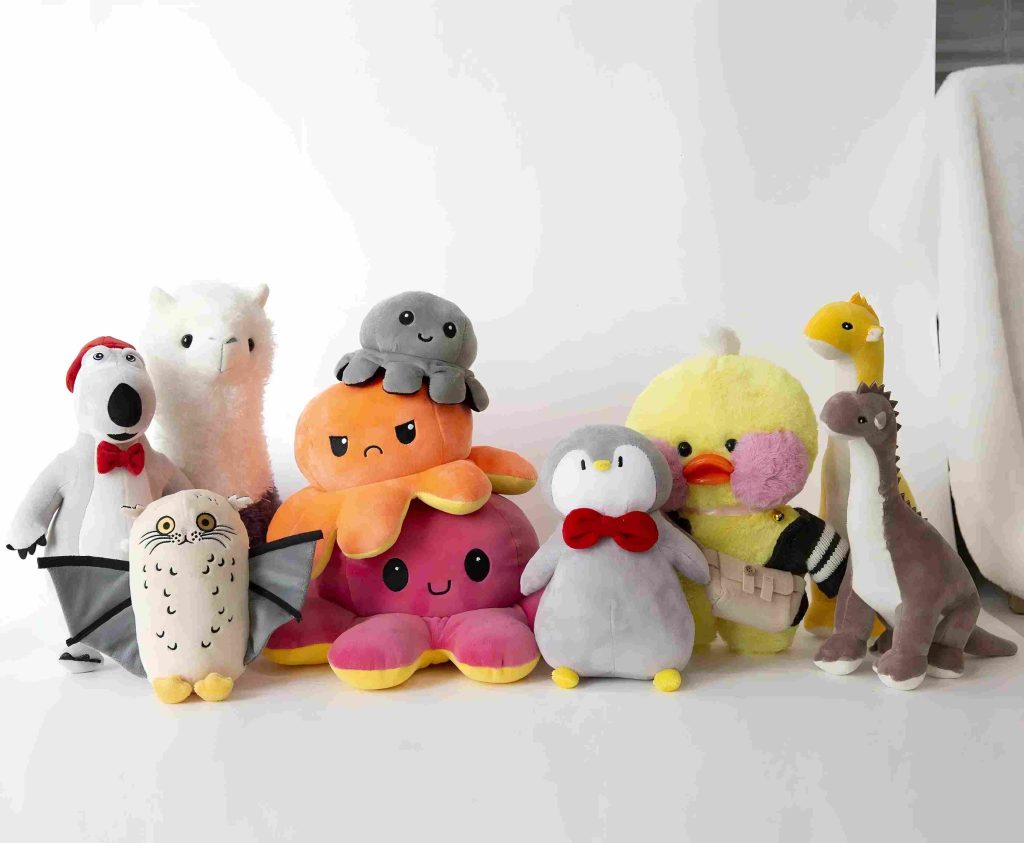
Why Safety Matters for Infant Stuffed Animals
Infants are curious creatures and usually explore their environment through their mouths or the sense of touch. This makes them especially vulnerable to choking, skin irritation, and exposure to harmful chemicals. Damaged, toxic fabric, or toxic stitch plush toys are some of the injuries that result in potential safety risks.
Business-wise, using non-compliant products would entail rejection at customs and recall of products, which would very much tarnish the company’s reputation. By choosing high-quality, appropriately designed, and certified stuffed toys for infants, brands can help reach out to regulatory bodies and build trust with their long-term customers.
Key Safety Features for Infant Stuffed Toys
Making safe stuffed animals for infants means following some basic safety rules. Here’s what to look for.
Gentle and Non-Irritating Fabrics and Fillings
Infant skin is sensitive. So you want to use soft materials that won’t cause irritation — both for the fabric and the filling.
Also, keep an eye on chemicals. Things like formaldehyde and heavy metals need to stay within safe limits.
Hygiene matters too. Pick plush toys materials that can be washed easily. That helps keep the toy clean and lasts longer.
And don’t forget about fading or shedding. Choose fabrics that don’t lose color or fibers. If loose fibers get loose, a baby could breathe them in. That’s a risk you don’t want.
Reducing Risks from Small Parts
Small parts like buttons, plastic eyes, beads, and ribbons can come off when a kid plays with the toy. That’s a real risk.
For infant safe stuffed animals, the better way is to use embroidery for the face and other details. That means fewer small loose parts, and the toy is safer overall. If you do need to attach something — say, a decorative part — make sure it’s on there tight. It also has to pass pull tests based on the rules in your target market.
Strong, Stable Stitching
Poor stitching leads to the breaking open of the toys and exposes the filling on the inside. Proper reinforced stitching improves the durability of plush toys and will minimize breakage during everyday usage and washing. Attention should be given to potential high-stress areas, such as seams, limbs, and necks, that are more likely to be torn because of regular handling.
Meeting the target market safety requirements
Different countries have different safety rules for infant products. Following those rules not only keeps kids safe but also helps you get your product into the market. For example, the U.S. requires ASTM and CPSIA compliance. The EU requires EN 71. Knowing these regional differences can save you from costly delays.
Global Safety Certifications for Infant Plush
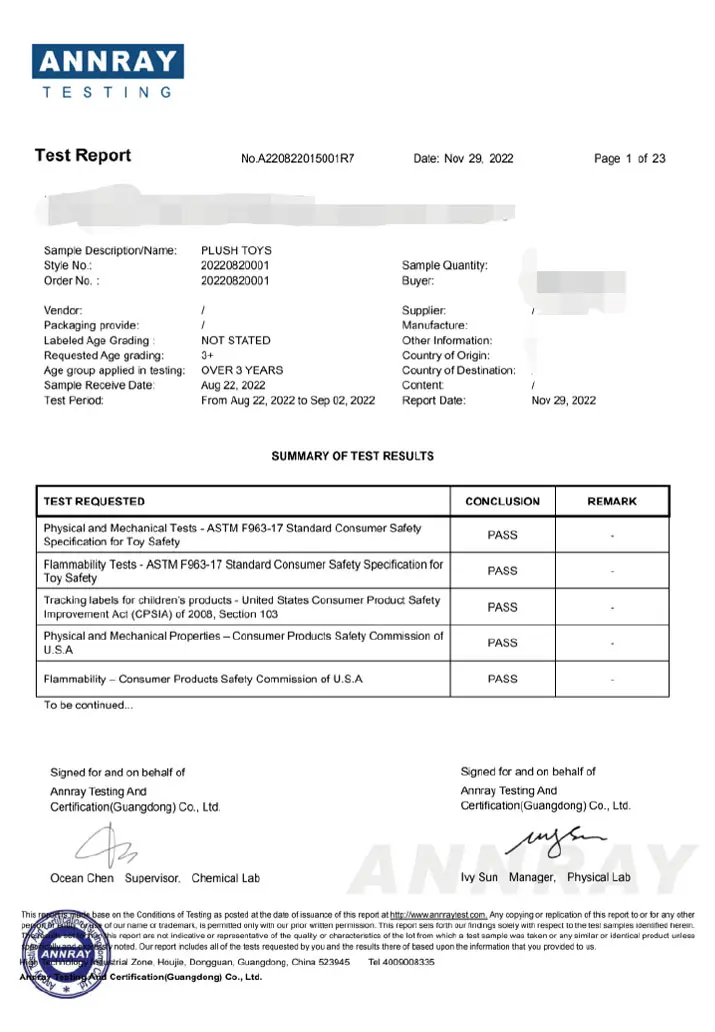
When you’re sourcing safe stuffed animals for infants, certifications are your best proof. They show that a manufacturer has third party reports and official documents to back up their claims.
ASTM F963
This is the primary safety standard for children’s toys in the United States. It covers mechanical and physical safety, flammability, and chemical restrictions specifically for products intended for infants and children under 3. Compliance is required for all infant plush sold in the U.S. market.
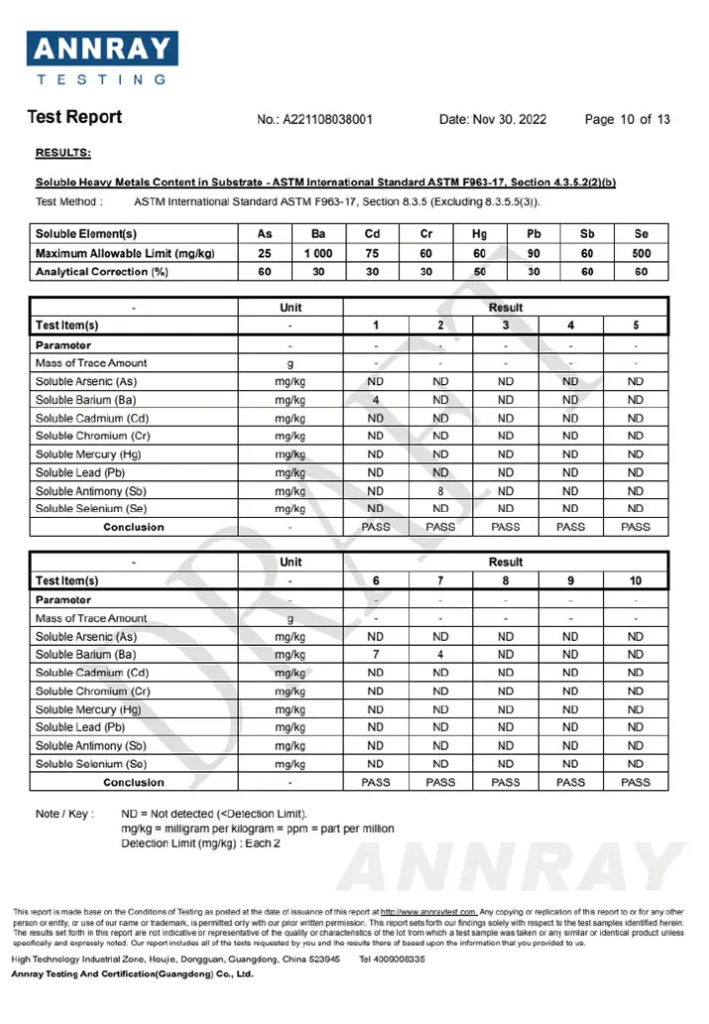
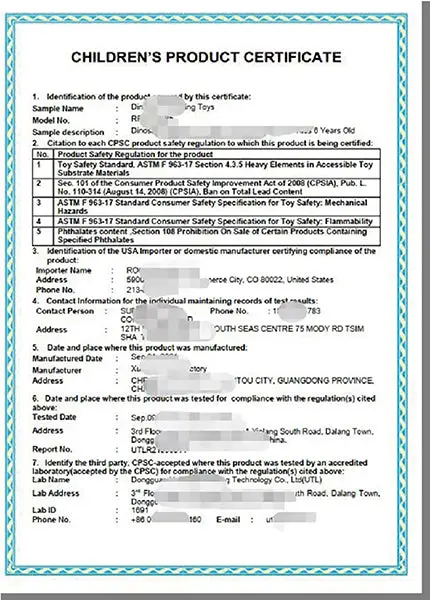
CPSIA & CPC
The CPSIA is a U.S. law that limits lead, phthalates, and other hazardous substances in children’s products. To sell in the U.S., you need a Children’s Product Certificate (CPC). This certificate proves your product meets all CPSIA requirements. Without a CPC, customs can hold your shipment, and U.S. retailers won’t accept your products.
EN 71
EN 71 is the toy safety standard for the European market. It covers chemical composition, small parts that could be a choking hazard, flammability, and labeling requirements. If you’re selling stuffed animals or any toy meant for infants in the EU, your product must meet EN 71. There’s no exception. For B2B buyers and retailers in Europe, EN 71 compliance is often a basic requirement before they’ll even consider your product.
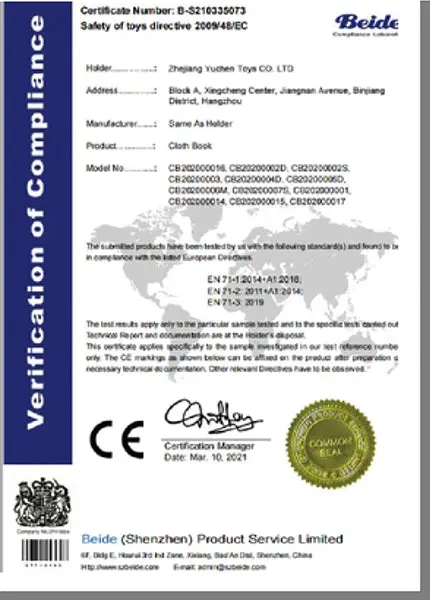
SGS Testing
SGS is an independent third-party testing company. They’re not affiliated with you or your factory. You send them your product, and they test for things like harmful chemicals, physical safety, and overall material quality. The test report SGS provides is an unbiased confirmation that your toys are safe for children. For B2B customers, having an SGS report builds trust and makes it easier to get your products listed on retail shelves or pass customs reviews.
These certifications provide a guarantee that requirements are met in the healthy and safe use of stuffed toys for infants in the essential international markets.
How to Choose a Manufacturer for Safe Infant Stuffed Animals
For buyers, the manufacturer’s expertise and compliance record are more important than price alone. When choosing custom plush manufacturer and evaluating suppliers, businesses should confirm:
Look for available safety certifications and test reports.
Focus on manufacturers that can give you valid safety reports that match your target market — and make sure the certificates are up to date for the specific product type.
Check experience in infant product manufacturing
Infant plush requires special design and workmanship. Manufacturers with relevant experience can better control details and understand international compliance. Ask for case studies or sample products of past infant plush orders to assess their expertise.
Confirm fabric and filling quality and sourcing
Request fabric samples and basic material specifications to assess softness and workmanship suitability for infant products.
Understand quality inspection processes
Find out if the factory runs production inspections and finished goods checks. That means regular testing of things like part stability, appearance, and stitching. Also, ask about their defect rates and how they deal with products that don’t pass. This helps you know whether they can keep quality consistent.
Good manufacturers don’t just take orders. They’ll actually give you tips during design — like making the structure simpler or changing some decorations to meet safety rules. That’s helpful, especially for infant toys.
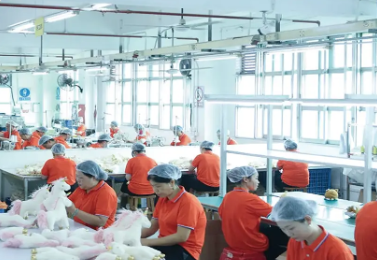
Confirm MOQ, lead times, and after-sales support
You’ll want to ask about MOQ, lead times, and what happens after you buy. Look for someone who lets you order flexible quantities and has steady production. They should also handle export paperwork. That makes working together easier long-term. And don’t skip the after-sales policy — get it clear upfront. What if there are defective products or compliance issues? If you don’t ask, you might end up in a dispute later.
Go with a custom plush manufacturer that knows infant products. Then you get safe stuffed animals that actually look good and meet all the legal requirements. No need to pick between design and compliance.
Implementer: Custom Plush Solutions for Infants
Implementer specializes in B2B custom plush production, with a strong focus on developing and manufacturing safe stuffed animals for infants that meet strict international safety standards.
Its plush products can support testing for EN 71, ASTM, CPSIA, CPC, and SGS to meet market entry requirements for different regions. Products use gentle, skin-friendly fabrics and fillings, and designs generally use embroidery to reduce the use of small parts, making them more suitable for infant use.
Our B2B services feature full custom design support, flexible low MOQs, on-time delivery, and shipping to nearly any destination worldwide via reliable logistics partners. Whether for baby products, promotional items, private-label consumer goods, or corporate gifts, we provide a wide range of compliant, high-quality, infant-safe stuffed animals that align with your brand identity.
Final Tips for Businesses Ordering Custom Infant Plush
| Clarify target market safety standards first | Ensure compliance with local regulations and avoid customs/listing issues | Confirm the required certifications (e.g., ASTM, EN 71) based on your target market |
| Keep the design simple, avoid excessive decorations | Reduce the risk of small parts falling off and improve safety | Use embroidery instead of detachable small parts for facial features |
| Request pre-production samples from the manufacturer | Verify the material softness and workmanship to meet infant product requirements | Check if the fabric and stitching meet the safety standards |
| Confirm the validity of safety certificates | Ensure the certificates match the product type and are within the valid period | Avoid invalid certificates affecting market access |
| Maintain communication with the manufacturer | Timely adjust the design or material according to the test results | Ensure the product meets the required safety standards |
| Keep records of all safety test reports and material instructions | Facilitate subsequent compliance review and after-sales service | Store documents properly for future reference |
| Choose manufacturers with relevant experience in infant plush production | Better grasp the safety details and meet the export compliance requirements | Prioritize manufacturers with mature quality control processes |
| Pay attention to the labeling and packaging requirements | Ensure the product meets the import/export document requirements | Avoid delays in customs clearance |
Summary
“Are stuffed animals safe for infants?” is a question that can be answered with “yes,” provided that credible materials and a good and health-compliant manufacturer are the criteria. Safe stuffed animals for infants are more than a product; they represent a commitment to safety and responsibility that builds trust with parents and global consumers.