
Sock Length: 10 Types Explained with Chart
Think about sock length for a second. It is not just a number. It decides where the cuff hits your leg. That one measurement changes how a shoe feels. It affects whether your ankle stays covered. And it can make an outfit look polished or careless.
Same for custom sock design. Pick the wrong length, and the best material or logo won’t save you. Too short? You get friction at the shoe collar. Too long? It bunches up or looks out of place.
So here is the breakdown. Ten common sock lengths. Their typical heights. Which shoes they pair with. How to measure them correctly. Plus a few practical rules for ordering custom socks—whether for a brand, a team, or an event.
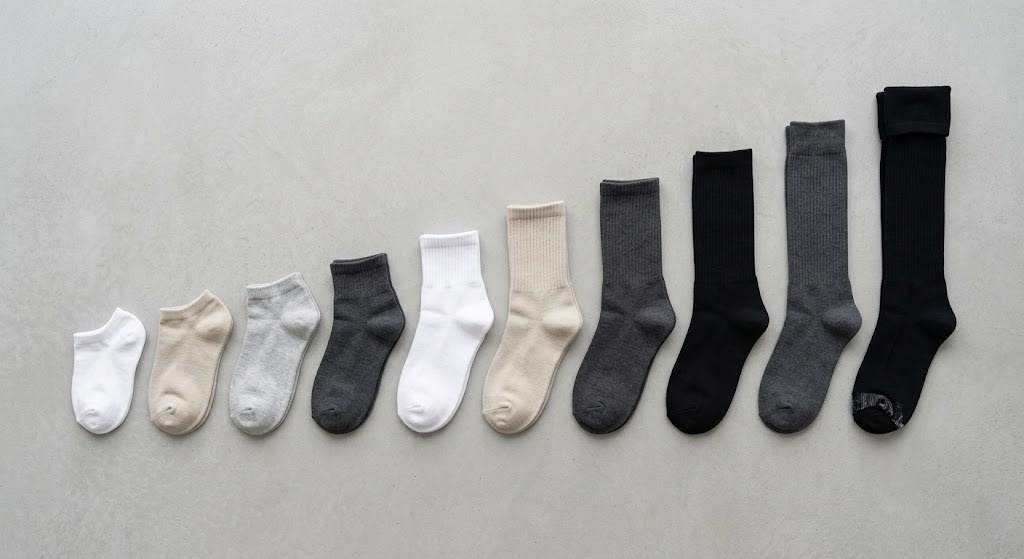
What Are the 10 Main Sock Lengths?
The table below pulls together the ten most common styles. Each one shows a typical height range, where it sits on your leg, and the shoe types it works best with.
| Sock Type | Typical Height Range | Coverage | Best Use |
| No-Show | Below ankle | Below shoe collar | Loafers, boat shoes, low sneakers |
| Ped / Low-Cut | 1–2 in (2.5–5 cm) | Around shoe collar | Works with casual sneakers or low-profile gym shoes |
| Ankle | 2–4 in (5–10 cm) | Ankle area | Good for running, gym sessions, or everyday training |
| Quarter | 4–6 in (10–15 cm) | Above ankle bone | Pairs well with high-tops and mid-cut hiking boots |
| Mini/Micro Crew | 5–7 in (12.5–18 cm) | Lower ankle/calf | A solid choice for casual streetwear and light outdoor activities |
| Crew | 6–10 in (15–25 cm) | Lower to mid-calf | Everyday wear, work boots, or custom merchandise |
| Mid-Calf | 8–12 in (20–30 cm) | Mid-calf muscle | Built for outdoor hiking, heavy workwear, or winter warmth |
| Over-the-Calf | 14–18 in (35–45 cm) | Upper calf below knee | Dress shoes, formal suits, extended calf coverage |
| Knee-High | Near knee | Lower leg to knee | Team sports, uniforms, athletic wear |
| Over-the-Knee | Above knee | Lower thigh | Fashion, costumes, specialty merch |
A quick word about those numbers. They are not universal. Different manufacturers set their own heights. One brand’s Crew might hit mid-calf. Another’s might stop an inch lower. So always check the heel-to-cuff measurement on the package. That is the real spec.
And do not mix up sock length with sock size. Size is about foot length or shoe size. Length is about vertical coverage. Two separate things.
How Do You Choose the Right Sock Length?
Three factors drive the choice. Your shoes. Your outfit. What you are actually doing while wearing them.
By Shoes
Loafers and low-top sneakers? No-Show or Low-Cut. You get that bare-ankle look, plus heel protection against rubbing.
Running and training shoes respond better to Ankle or Quarter socks. They cover the exact zone where shoe collars tend to irritate.
High-top sneakers and hiking boots. Quarter or Crew. The extra fabric stops stiff leather or synthetic edges from digging into your skin.
Boots in general? Crew and Mid-Calf are the usual picks. They keep the boot shaft from making direct contact with bare skin.
For dress shoes, Mid-Calf or Over-the-Calf. Smooth coverage. Stays put. Looks tailored under formal trousers.
Soccer and similar field sports require Knee-High. That length holds shin guards securely and protects the entire lower leg.
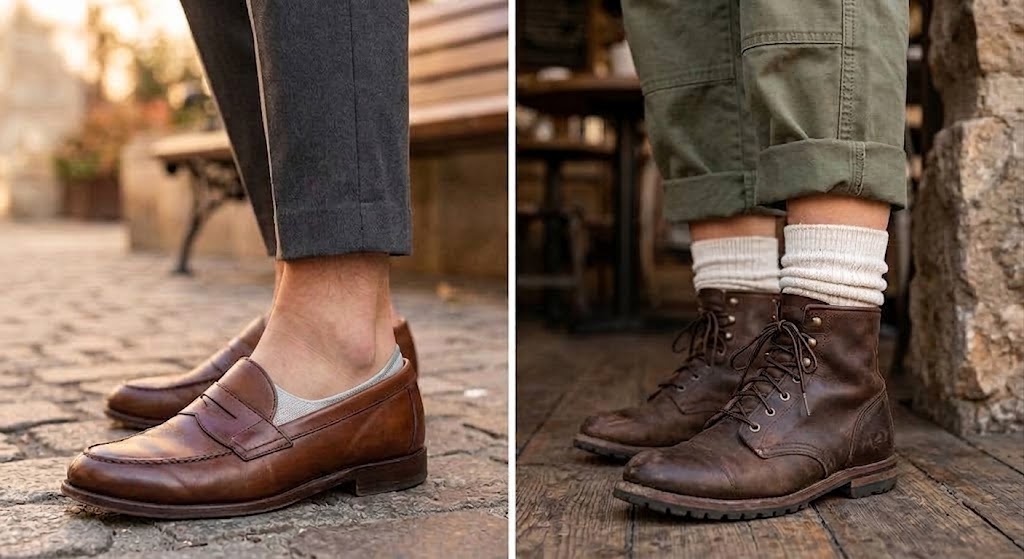
By Outfit and Occasion
Casual summer outfits or everyday street wear. No-Show, Low-Cut, or Ankle. They keep you cooler and create a cleaner visual line.
Gym sessions and running? Ankle and Quarter. Good moisture management. Good heel protection.
Office settings and business casual. Crew and Mid-Calf. They project a neat, professional image without drawing attention.
Formal occasions like suits, weddings, or banquets. Mid-Calf and Over-the-Calf. They guarantee no bare skin shows when you sit or cross your legs.
Outdoor hiking and winter activities. Crew, Mid-Calf, or Knee-High. More warmth. Extra barrier against dirt, debris, and cold air.
Team sports uniforms almost always go with Knee-High. That matches official equipment standards and looks consistent across players.
One practical check for suit wearers. Sit down. Cross your leg. If skin shows between the trouser hem and the sock top, go longer. Over-the-Calf usually fixes that.
How Do You Measure Sock Length?
Measuring sock length is straightforward. Just three steps.
Step 1: Measure from the Heel
Take a soft tape measure. Place it at the lowest point of your heel, where it touches the ground. That is your zero point.
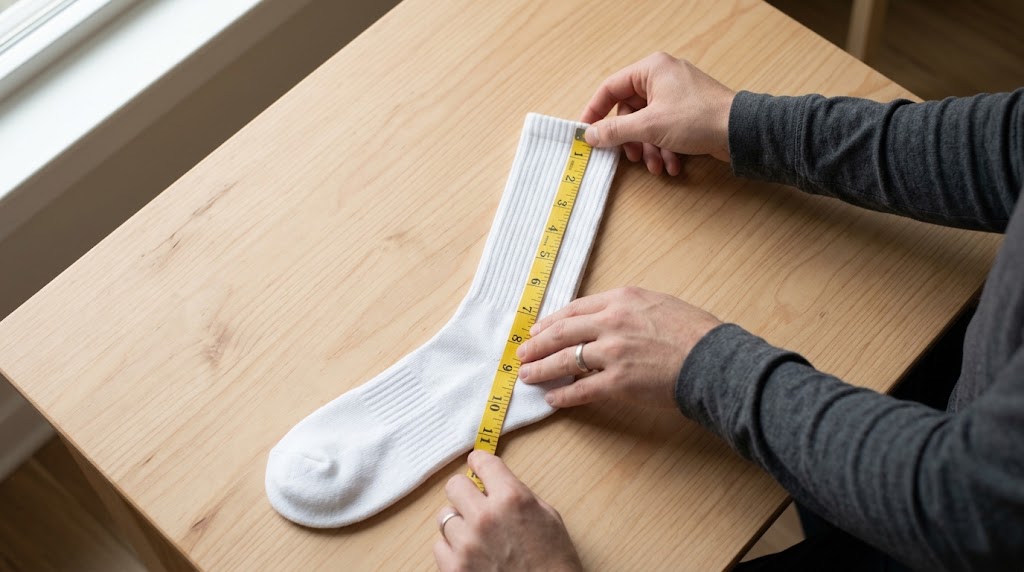
Step 2: Measure to the Desired Cuff
Run the tape up along the side of your leg. Stop at the height where you want the sock top to sit. That gives you your target length.
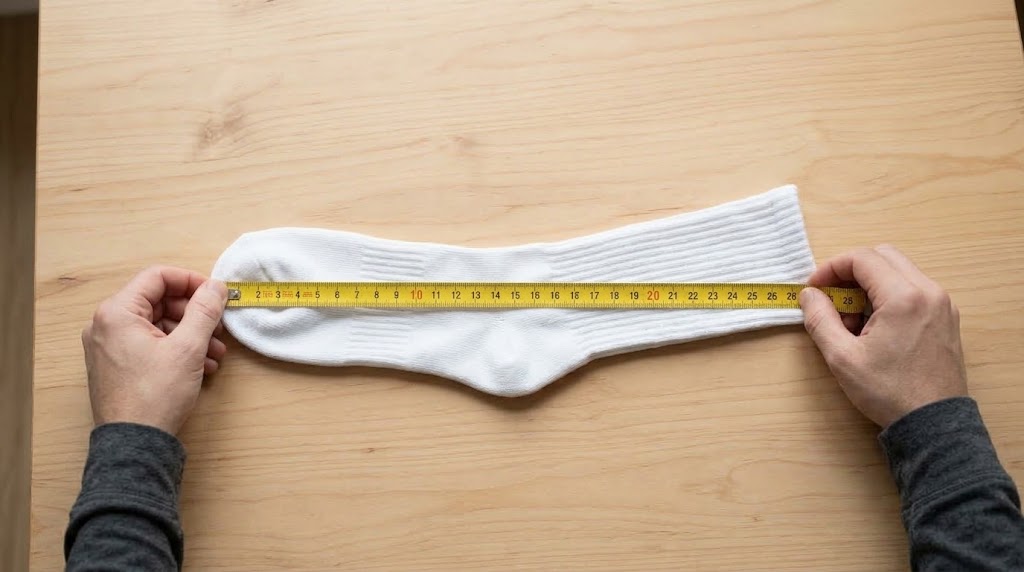
Step 3: Compare the Brand’s Size Chart
Now take that number. Check it against the brand’s specific size guide. Do not rely on generic names like “crew” or “ankle.” Those labels vary a lot from one maker to another.
Also keep in mind: your own leg shape and height matter. The same sock length sits differently on a shorter person versus a taller one. So use the measurement as a reference, but adjust for your own proportions.
How Do You Choose Sock Length for Custom Socks?
Thinking about custom socks? Crew length often works as a starting point. It gives you enough room for a design. It wears well day to day. And it fits a range of shoes. That said, we are not limited to Crew. We can make any length you need—from No-Show right up to Over-the-Knee. It just depends on your project.
Here is a practical breakdown by style.
No-Show – works for subtle branding, hidden logos, or lifestyle merch where the sock should be almost invisible.
Quarter – fits sports clubs, casual athletic events, or promotional giveaways that need a bit more coverage.
Crew – the all-rounder. Plenty of room for logos and patterns. People actually wear these daily.
Knee-High – ideal for school uniforms, sports team gear, and high-visibility campaigns.
Over-the-Knee – suited for fashion-forward women’s lines, anime or game merchandise, and niche creative brands.
Once you settle on the length, you also need to consider four production factors.
Design – longer socks give you more canvas. But complex patterns can stretch and distort when worn. So test your artwork on the actual length before finalizing.
Material – you can choose combed cotton, bamboo, wool, nylon, or polyester. Each affects breathability, moisture-wicking, and overall comfort. Pick based on your use case.
Production – based on your design complexity, decide between jacquard and printed methods. Embroidery can add a premium touch. Each technique gives a different visual effect and feel.
Packaging – do not overlook this. Sock length and thickness affect how they fold, what kind of cards or wraps you use, and even shipping costs.
The right sock length depends on your shoes, outfit, activity, and coverage needs. For custom projects, Crew is a safe, versatile option. But shorter or longer styles become better choices when branding, performance, uniform rules, or fashion goals demand something else.
About Implementer Manufacturing Services
Implementer provides full-service custom sock manufacturing. We handle material selection, production techniques, and packaging—all with flexible MOQs and made-to-order development across every standard sock length. Contact Us for a Quote to discuss materials, production methods, and custom packaging for your next project.