
What Are Dress Socks Made Of? 5 Typical Materials
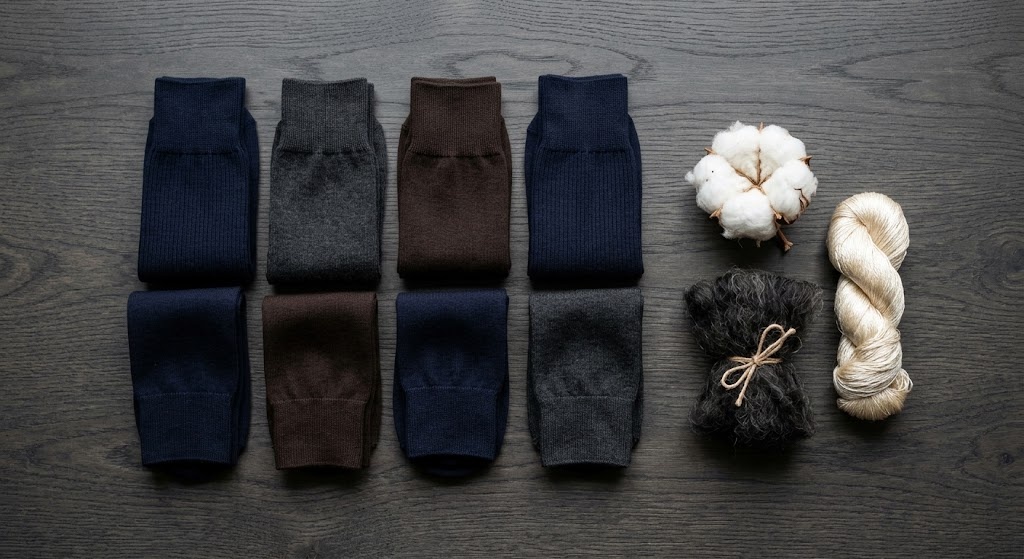
If you are wondering what dress socks are made of, they are usually made of cotton, merino wool, nylon, polyester, and bamboo-based fibers, typically combined together to provide the perfect balance of softness, breathability, durability, and stretch. The selection of material for dress socks impacts not only the feel and breathability of the fabric but also directly influences the fit of the foot, abrasion resistance, and the overall wearing experience in dress shoes.
Dress socks aren’t necessarily comprised of one fiber. Look at the composition label on a good pair of dress socks and you will generally see a blend of more than one material, because different fibers do distinct jobs in the sock.
What Are Dress Socks Made Of?
To really get the most out of dress sock materials, it’s important to grasp the fiber categorization logic that goes into the label. Dress sock fabrics generally fall into the following three categories:
intrinsic fibers: such as cotton and merino wool, mainly for their natural skin-friendliness and natural moisture absorption.
Synthetics and regenerated cellulose fibers: nylon, polyester and viscose They differ in their sources of raw materials and their modes of manufacturing. They may have different uses in sock items.
Blended fabrics are made by weaving together fibers with different qualities, to give a fabric with a combination of comfort, strength and stretchiness.
You have to understand composition ratios along with yarn fineness, evenness, knit structure and fabric density. You can’t simply judge the quality of a whole pair of socks based on the name or percentage of one fiber.
5 Common Materials Used in Dress Socks
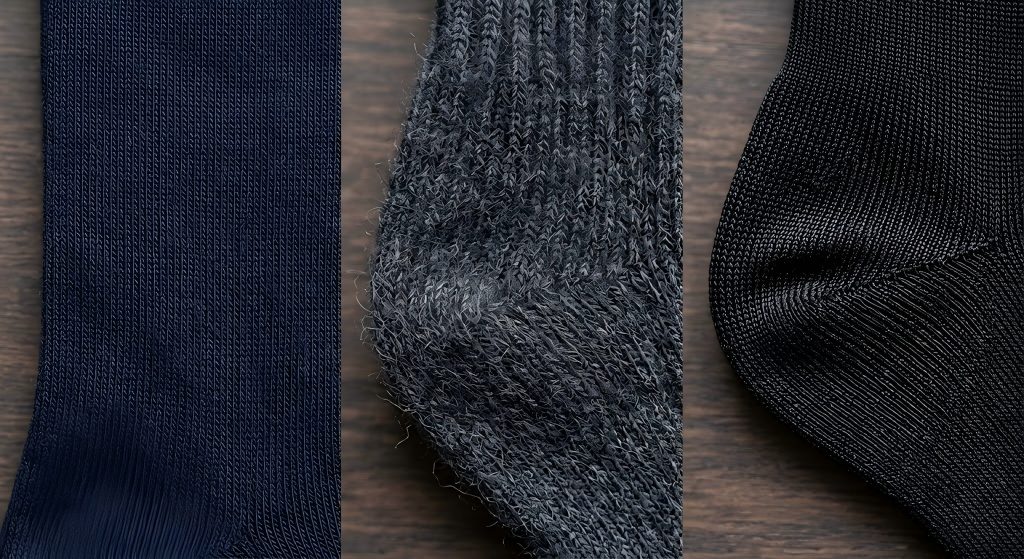
Cotton
Advantages: soft and natural feeling, good skin-friendliness and excellent basic moisture absorption. Great for every day work wear.
Limitations: Wet cotton fibers do not dry quickly after collection. For those who sweat a lot, the amount of moisture retained inside the shoe can affect the feeling of dryness.
Best used for: Everyday business office wear, indoor static work and moderate climes.
Cotton is sometimes blended with synthetic fibers like as nylon, to increase durability or structural stability; inclusion of elastane increases flexibility and fit. The real impact will depend on the formula and how it’s crocheted. If you’re truly worried about foot moisture, learn more about sock material for sweaty feet.
Wool and Merino Wool
The main benefits are that merino wool fibers are usually rather fine and may absorb a significant amount of water vapor which helps to cushion changes in humidity during wear. It’s also good at regulating temperature, making it ideal for sock patterns in many climates.
Limitations: Raw material cost might be considerable, the softness and abrasion resistance of different wool yarns are vary. Selection of care techniques should be based on product label.
Best for: Consumers seeking temperature regulation and long term comfort whether wearing shoes or natural fiber mixes.
(External references:Woolmark — Wool Fibre Facts & Benefits)
Nylon
Key benefits: Tensile strength and abrasion resistance.
Limitations: Generally employed as part of blended yarns or for targeted reinforcing structures in dress socks.
Best for: Primarily used as a blend to reinforce high-wear regions such as the heel and toe.
Importance of mixing: Helps to improve the overall structural strength and service life of sock when used as supporting fiber together with natural fibers.
Polyester
Polyester Key benefits: Strong Abrasion resistant Fast drying Dimensionally stable Rich in color expression
Limitations: Polyester yarns varies widely in feel and breathability; some structures can create static electricity.
Best for: High intensity or wanting rich colors and patterns in your sock designs.
Importance of mixing: The mixed textiles enhances the durability and the form retention as it has structural strength and a quick drying nature.
Bamboo-Based Fibers
Main advantages: The most common bamboo-based sock materials on the market are mostly regenerated cellulose fibers made from bamboo (e.g. viscose/rayon). These textiles are usually silky smooth.
Limitations: The basic material is bamboo, which does not guarantee that the completed product has natural antibacterial properties or more environmental benefits. The wet strength and abrasion performance depend on the specific yarn and knitting process.
Best for: Lightweight dress socks that want a smooth feel and a light wearing experience.
Mix important: When purchasing, look at the composition of fiber, the thickness and care details of the fabric printed on the goods. If a mixed fabric is utilized, the qualities of the other fibers should be considered in judging the total performance.
Dress Sock Materials Compared: Cotton, Wool, Synthetics, and Bamboo-Based Fibers
Here is an impartial comparison reference to help you analyze the qualities of different dress sock textiles objectively:
| Material Type | Feel | Moisture Management | Durability Considerations | What to Watch For |
| Cotton mixes | Soft, natural | Absorbs moisture, but not always dries quickly | Design of yarn and reinforcing | Comfort everyday, thickness, care instruction |
| Blends of Merino wool | Fine, depending upon the yarn | Helps control moisture when worn | Depends on blend structure and wool quality | Fineness and thickness of fiber, maintenance requirements |
| Blends with man-made fiber | Wide range | Some constructions allow for rapid drying | Depends on fiber type, knit structure | Rugged, durable, abrasion resistant design |
| Regenerated cellulose composites based on bamboo | Usually soft and silky | Depends on fiber and fabric construction | Must be judged with the blend and finished structure | Actual fiber name, fabric weight, care instructions |
Why Are Dress Socks Often Made from Blends?
Blending is a common practice in modern dress socks to achieve a balanced performance blend, and it is not just for cost savings. It is quite difficult for a single fiber to simultaneously satisfy all the requirements, such as softness, breathability, fit, resistance to abrasion and non-slip performance.
Performance complementarity: Natural fibers such as cotton and wool provide skin-friendly comfort and basic moisture absorption, while synthetic fibers such as nylon are used to strengthen the sock’s abrasion resistance and tensile strength.
Fit and stretch recovery: The right quantity of elastic fiber (such as elastane) in the sock helps fit snugly to the foot and leg line and helps prevent the sock from loosening and slipping down during walking.
increase the durability of important parts, many premium dress socks use stronger yarns in the heel and toe to reinforce these areas.
The construction dictates the end experience. Two pairs of dress socks with the same composition ratio could function differently in actual wear. The yarn fineness and evenness, knit structure, fabric density, sock body thickness and the reinforcement procedures all influence the final feel, fit and durability.
For enterprises and brands when developing custom dress socks, how to scientifically combine yarns according to specific application scenarios is the most crucial step in the research and development process.
How to Choose the Right Dress Sock Material
When picking the materials of the dress socks, it is important to consider the use scenario and specific wearing experience when matching the material:
Office & Business Formal Daily
Notice also the softness and fit of the fabric, how easily the sock bunches and wrinkles within the shoe, and if the cuff elasticity is moderate and not prone to slipping.
High temperatures or high breathability requirements
Don’t just look at the fiber name. Also pay attention to the thickness of the sock body, the knitting structure and the breathability of the shoes.
Business Clothing for Cold Weather
You can use wool mixes or thicker materials but be careful with the thickness of the sock itself as it may make dress shoes uncomfortably tight and compress the foot.
Standing, Walking or Frequent Travel Prolonged
Check the reinforcement design at heel and toe, the fit of the cuff and whether the shoe-sock combination will likely create discomfort in areas of friction.
Material is only one aspect of the wearing experience. The length of a sock is also determined by how much of your calf you want to expose when you sit down and by formal dress etiquette. It is advisable to choose according to a particular sock length thoroughly.
What to Look for on a Dress Sock Label
Let’s start with the composition label, the first step to understanding dress socks. But it can’t tell you the quality of the goods. Besides buying, you must also make a detailed judgment according to the sort of yarn, fabric structure and care requirement.
Don’t Only Look at Cotton Percentage
More cotton = more comfortable sock? Not even a tiny bit. More cotton, more tough? Not so much. The actual wear will depend on the quality of the cotton yarn, the thickness of the sock, the density of the knitting and the manner the heel is reinforced. If you are wearing them largely for daily business office wear then you should concentrate on softness, fit, and thickness inside the shoe rather than merely going for the maximum cotton content.
Know How Elastane and Nylon Work
Nylon and elastane don’t do the same function. Nylon is frequently used to increase the strength and wear resistance of the yarn. Elastane is added to boost the elasticity and stretch recovery. It is contingent upon the formula and the structure. The content level itself isn’t a straightforward measure of product quality.
Check Care Instructions
You can have varied care needs for socks made from a combination of different fibers. Wool blend products should be washed at the right temperature, machine washed and dried according to the product label, and other fabrics should be cared for according to the product label. Proper washing methods assist limit the danger of shrinkage, distortion and loss of elasticity.
Fiber Content Isn’t Everything: Compare Construction
If two pairs of dress socks have the same fiber ratio, you can go further to examine the thickness of the sock body, the knit structure, the elasticity of the cuff, and if the heel and toe adopt a reinforcement design. Together with the materials themselves, these characteristics determine the wearing feel and the service life of the sock.
How to Pick Your Custom Dress Sock Materials
The material selection for organizations or brands that need to manufacture personalized dress socks should consider product application, design needs, procurement budget, and sample verification:
Define Application of Product
Employee Uniforms: Emphasis on abrasion resistance, shape retention after regular washing and ease of maintenance.
Business gifts and retail: Balance of visual texture, softness and brand positioning. For beautiful appearance, combed cotton, delicate wool blends or unusual knit textures might do well.
Define the priority of requirements
Think about affordability, comfort, durability and looks. For instance in the construction of complex color patterns, the use of high grade synthetic fiber yarns may be necessary to be able to provide accurate color presentation.
Verification sample
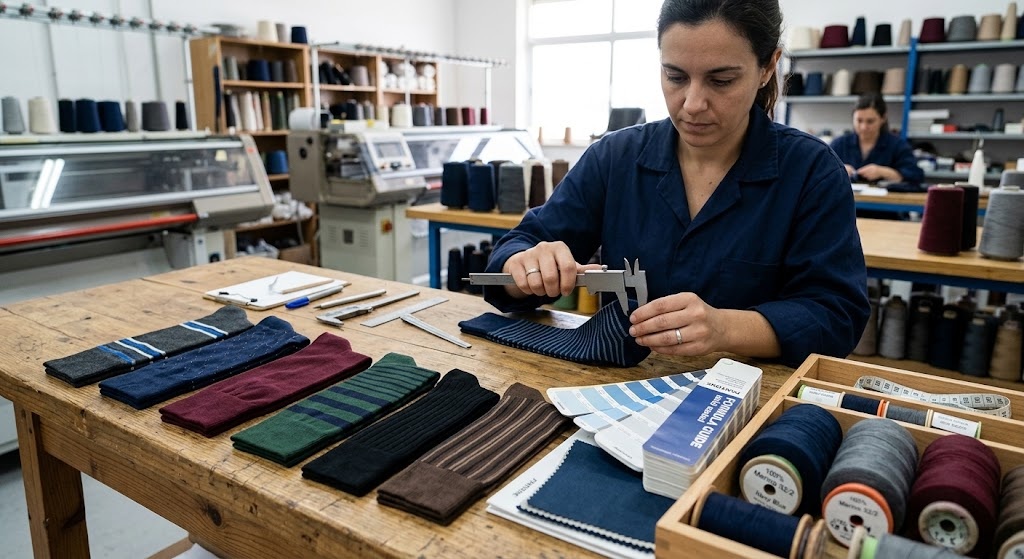
It is recommended to do actual wear and wash tests of samples, especially dimensional changes after washing, durability of cuff elasticity and abrasion performance of important sections, before mass manufacturing.
Explore the Implementer’s Custom Sock Services
For organizations who are in need of developing custom dress socks, material selection should be linked with product application, design specifications, procurement budget and sample testing. By discussing with a custom supplier on fiber ratios, fabric structure, colors and finished product requirements, customers may evaluate the viability of different solutions more clearly. Learn more about Implementer’s custom sock services to help further explore bespoke solutions appropriate to your product demands.