
How Complex Plush Designs are Manufactured: A Step-by-Step Process
Manufacturing complex plush designs requires multiple professional fields to work together because it demands both artistic skills and textile engineering expertise and manufacturing precision. Complex plush designs need to have advanced structural designs which use multiple types of materials, hidden features and specific visual elements. The products function as common items which people use for collecting purposes, for branded product, animation-related products, educational plush toys and custom promotional merchandise. The article explains the process of developing complex plush toys together with their required technologies and the key challenges custom plush toy manufacturers face when turning detailed designs into soft, durable, and safe products.
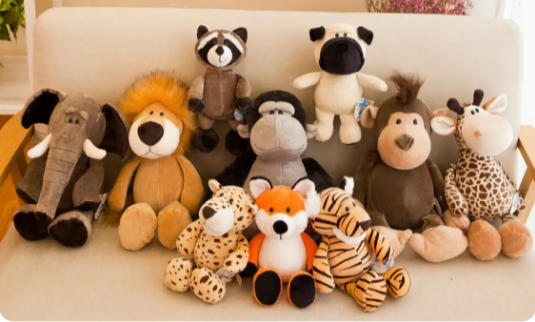
The Process of Manufacturing Complex Plush Design
The manufacturing process of complex plush toys requires careful coordination between design, engineering, material science, and quality control teams.
Step 1. Turning Creative Concepts into Production-Ready Designs
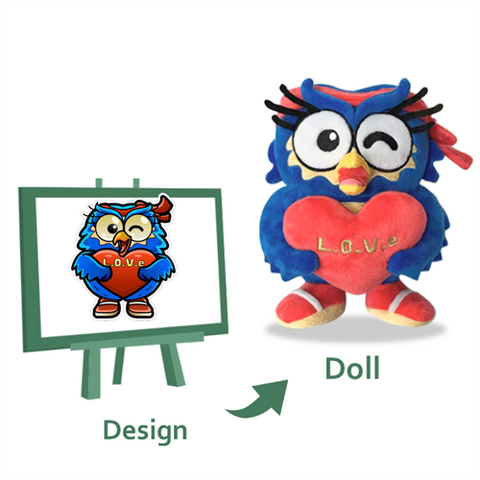
The overall process related to the series production of complex plush designs starts with a creative concept that is often elaborate and visually articulate. These design ideas are likely to be built around a character, an animation concept, or a 3D model, involving detailed clothing, layered textures, and unconventional body proportions. An extremely critical need exists at the entry point for production afore following any physical production. That is, the notion about how art can be transformed into a soft, ductile object and yet keep its own identity. Early in the design process, one thing leads fifth step declares that the designer and industrial partner need to collaborate for decisions made concerning what can be translated as initially conceived from the artist’s soul, and therefore what constrains need to be loosened for feasible design.
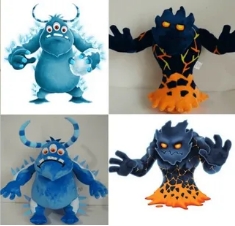
Step 2. Engineering the Design into Technical Patterns
On achieving an finally approved design. the first step is to technicize it into sewing technical drawings. This is an important stage since it governs how the fabric will actually appear in the physical form. The sewers and draftsmen break the design down into the individual fabric sections, marking the seams, curves, and assembly points precisely. Modern plush making will often depend on computer-aided design tools that can simulate the behavior of the materials in them when stitched and stuffed. In the design of more complicated plush toys, many revisions would usually be needed since even a small change in the line of seams might create an unbalanced expression or overall proportion. The aim is to achieve a feasible structure without compromising the appealing impression.
Step 3. Choosing Materials for Structure and Aesthetic Detail
Material selection plays a defining role in how the final customized plush toy will look and feel. Complex plush designs rarely rely on a single fabric type. Multiple materials are combined to achieve different visual and functional effects.
| Material Type | Typical Use in Plush Design | Key Properties | Why It Is Chosen | Common Challenges |
| Short-pile Plush Fabric (e.g., minky) | Main body surfaces, soft skin areas | Smooth texture, consistent finish, high softness | Provides a clean, uniform appearance and premium feel | Can show seams easily in tight curves |
| Long-pile Faux Fur | Hair, tails, animal features, accents | Fluffy, directional fibers, high visual volume | Adds realism and expressive texture variation | Difficult to trim and align during sewing |
| Velboa Fabric | Budget-friendly body sections, lining layers | Lightweight, low pile, easy to cut | Good balance of cost and softness for mass production | Less luxurious appearance than premium fabrics |
| Fleece or Microfiber Blends | Internal or secondary soft layers | Stretchable, warm, flexible | Helps maintain comfort and structural flexibility | Can deform under uneven stuffing |
| Structured Woven Fabrics | Clothing, armor, accessories | Strong weave, stable shape retention | Maintains defined shapes for outfits and props | Less flexible, harder to stitch on curves |
| Felt Material | Small details, decorative elements | Non-fraying edges, firm texture | Ideal for logos, patches, and small features | Can appear flat or less realistic |
| Foam Inserts (EVA or polyurethane foam) | Internal structure, shaping support | Lightweight, rigid or semi-rigid | Helps maintain complex 3D shapes and posture | May limit compressibility of plush |
| Polyester Fiberfill | General stuffing material | Soft, resilient, lightweight | Provides overall softness and volume control | Uneven distribution can distort shape |
| Wire or Plastic armatures | Joints, poseable limbs, structural support | Flexible (wire) or rigid (plastic) | Enables poseability and stability in complex poses | Requires careful safety encapsulation |
| Embroidery Thread | Facial features, fine detailing | Durable, colorfast, precise stitching | Ensures long-lasting expression and detail | Limited resolution compared to printing |
| Heat-transfer / Printed Fabrics | Patterns, clothing graphics, branding | High-detail visual reproduction | Allows complex visual designs without stitching layers | Can fade or crack over time if low quality |

Step 4. Fabric Cutting and Component Preparation
After deciding on materials and patterns, the production process transitions into cutting and preparation. Fabric pieces are cut with high precision using automated cutting systems to ensure consistency in production units. Every piece gets labeled and organized according to its assembly sequence to avoid mix-up during sewing. In some complicated designs that have too many similar parts, sorting becomes necessary to avoid regrets regarding wrong assembly. The stage guarantees that the assembly process functions smoothly and efficiently without loss of accuracy.
Step 5. Assembly and Structural Formulation
While being sewn and stitched together, the plush design gradually comes alive at the sewing and assembly stage. Various fabric pieces after being individually stitched form subcomponents, such as heads, limbs, and torsos, that will shortly come together as a complete piece. A few technical features of advanced stitching have come into play for plush designs-especially in the curvy areas or in places with plenty of details and maintaining smooth contours is no mean feat. As soon as it is completed, savaged stitching becomes secured to uphold this area of a strain. Sometimes, some intricately inserted plastic frames or wirework must be appended to help keep these creatures propped up or in an intended stance.
Step 6. Controlled Stuffing and Shape Definition
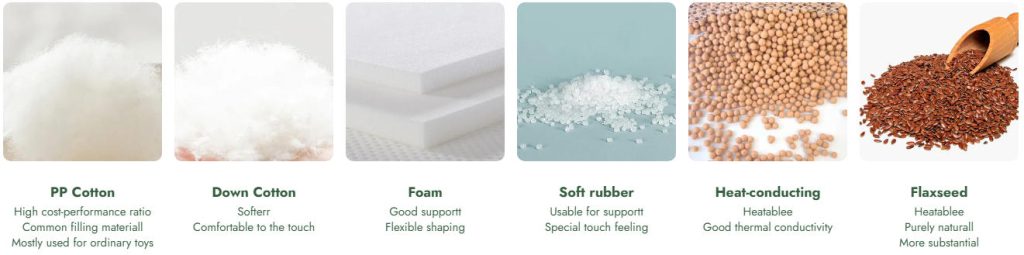
Filling of plush toys is a stringent process because it must create the final shape, lie in balance, and behold the expression of plush neatly. Filling isn’t about simply having the form created and filing it with stuff. It also has its specific density distribution over the different regions of the plush determined by care and thought. Softer regions clearly have looser stuffing to keep the needed touch and feel, whereas the more rigid portions have firmer stuffing to keep their shape. Inserts made of foam layers stabilize the stuffing stuffing in the more intricate shapes. Stuffing must ensure symmetry to avoid any distortion; without proper filling, the desired design appearance will not be achieved.
Step 7. Detailing, Embellishment, and Functional Integration
Once the structure of this plush is complete, the details and refinements take place. These usually include adding facial features through embroideries, printed fabric designs, and dressing him or decorating him with various details and accessories. Some plush toy designs encompass functions such as sound mechanisms, illuminations, or magnetic parts; therefore engineering these aspects require the consideration of their secure embedding and safety and durability. Any elaboration about each densely populates the character and realism embedded in the finished product.
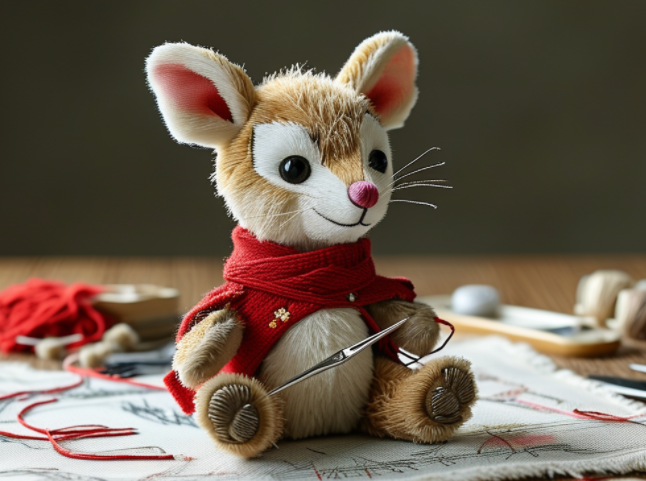
Step 8. Quality Assurance and Safety Verification
Before becoming available in the market, every plush toy undergoes meticulous quality and safety tests like seam strength, material endurance, wear resistance, safe attachment testing on small parts that can be detached. Further, alignment of the already-stuffed toy with the original design specifications is verified. Given more than one material having cosmetic concerns in a plush design, quality control is done at multiple stages rather than at the last stage for more product consistency and safety.
Step 9. Final Finishing and Packaging Presentation
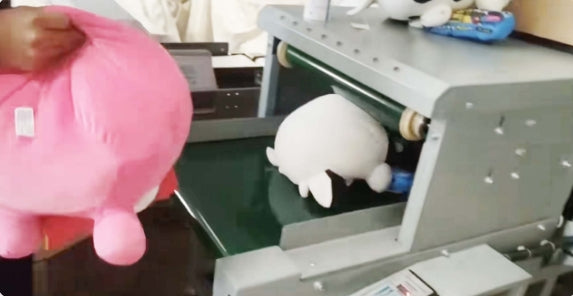
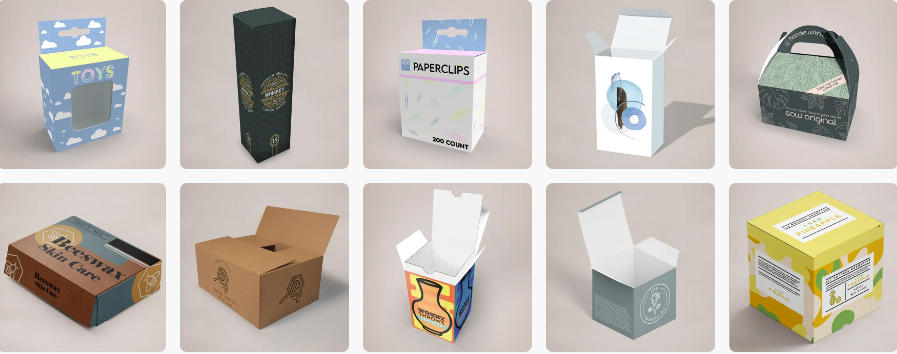
The premium intention of producing an individual unit rises when plush toys are finished with adequate protection for transportation. Non-messy cleaning and shaking-to-regain-shape tasks keep edge-fluffiness to an acceptable level, banish knots, and remove any gunk from the core. All internal tags are finally attached and verified. Garment tags, garment labels, and swing tags are applied, and the protective packaging is put on with tools in place to enhance the quality of the plush toy during transit. Additionally, special packaging for plush toys may be put together for priceless bears and select designs to add to the premium feel of the setting and improve the buyer’s overall experience. The result is a product that exemplifies the designer’s abilities and shows lovely quality from the start.
Key Challenges in Manufacturing Complex Plush Designs
| Key Challenge | Description | Impact on Production | Common Mitigation Approaches |
| Translating detailed designs into fabric form | Converting artwork into workable sewing patterns without losing identity | Risk of design distortion or oversimplification | CAD pattern engineering, iterative prototyping |
| Multi-material integration | Combining different fabrics (fur, velboa, minky, etc.) with different behaviors | Uneven seams, mismatched texture alignment | Material pre-testing, standardized cutting parameters |
| Structural stability | Maintaining shape in complex or non-traditional forms | Deformation after stuffing or use | Internal frames, foam inserts, reinforced stitching |
| Precision stitching in tight areas | Sewing small or curved sections accurately | Visible defects, weak seams | Skilled manual sewing, specialized industrial machines |
| Consistent stuffing distribution | Ensuring balanced density across complex shapes | Asymmetry, poor expression, instability | Zone-based stuffing control, pre-measured fiberfill |
| Integration of accessories and parts | Adding eyes, accessories, electronics, or detachable elements | Safety risks or detachment during use | Safety locking systems, compliance testing |
| Production scalability | Maintaining quality when scaling from sample to mass production | Variation between units | Standard operating procedures (SOPs), automation tools |
| Safety compliance | Meeting international plush toy safety regulations | Product rejection or recalls | Rigorous testing (pull tests, toxicity checks, durability tests) |
| Cost control vs. complexity | High design complexity increases labor and material costs | Reduced profitability | Design simplification without losing key features |
| Color and texture consistency | Matching colors and textures across multiple batches | Inconsistent product appearance | Batch dye control, supplier standardization |
Future Trends in Manufacturing Complex Plush Design
The future of manufacturing complex plush design is increasingly shaped by digital transformation, enabling smoother collaboration between designers and plush toy manufacturers across different regions. This shift also allows faster customization, making it possible to produce highly detailed custom plush designs in smaller batches without sacrificing efficiency.
1. Artificial Intelligence (AI) in Pattern Optimization and Design Engineering
Manufacturing complex plush designs is an area where AI could play a significant role to effectively improve production. AI could use algorithms to analyze the geometry of design, forecast critical stress points in the seam lines, and then define the optimal pattern segmentation to enhance durability and replication of aesthetics-a very insightful module. Manufacturers will be shifting their focus from just using people in their hands-on and empirical experiences to getting the focus on using analytics to inform better construction methods.
There is the substantial reduction in material waste that takes place through the optimization of the layout design for fabric cutting. More sophisticated systems, however, create design alternatives that embody that original aesthetic of the plush while increasing the manufacturability with a design that becomes genuinely scalable and cost-efficient.
2. Integration of Smart Features and Interactive Components
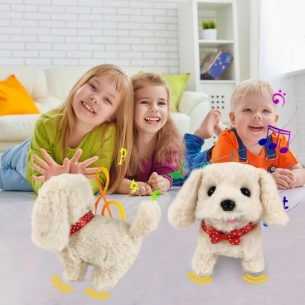
Yet another major trend observed in this domain is the recent invasion and emergence of smart technologies in plush products. Due to which, plush designs have evolved from being inanimate objects to becoming interactive plushies equipped with sensory systems, audio systems, lighting systems, and thus presenting them with interactive attributes. Henceforth toys are operated by touch, voice, movement, etc., thereby providing a livelier experience for end users.
3. Sustainable Materials and Eco-Conscious Manufacturing
Rather than mere post-production selling points, attendance to the sustainability is indeed becoming an inevitable scorecard item for plush manufacturers. Entrepreneurs gradually shift toward these eco-friendly approaches for plush toys that include various recycled fabrics, biodegradable yarns, and filler materials. Accordingly, durability and softness are not to be negotiated as they highly contribute to the value of the product; only the environmental loading has to be responsibly lessened.
Besides material principle, the circular manufacturing models are an advancement in the toy industry. Such systems presuppose durable plush products, which can, after their lifecycle, be disassembled for materials and components to be reused or recycled. These approaches to green design encourage mindful consumption with an extremely high degree of complexity demanded by contemporary plush design.
4. Automation and Robotics in Soft Material Manufacturing
Even as automation starts creeping into plush toy manufacturing, due to the soft and highly variable nature of textile products, it faces a number of unique challenges. In contrast to a fixed manufacturing system that has been rigid across disciplines, some industries look forward to the potential creation of software, specification standards, curriculum, workshops, and learning environments conducive to adaptive robotics interacting with flexible products without damaging them.
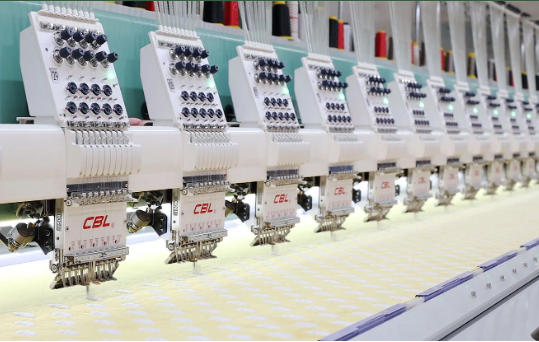
When factories evolve in the future, expect the emergent interplay of cut-throat robot technology, AI-aided stitching or sewing, and auto-visual-quality inspection systems, which count as mostly driving consistency and blunting production errors, particularly on complex designs with a multitude of small parts or mazes of assembly steps. However, handcraft will still have to be performed at its peak during fine detailing and for effecting final adjustments.
5. Modular Design Systems and On-Demand Customization
Modularity is evolving as a leading strategy to deal with complexities in plush design. In place of treating each plush stuffed animal as an entirely unique framework, manufacturers foresee building componentry capable of interchanging, with interchangeable limbs, facial bases, and accessory systematization. These modules could be combined in a number of ways to come up with highly customized designs that do not have to undergo entirely new production workflows.
This works well in on-demand manufacturing so that the materials can be customized in accordance with consumer specifications for any design. Simultaneously, it reduces the maintenance of any inventory stores and provides the manufacturers a chance to fabricate according to the prevailing character entertainment and design preferences.
6. Enhanced Sensory and Emotional Design Capabilities
Accordingly, future plush will tend toward more emotionally engaging, sensory-intense designs. Besides aesthetic appeal, texture, overall smoothness, and so on, the designers are contemplating materials and constructions that can feed back through touch, temperature, and so on. In some cases, these might be further enhanced with an almost subliminal scent diffusion or responsive textures that assist with comfort or interactivity.
One of the great potentials lies in applications within the area of therapy, education, or lifestyle. When projected in reality, these plush toys will function as support mechanisms for emotional tools or sensory tools. Thus, future manufa.cturing processes are becoming focused on durability, emotionally, in addition to physical.
Summary
Manufacturing complex plush designs remains an exquisite art combining creative expression with scientific precision. From initial concept introduction to final quality control, a careful and well-orchestrated task to shelter the brand being, while ensuring that the look of the custom plush toy is right, the stuffing have been expertly put together and the plush toys are also safe to use, etc. Considering the development of more and more technologically advanced pieces, the ability to produce increasingly detailed and expressive plush designs will continue to expand, opening new possibilities in both commercial and artistic applications.