
Customization Trends in Plush Toy Design and Manufacturing
The plush toy industry has undergone a major transformation because of two factors which are evolving customer demands and new manufacturing technologies that have been developed. The current market for plush toys now offers customers the ability to create custom designs which reflect their personal tastes, brand preferences and their emotional ties. The plush toy manufacturing industry uses customization as its main method to create products that meet different market needs while establishing distinct product identities.
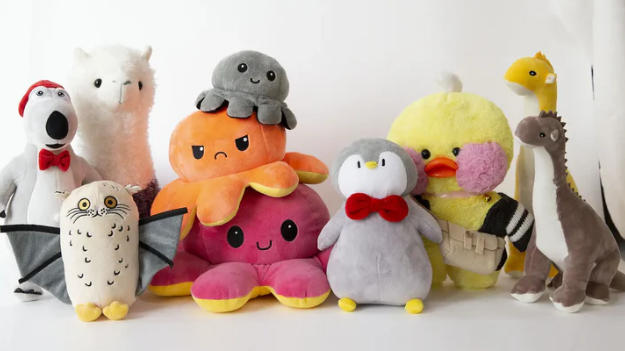
The Rise of Customization in Consumer Markets for Plush Toys
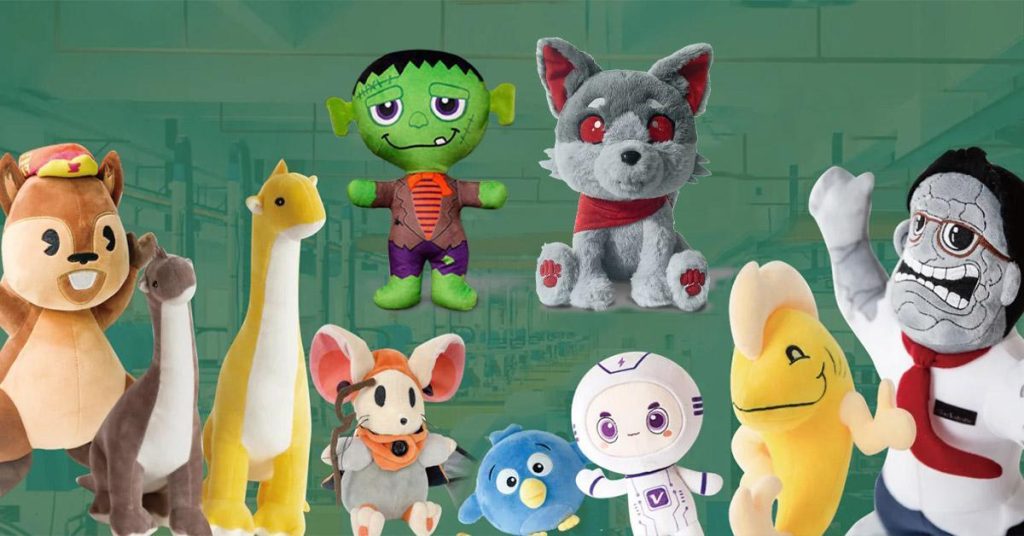
Contemporary consumers want products that show their unique identity and their personal emotional worth. The need for custom plush toys has increased because people use them as gifts and branding tools and for special commemorative purposes. People prefer personalized plush toys because they can add custom names and messages and likenesses to their products for birthdays and anniversaries and special events.
E-commerce platforms have created a trend that enables customers to make their own plush toys through interactive design tools. The ability to preview designs before production enhances customer satisfaction and reduces the gap between expectation and final product.
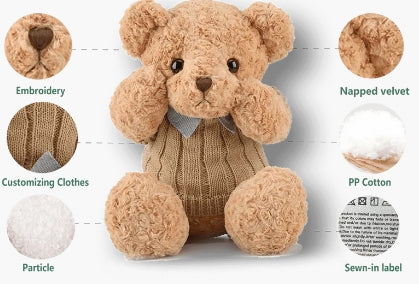
Key Customization Trends Shaping Plush Toy Design and Manufacturing
1. Personal Character Creation
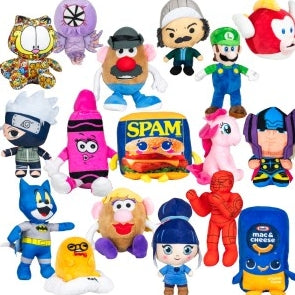
One of the most pop-ups is the trend to design whole personal plush characters from scratch. Everybody wants a toy that either looks like them or somebody who is precious to them, more often their pets. This has led to services that would conversion photos, sketches, or simply dreams into plushy items. Advances in digital design tools now make it possible for manufacturers to mimic faces, clothing styles, expressions, among other things, perfectly; when it involves personal elements, of course, emotional attachment is heightened so that plush creatures can serve as very valuable gifts and as keepsakes.
2. Digital Design Platforms
Interactive digital platforms are converting customers from passive purchasers to active co-creators. Many companies have come up with online customization tools for users to choose colors, shapes, accessories, and text in real time. Such platforms allow customers to see the final product before finalizing their orders. The coproduction model improves customer satisfaction and reduces design failures and product revisions.
3. Small-Batch and On-Demand Manufacturing
Customization demands flexibility and hence has paved the way for the survival of a small-batch and on-demand production model for plush toys. No longer manufacturers produce high quantities of standard parts; rather, they produce small volumes that fulfill specific orders. This leads to a scenario where companies have a better grip on inventory costs, welcome the decay of waste, and maintain agility to respond to fashion change quickly. At the same time, variety becomes but a thing of piercing love for them, and they are free to costly mistake—a downrush of horrific kinds entailed by mass production.
4. Advanced Embroidery and Printing Technologies
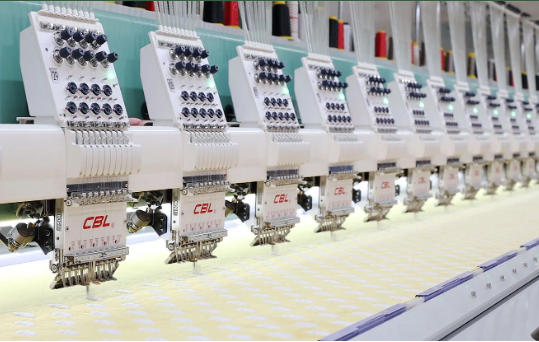
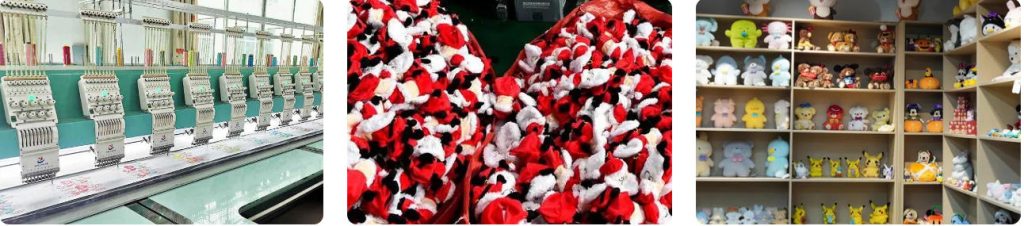
Modern embroidery and printing techniques have significantly expanded the scope of customization. High-precision embroidery machines can produce intricate logos, names, and patterns with consistent quality.
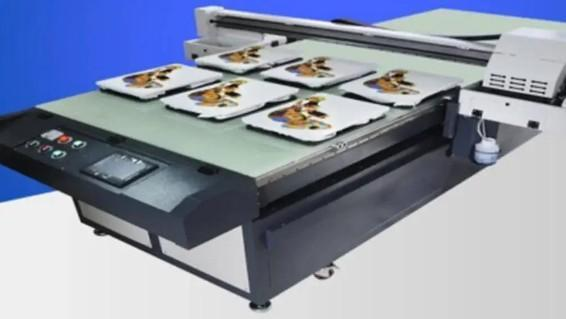
The digital print technology enabled designs with all-out push to the most diverse spectrum, creating designs with storied color prints on any fabric surface. The custom-made plush toy can look much more attractive in this context strengthened by greater creativity and detail.
5. Sustainable and Custom Material Options
Sustainability is becoming an important aspect of customization. Consumers are increasingly interested in choosing eco-friendly materials, such as organic fabrics, recycled fibers and biodegradable stuffing.
The following chart provides custom material options in plush toy design and production.
| Material Category | Custom Options | Key Features | Advantages | Limitations |
| Outer Fabric | Cotton, polyester, velvet, fleece, faux fur | Soft texture, customizable colors and patterns | Comfortable, versatile, wide design flexibility | Some fabrics may wear out or fade over time |
| Eco-Friendly Fabrics | Organic cotton, recycled polyester (rPET), bamboo fiber | Sustainable, non-toxic, biodegradable options | Environmentally friendly, safe for children | Higher cost, limited availability in some regions |
| Stuffing Materials | Polyester fiberfill, cotton stuffing, foam beads | Adjustable firmness, lightweight | Good shape retention, customizable density | May lose shape over time depending on quality |
| Premium Filling | Memory foam, microfiber, natural wool | Enhanced comfort, higher durability | Luxurious feel, long-lasting | Higher cost, heavier weight |
| Hypoallergenic Materials | Anti-allergy polyester, organic fillings | Dust-resistant, safe for sensitive users | Suitable for children and allergy-prone users | Limited material variety |
| Surface Decoration Materials | Embroidery thread, printed fabric, applique patches | High customization for details and branding | Durable, visually appealing designs | Complex designs may increase cost |
| Accessories and Add-ons | Plastic eyes, safety eyes, fabric eyes, removable clothing | Enhances realism and interactivity | Wide variety of design options | Small parts may pose safety risks |
| Smart/Interactive Components | Sound modules, sensors, LED lights | Interactive features, programmable elements | Engaging, educational, innovative | Requires power source, higher cost |
| Specialty Materials | Waterproof fabrics, flame-retardant textiles | Functional enhancements for specific uses | Increased durability, safety compliance | Limited softness or flexibility |

6. Modular and Interchangeable Features
Other emerging concepts are modular plush toys with varieties of interchangeable features. Obvious options in such manufacturing are clothes and accessories that can be detached and reattached on the animal as well. If carried out for a toy, such modification would foster prolonged engagements from the user, whereas it would result in additional sales from buying into extensions and add-ons.
7. Integration of Smart and Interactive Elements
With customer preferences growing with technological integration in plush toy making, there are no questions that technology is gaining a path to creativity. Smarter-than-smart plush toys can also record voice messages, detect touch, or connect themselves to a mobile app.
Customized interactive plush toys have fully personalized messages, sounds, or responses to various occasions or needs, and they undoubtedly offer a lively and dynamic consumer engagement experience. This is very popular for children’s, educational toys and products.

8. Brand Collaborations and Themed Customization
Indeed the collaboration between plush toy manufacturers and famous brands, franchises, and influencers is driving cushion customization. The resultant plush toys are generally in line with certain target groups. Oftentimes, customers are also asked to further personalize the products by complementing a custom wardrobe or accessories. The nexus between branding and customization really pumps the attractiveness and market appeal of a product.
9. Emotional and Story-Driven Customization
Thus in addition to physical design, customization has evolved in a more story-filled, emotionally laced guise. Plush toys now are about remembering, celebrating milestones, or experiencing something precious. For example, a subject dear to a little child, who couldn’t draw properly, would still come out as a plush toy. Of course for ladies, who value sentimental things, such a trend underscores the value of emotional design in building long-standing relationships with these consumers.
Challenges in Customization for Plush Toy Manufacturing
| Challenge | Description | Impact on Manufacturing | Key Difficulties | Possible Solutions |
| Design Complexity | Custom designs vary widely in shape, size, and details | Slows down design standardization and production planning | Translating unique concepts into manufacturable designs | Use CAD tools and standardized design frameworks |
| Small-Batch Production | Orders often require low volume or one-off production | Reduces economies of scale and increases unit cost | Frequent changeovers and inefficient resource use | Adopt flexible manufacturing and on-demand production systems |
| Material Sourcing | Custom orders may require specific or rare materials | Causes delays and increases procurement costs | Limited supplier availability and inconsistent quality | Build diversified supply chains and maintain material inventory |
| Quality Consistency | Each customized product may differ slightly | Difficult to maintain uniform quality standards | Variability in stitching, filling, and finishing | Implement strict quality control and inspection processes |
| Production Efficiency | Customization interrupts streamlined mass production | Leads to longer production times | Increased manual intervention and process adjustments | Integrate automation and modular production lines |
| Cost Management | Customization increases labor, materials, and setup costs | Higher overall production expenses | Pricing products competitively while maintaining profit | Optimize workflows and use cost estimation tools |
| Communication Gaps | Misinterpretation of customer requirements | Results in design errors and rework | Lack of clear specifications or feedback loops | Use digital visualization tools and clear approval processes |
| Lead Time Pressure | Customers expect fast delivery for customized products | Strains production scheduling and logistics | Balancing speed with quality | Implement efficient order management and production planning |
| Safety and Compliance | Custom features must meet safety standards | Risk of non-compliance, especially for children’s toys | Managing small parts, materials, and regulations | Follow international safety standards and testing protocols |
| Scalability Issues | Difficulty in scaling customized production | Limits business growth and capacity expansion | Managing increased order diversity | Invest in automation, AI, and scalable manufacturing systems |
Future Outlook of Customization in Plush Toy Design and Manufacturing
As consumer preferences evolve and technology advances, the process of designing, manufacturing, and delivering plush toys will be redefined by manufacturers. The future of customization will be exemplified by digital change, increased expectations for sustainability, and evolution of evermore sophisticated production capabilities.
1. Expansion of Digital Co-Creation Ecosystems
Among many transformations that will emerge for the future of plush toy customization, the expansion of digital co-creation platforms will have major implications. It will move beyond the basic design tool into an immersive, highly interactive experience. On these platforms, consumers can create plush-toy designs in real-time, using more advanced interfaces; maybe even employing augmented reality (AR) and virtual reality (VR). This way, users will be able to visualize, modify, and interact with the designs prior to their manufacture. The closer such a system gets in bridging imagination and final product, the more intuitive it becomes.
2. Integration of Artificial Intelligence(AI) in Design
The expectation is sound-plush will be transformed once AI gets absorbed into the world of customization. With AI-driven design tools, the user’s preferences, current trends, and historical data could be analyzed to present a number of design suggestions that individualize the design.
This approach will surely increase automation throughput as well as enabling the less creative consumers to enjoy the experience. Besides, AI may also contribute greatly to the fidelity check of designs by ensuring that the custom concepts can be efficiently manufactured with no harm to their quality.
3. Evolution of Smart Manufacturing and Automation
Customization is the product development industry’s shining light. In terms of soft toys and plush playthings as well, increasing customization is the answer. Operation of new technologies for customization is expected: CAD/CAM systems, where the designs are fed into a computer and use imaging technology to convert them into shaped patterns. Substantial changes in the plush toy industry will begin to take effect over the next few years, mainly taking into account: smaller economies, kinder impacts; quality of life; fairness; conservationism; innovation; creativity; and aptitude. One is convinced, after many small improvements, that a point of inflection is needed in several major areas of the factory. Offer the user a doll. It might be completely included in an online auction.
4. Growth of Sustainable Customization
Sustainability will take a main stage in the customization of plush toys. The well-informed consumer will make demands for eco-responsible items, and the manufacturer is to reply by providing more sustainable material and production options. Plush toys can be designed from materials that are recycled, organic, or biodegradable and become more common. Also, the on-demand manufacturing model embodies new technologies for eliminating waste by minimizing inventory and theoretically aligning customization with broader environmental goals.
5. Supply Chain Digitization and On-Demand Production
By digitizing the supply chain, what will take place is a whole-system transformation- from design through manufacturing. Integrated framework will allow for actual-time information exchanging among clients, designers, and production persons.
On-demand manufacturing will be efficient enough for companies to create custom plush toys in a timely fashion and with preciseness. It reduces inventory costs, cuts down the time between inception and delivery, and allows holes for accessory-efficient response to market trends.
Summary
Customization trends in plush toy design and manufacturing are setting the direction for the industry, transforming it from being focused on mass production to giving out personalized experiences. With the many sustainable materials, engineering technology, and innovative methods of production, it is now possible for plush toy manufacturers to cater to the rising demands for unique and meaningful products. As a result of the market continuing to evolve, customization-integrating companies will have a fair chance at distinguishing themselves, while forging much stronger customer relationships.