
Plush Mascots vs. Stuffed Animals: 9 Key Differences You Need to Know
Plush mascots and stuffed animals are two popular types of soft toys used in many places. You will see them in promotions, shows, shops, gift sets, and kids’ products. Most are made with soft outer fabric and filled with materials such as polyester fiberfill. They feel cozy and look inviting. Still, even though they share many similarities in materials, manufacturing methods, and overall softness, their purposes, designs, customization requirements, and target audiences can be quite different.
Figuring out the differences between plush mascots vs. stuffed animals matters to brands, businesses, event organizers, and retailers looking to develop customized plush toy products. Whether the goal is to create a recognizable brand character or manufacture attractive toys for everyday play, the choice can affect product design, production costs, and market appeal.
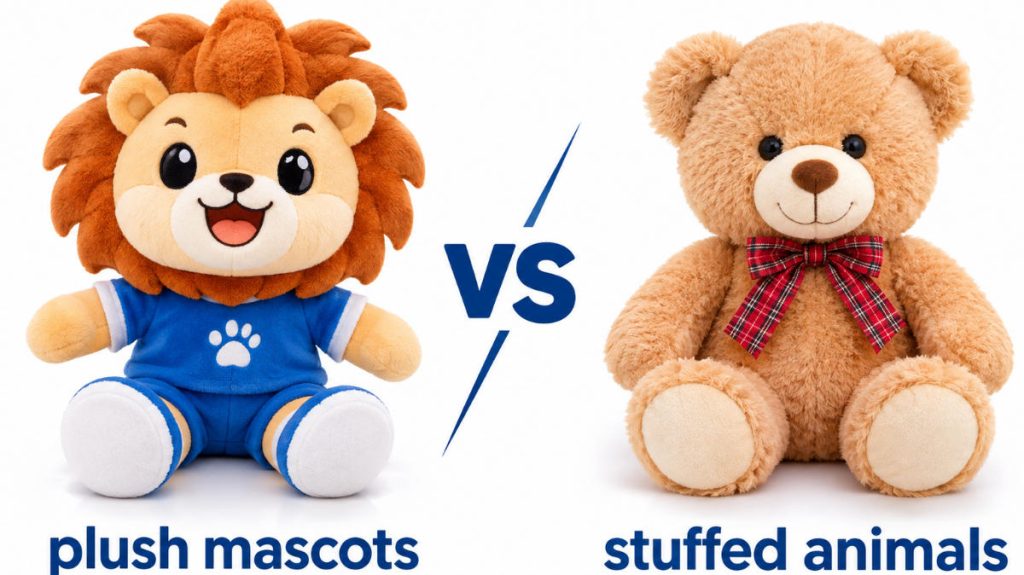
An Overview of Plush Mascots
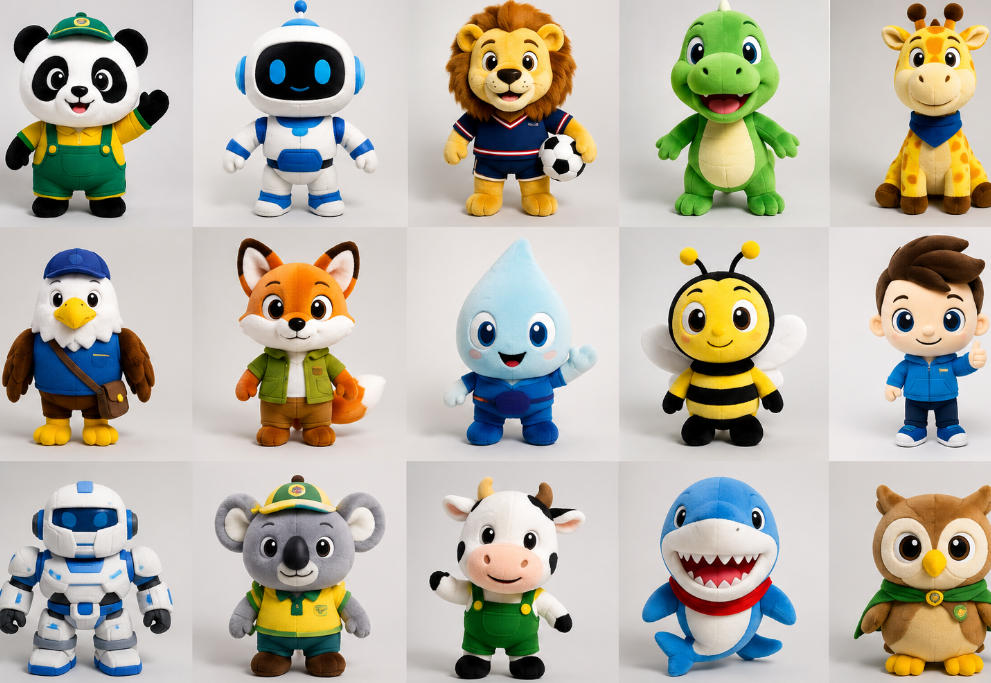
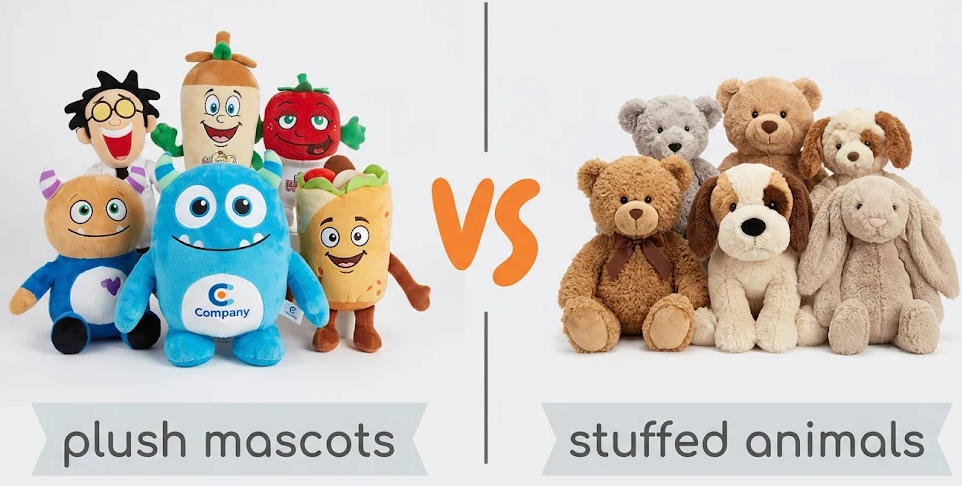
Plush mascots are custom soft toys designed to represent a specific brand, company, organization, sports team, school, event, or character. Unlike ordinary plush toys, they are usually developed around an existing identity, such as a company logo, brand character, cartoon figure, or promotional image.
The job of a plush mascot is to make that identity easy to spot. It also aims to build a friendly feeling with people who see it. For instance, a business may order a plush mascot that matches its brand character. Then it can hand the toy out at trade shows, ads tied to campaigns, product releases, and office or public events.
Plush mascots also often need more careful changes than basic stuffed toys. Makers may have to copy the exact face look, outfits, extra items, colors, and body shape from what the buyer requests. Distinct details matter here, especially anything that makes the character easy to recognize.
Their applications extend beyond promotional activities. Custom plush mascots are also popular in theme parks, sporting events, educational institutions, entertainment industries, and collectible merchandise markets.
An Overview of Stuffed Animals
Stuffed animals are soft toys meant to look like real animals or made-up creatures. Some are based on cartoons too. People often buy teddy bears, rabbits, lions, elephants, dogs, cats, pandas, and dinosaurs.
These toys are made for fun and for comfort. They are also kept as company and as room decoration. Kids are the biggest buyers, but older teens and adults still pick them up as gifts, for collections, or to decorate a home.
Compared with plush mascots, stuffed animals usually follow simpler, common designs. Manufacturers can make many animal shapes and sizes by using set templates. They rely on standard fabrics, filling types, and sewing methods.
However, stuffed animals can be customized too. Buyers can pick colors, sizes, face styles, outfits, stitching details, tags, and added items. This helps retailers, gift stores, and event planners offer items that feel a bit more personal.

Key Differences Between Plush Mascots and Stuffed Animals
1. Product Purposes
The most fundamental difference between plush mascots and stuffed animals is their intended purpose.
Plush mascots are made to stand in for a brand. They are used for ads, promotions, and public events. Brands often turn their logos, character figures, or campaign mascots into soft toys. The goal is to help people remember the brand and feel a warmer link to it. You can see these toys at trade shows, company functions, new product launches, sports events, and other marketing drives.
Stuffed animals are mostly made for comfort and fun. They are for companionship, play, and home decoration. Classic choices include teddy bears, rabbits, pandas, lions, elephants, and lots of other animal forms. These toys tend to be liked by kids, shoppers buying gifts, and collectors. Soft fabric and easy-to-enjoy looks are a big part of that.
Even so, stuffed animals can be used as giveaways. Still, most of the time they are sold as consumer items, not as a strong brand identity tool.
2. Design Concepts
Design requirements are another important distinction between these two plush products.
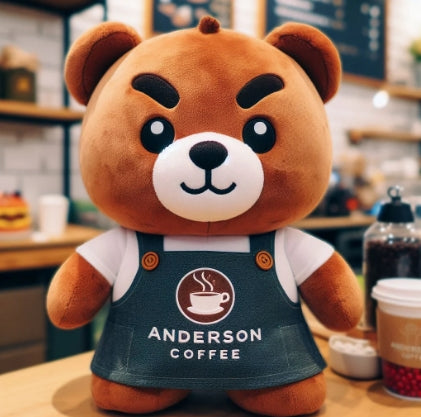
Plush mascots usually need to match a set character plan. That plan often comes from brand directions. The toy must look like the source design, including the face, the body shape, the outfits, the colors, and any obvious marks.
For instance, a mascot might have a specific hairstyle, a uniform, a logo, or a particular facial look. Those parts have to be copied well during production. Otherwise, the character feels off, and the brand look may not stay the same.
Stuffed animals usually use simpler, more familiar animal looks. The aim is to keep traits people recognize. That means friendly faces, balanced shapes, and a soft style that feels inviting.
However, custom stuffed animals can also feature imaginative designs, unusual colors, personalized clothing, and cartoon-inspired details.
3. Customization Requirements
Both products support customization, but the focus of customization is different.
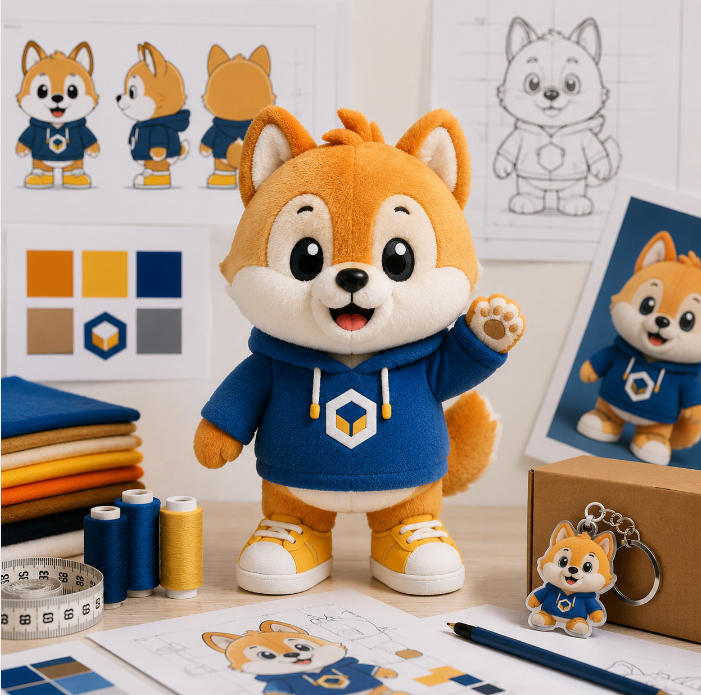
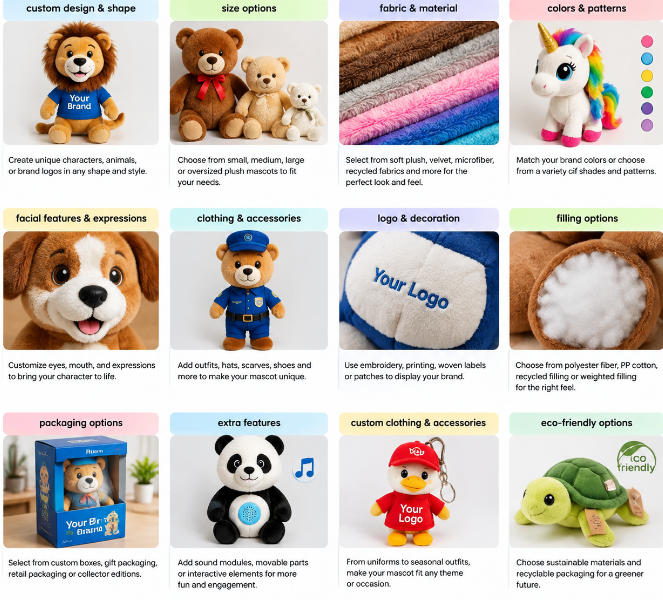
Plush mascots typically require more comprehensive customization because each product needs to represent a particular brand or character. Manufacturers may need to develop unique patterns and reproduce complicated visual details based on customer-provided illustrations.
Stuffed animals tend to be customized within known forms. The basic shape and structure are already set. Buyers still get options, like choosing sizes, fabric types, color sets, added accessories, and face features.
The following table highlights their main customization differences
| Customization Factor | Plush Mascots | Stuffed Animals |
| Basic Design | Brand characters, logos, and custom illustrations | Animals, cartoon creatures, and fictional characters |
| Shape | Often requires unique character proportions | Usually follows recognizable animal structures |
| Facial Features | Must match specific character expressions | Focuses on attractive and friendly appearances |
| Colors | Often follows brand colors or character specifications | Offers a wide range of color combinations |
| Clothing | Frequently includes customized uniforms and costumes | Optional clothing and decorative outfits |
| Accessories | Brand-related accessories and character-specific details | Bows, scarves, hats, and decorative accessories |
| Logo Application | Embroidery, printing, and customized labels | Optional embroidery, labels, and personalized details |
| Packaging | Often includes branded promotional packaging | Commonly uses retail or gift packaging |
4. Target Audiences
Plush mascots and stuffed animals also appeal to different customer groups.
Plush mascots are mainly developed for businesses, organizations, schools, sports teams, event organizers, and entertainment brands. Their target audiences may include company customers, employees, sports fans, students, and event participants.
For example, a university may create a customized plush mascot to represent its school identity, while a sports organization may manufacture mascot toys for fans and promotional merchandise.
Stuffed animals have a broader consumer-oriented audience. Children are one of their main customer groups, but adults also purchase them as birthday gifts, holiday presents, decorative items, and collectible products.
Their market appeal comes from familiar animal appearances, soft textures, and emotional value.
5. Applications and Market Uses
Although there is some overlap, plush mascots and stuffed animals are commonly used in different commercial scenarios.
| Application | Plush Mascots | Stuffed Animals |
| Brand Promotion | Represent company identities and brand characters | Used as customized promotional gifts |
| Corporate Events | Distributed at exhibitions and business events | Used as souvenirs and giveaways |
| Sports Industry | Represent teams and sporting organizations | Sold as animal-themed fan merchandise |
| Education | Represent schools, universities, and educational programs | Used as educational toys and classroom decorations |
| Entertainment | Represent movie, animation, and game characters | Developed as character-based toy collections |
| Retail Industry | Sold as branded merchandise | Sold through toy stores and gift shops |
| Festivals | Created as event-specific characters | Designed as seasonal and holiday gifts |
| Children’s Products | Used as character-based promotional toys | Used for playing, cuddling, and companionship |

6. Manufacturing Complexity
The manufacturing processes of plush mascots and stuffed animals share several basic steps, including fabric selection, pattern development, cutting, sewing, stuffing, finishing, inspection, and packaging.
However, the complexity of production can vary considerably.
Plush mascots often require customized pattern development based on original character illustrations. Manufacturers must consider fabric combinations, embroidery positions, and special structural details. Complex clothing, unusual body shapes, and multiple accessories can increase sampling and production difficulty.
Stuffed animals can sometimes be manufactured using established patterns, especially for common products such as teddy bears, rabbits, and dogs. Standardized designs can simplify production planning and improve manufacturing efficiency.
Nevertheless, highly customized stuffed animals with realistic shapes or complicated structures may also require extensive development work.
7. Material Selection Considerations
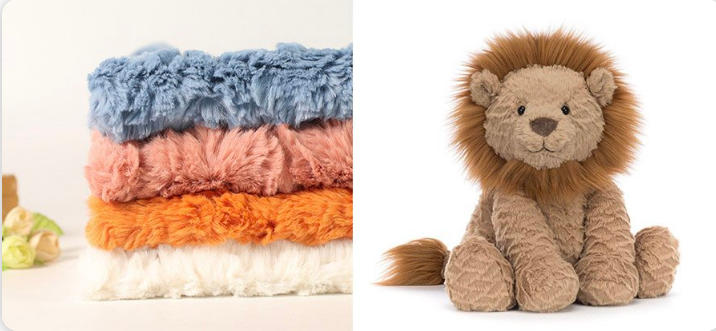
Both plush mascot toys and stuffed animals often use polyester plush, short-pile fabric, long-pile fabric, and polyester fiberfill. Still, the order of priorities is not always the same.
For plush mascots, matching the character look matters a lot. Manufacturers try to find fabric colors that are close to the original artwork. They also aim to keep the same feel and appearance after production. Logos, patterns, and faces may need extra work too, using embroidery or printing materials.
Stuffed animals tend to focus more on comfort. Softness and a nice hand feel come up often. People also notice how the fabric texture looks and feels while holding the toy. That texture can change the final charm of the product.
Filling choices matter for both types. Polyester fiberfill is a common pick since it stays light, feels soft, and works well in many shapes.
For products aimed at children, safety points should be checked. This includes meeting safety rules, keeping material quality steady, checking seam strength, and making sure parts stay firmly attached.
8. Production Costs and Order Requirements
Production cost depends on multiple items. These include product size, fabric choice, how complex the design is, customization needs, order count, and how the item is packed.
Plush mascots can cost more to develop. They often need an original pattern. On top of that, they may require trial samples and repeated tweaks until the result matches the chosen character.
Stuffed animals with common shapes can be cheaper to develop. Many makers already have patterns ready. But costs rise when the design is custom, when higher end fabrics are used, or when accessories are detailed.
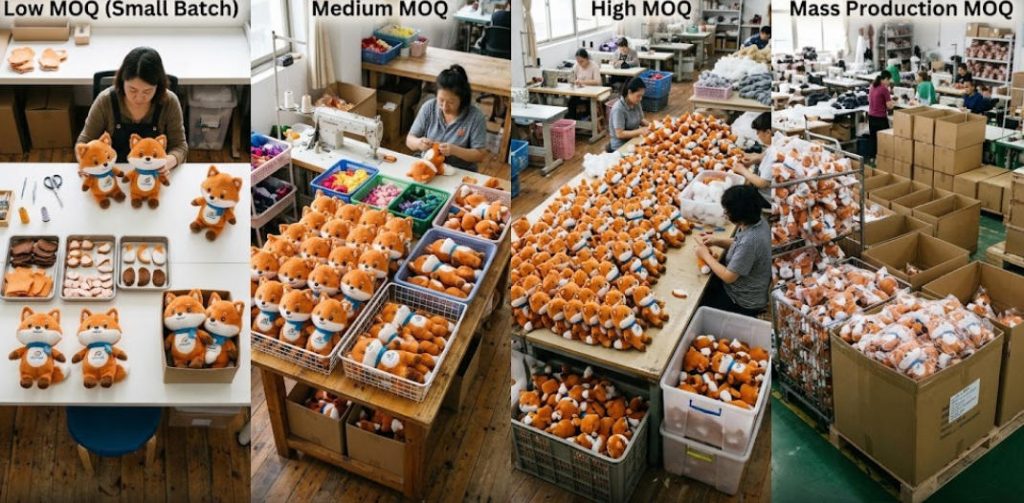
Minimum order quantities(MOQ) for custom mascots are not the same across all manufacturers. A custom plush mascot may need more back and forth during sampling and later production. Standard stuffed animals may fit into steadier manufacturing plans.
Companies should ask for a clear quote once the design and specs are set, along with the order quantity. Do not guess that one category is always higher priced.
9. Packaging and Branding Strategies
Packaging is another area where these products can differ.
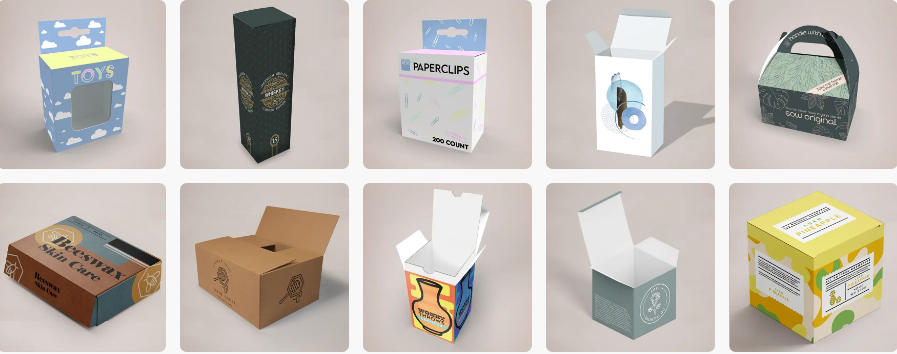
Plush mascots are often tied to a brand plan. Their packaging may use custom boxes, branded bags, and promotional inserts. You may also see company logos, character info, and cards made for the campaign. If a business uses these mascots for marketing, matching the package look can help people recognize the brand and make the item feel more polished.
Stuffed animals are usually packed for regular retail or gifting. They are meant to protect the toy during shipping and shelf display. Typical options include clear bags, display boxes, gift boxes made to order, and hangtags.
Custom packaging for plush toys can also be available according to seasonal promotions, special occasions, and retail positioning.
Summary Comparison Table of Plush Mascots and Stuffed Animals
| Comparison Factors | Plush Mascots | Stuffed Animals |
| Primary Purpose | Brand promotion, identity representation, and marketing | Entertainment, companionship, gifting, and decoration |
| Design Concept | Based on brand characters, logos, organizations, or custom illustrations | Based on real animals, cartoon creatures, or fictional characters |
| Appearance | Unique appearance that reflects a specific brand or character | Familiar animal shapes with attractive and friendly features |
| Design Complexity | Often requires detailed character reproduction | Usually follows standard animal shapes and structures |
| Customization | Highly customized according to brand guidelines and character designs | Customized according to animal types, colors, sizes, and styles |
| Facial Features | Must accurately reproduce specific character expressions | Focuses on cute, friendly, and appealing expressions |
| Color Selection | Often follows specific brand colors or character specifications | Offers flexible color combinations and fabric choices |
| Materials | Polyester plush, short-pile fabric, embroidery materials, and fiberfill | Polyester plush, long-pile fabric, cotton-based textiles, and fiberfill |
| Accessories | Customized uniforms, logos, hats, costumes, and brand-related items | Bows, scarves, hats, clothing, and decorative accessories |
| Target Audience | Businesses, brands, schools, sports teams, and event organizers | Children, parents, gift buyers, and toy collectors |
| Main Applications | Corporate promotions, exhibitions, sporting events, and brand merchandise | Children’s toys, birthday gifts, holiday presents, and retail collections |
| Manufacturing Process | Often requires custom pattern development and repeated sample adjustments | Can use standardized patterns for common animal designs |
| Production Complexity | Depends heavily on character details and customization requirements | Generally simpler for standard animal designs |
| Production Costs | May involve higher development and sampling costs | Can be more economical for standardized designs |
| Packaging | Often includes branded boxes, promotional cards, and customized labels | Commonly uses retail packaging, gift boxes, and hangtags |
| Market Positioning | Promotional merchandise and branded collectibles | Consumer toys, gifts, and decorative products |
| Main Advantages | Strengthens brand recognition and creates distinctive promotional products | Offers broad consumer appeal and diverse product possibilities |
| Ideal Choice | Companies, organizations, and businesses seeking customized promotional products | Toy retailers, gift shops, and businesses targeting the consumer toy market |
How to Choose Between Plush Mascots and Stuffed Animals
Choosing the right product depends on your target market, business objectives, budget, and design requirements.
- If your goal is to promote a company, strengthen brand identity, or create merchandise based on a recognizable character, plush mascots are usually the more suitable choice. Their customized appearance makes them effective promotional products for exhibitions, sporting events, corporate activities, and entertainment brands.
- If you want to develop products for toy retailers, gift shops, children’s markets, or collectible merchandise, stuffed animals may be a better option. Their diverse animal designs and broad consumer appeal provide opportunities to develop different product collections.
You should also consider production complexity. A highly customized mascot with complicated clothing, accessories, or unusual body proportions may require more sampling and pattern development than a standard stuffed animal. That usually affects costs, how many units you must order, and the delivery timeline.
Safety and overall product quality matter just as much. If the items are made for kids, the maker should follow toy safety rules for the place you will sell in. They also need to check fabric quality, what goes inside, how strong the seams are, and whether any small parts could be a risk. These needs should be reviewed for the specific country or region and the age group you plan to target.
In the end, the right choice is the one that fits your business goals, your buyers’ expectations, and where you want the product to sit in the market.
Final Thoughts
Plush mascots and stuffed animals use similar materials and go through similar manufacturing steps. They also share many product traits. Still, the key differences come from why they are made, how they are designed, how much customization is needed, who they are for, and how they are sold.
Plush mascots often work well for brand promotion, company gifts, sports teams, and marketing that focuses on characters. Stuffed animals are more often made for kids’ toys, gift items, retail collections, and decorative purposes.
If you plan to develop customized plush products, it helps to work with an experienced manufacturer. A professional plush toy manufacturer can guide you across the full path, starting with your idea, then picking materials, then making samples, moving into mass production, and finishing with a final quality inspection. This supports the goal of ensuring the finished products meet design expectations while maintaining consistent quality and market appeal.