
Sitting vs. Standing Plush Mascots: Which Design Option is Better
When promoting a business with branded plush items, selling custom plush mascot retail merchandise, developing children’s toys, or creating collectible items with your mascot character, a key part of the design process is choosing between sitting and standing plush mascots.
There are differences that inform this decision, such as appearance, body proportions, stability, manufacturing requirements, packaging, and practical applications. Understanding these distinctions helps businesses select a plush mascot that matches their brand identity and intended use.
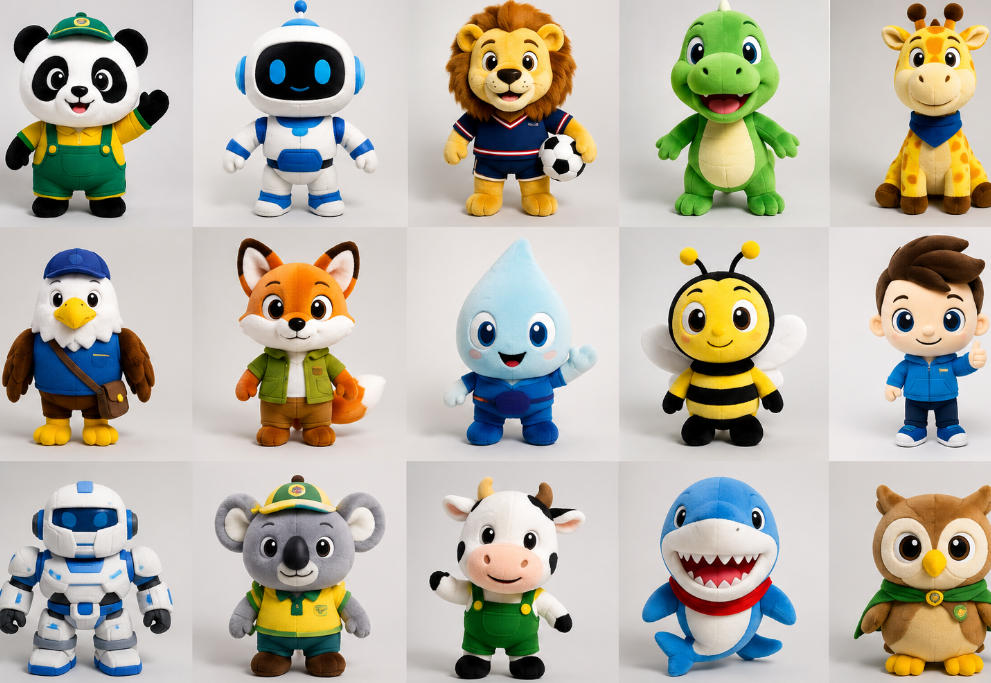
An Overview of Sitting Plush Mascots
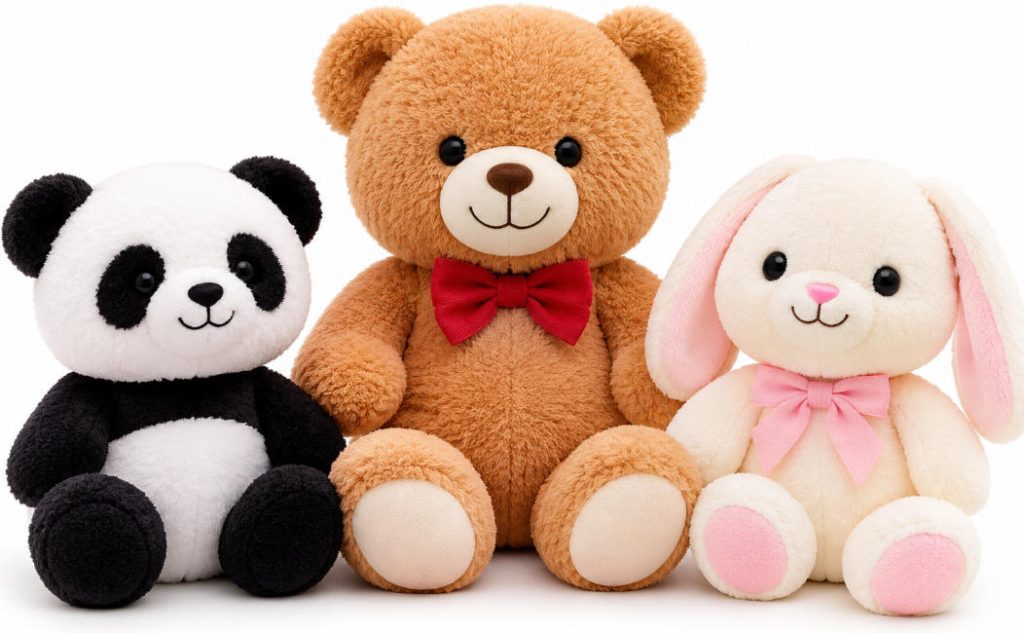
With a sitting mascot design, your character will be positioned naturally on their lower body. This is commonly done with the legs either folded or extended forward, or sometimes even underneath the character. The sitting mascot design is excellent for mascot characters that have a cute, friendly, or relaxing demeanor. This posture works well for many animal characters as well as for various character mascots. Sitting designs generally use lower body weight for support, and therefore can hold their shape relatively well without an excessive internal structure.
Sitting style plush mascots are a great design choice for small display spaces such as desks, shelves, beds, sofas, etc., due to their smaller footprint. They are often a good design choice for promotional items and collectible merchandise.
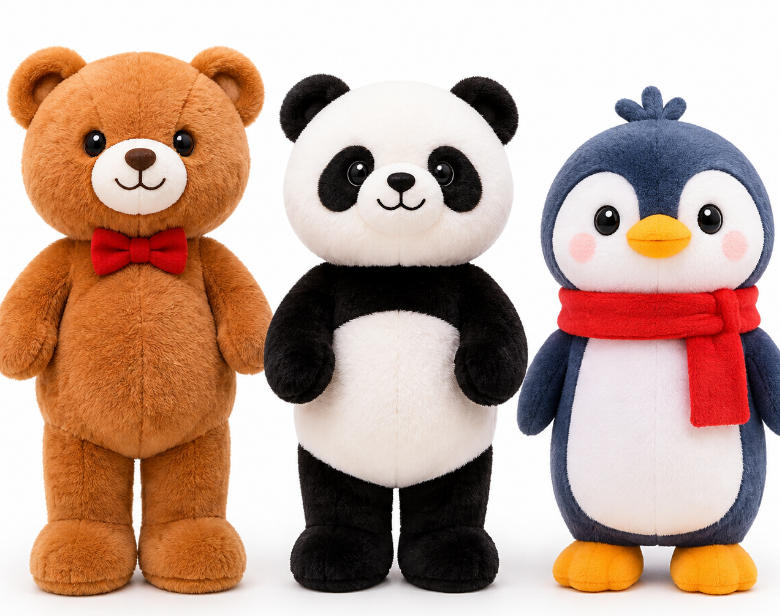
An Overview of Standing Plush Mascots
Standing plush mascots will have at least two legs on the ground to stay upright, and often have many legs. They create a taller, more energetic, and more dynamic design that fully utilizes the character’s body proportions.
A standing mascot design may be necessary if character details like legs, clothing, shoes, or a full silhouette are a key part of their design. It is also good for more eye-catching displays in retail environments, exhibitions, events, and other promotional areas.
Standing mascots generally require a bit more design focus on balance. The character’s feet, legs, and even stuffing placement need to work with internal support to ensure your mascot doesn’t fall.
Key Differences Between Sitting and Standing Plush Mascots
1. Appearance and Overall Design
The most noticeable difference between sitting and standing plush mascots is their overall appearance.
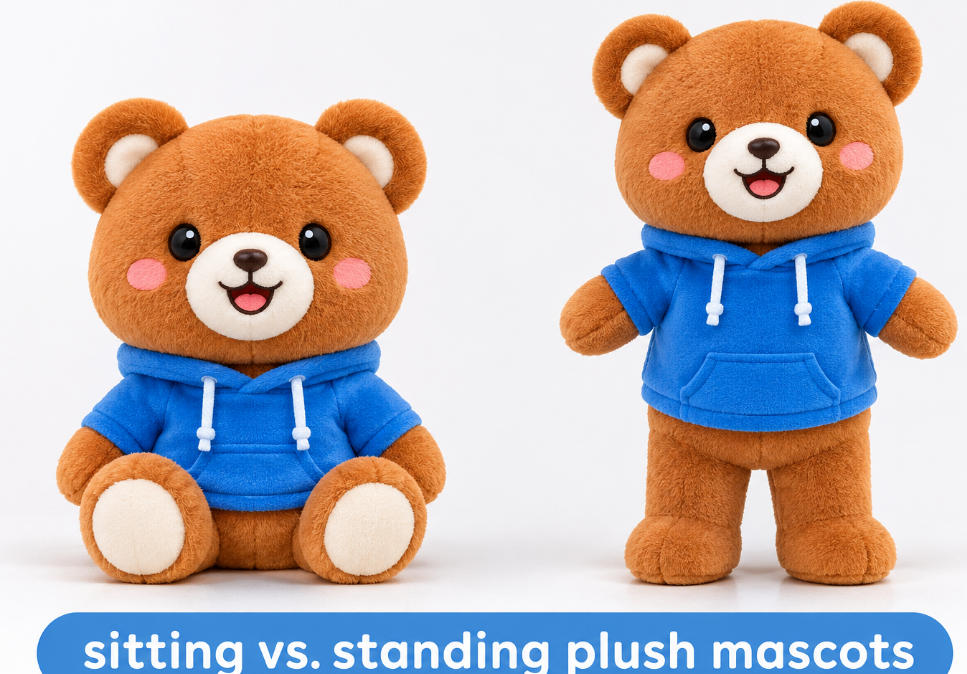
Sitting plush mascots tend to look relaxed and cute. Their legs are typically in front of their bodies, which results in a compact size and helps create a friendly, cartoon-like design. This style works best for cartoon character mascots and animals with larger heads or larger round bodies.
Standing plush mascots look more energetic and more active. They also reveal more of the full-body character and allow details like long legs, shoes, and clothing to be better displayed. Characters that need to appear more outgoing and expressive fit better in a standing design.
A plush mascot’s design, especially its original character concept and personality, should inform the position choice.
2. Stability and Balance
Stability is another important difference between the two mascot designs.
Sitting plush mascots tend to have lower centers of gravity and a larger support area. Because they sit, their body and legs support a portion of the weight. This makes sitting mascots easier to balance on a flat surface.
Standing plush mascots are much more difficult to balance. They require feet to support the weight of the entire body. If the stuffing is uneven, the feet are too small, or the body is top heavy, the mascot may lean and then tip.
Designers must be very particular about stuffing, proportions, foot dimensions and body supports.
3. Body Structure and Proportions
Sitting and standing mascots require different approaches to body construction.
Sitting plush mascots have lower bodies that are wide and long legs that are less visible. Because sitting mascots are compact overall, they have greater design flexibility and the ability to utilize soft and rounded shapes.
For standing plush mascots, the upper body requires long legs for support, and the feet must have sufficient proportions to support the standing posture. To ensure the overall mascot looks natural, designers must coordinate the proportions of the arms and head with the legs and torso.
The proportions of character illustrations can become impractical during conversion to plush toys and designers must make compromises.
For highly stylized mascots, custom plush manufacturers can also modify the proportions slightly to improve stability and manufacturability without changing the character’s overall identity.
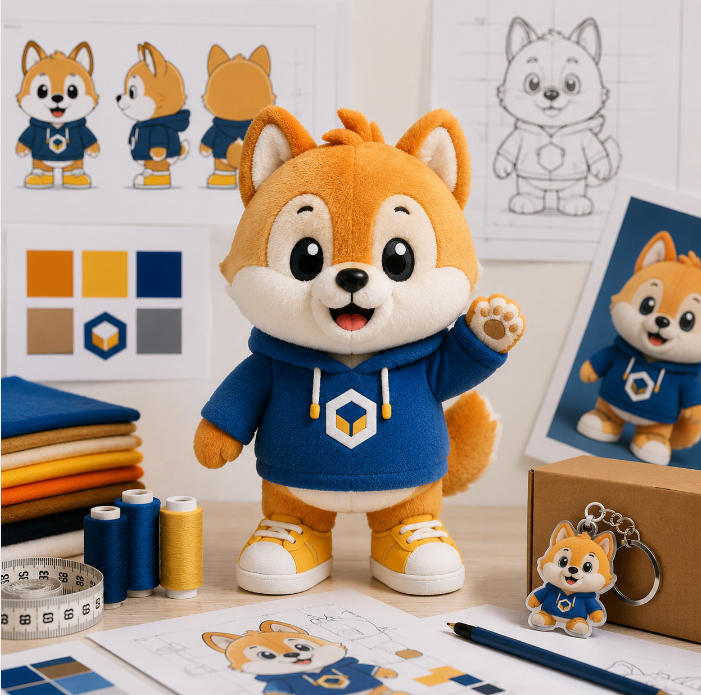
4. Manufacturing Complexity
Manufacturing requirements can vary significantly depending on the mascot’s posture.
Manufacturing sitting plush mascots is simple, and lower bodies help maintain stability during manufacturing. Some adjustments in pattern construction may be required.
Standing plush mascots require more pattern construction. Leg sections require extra attention and manufacturing must ensure foot support is sufficient. Stuffing must be evenly distributed in all sections.
Some large standing mascots may also require additional internal support to maintain their shape. These requirements can increase sample development time and production complexity.
However, the actual manufacturing difficulty depends on the character’s size, materials, design details, and construction method.
5. Display and Space Requirements
The location in which mascots are to be displayed is also a factor.
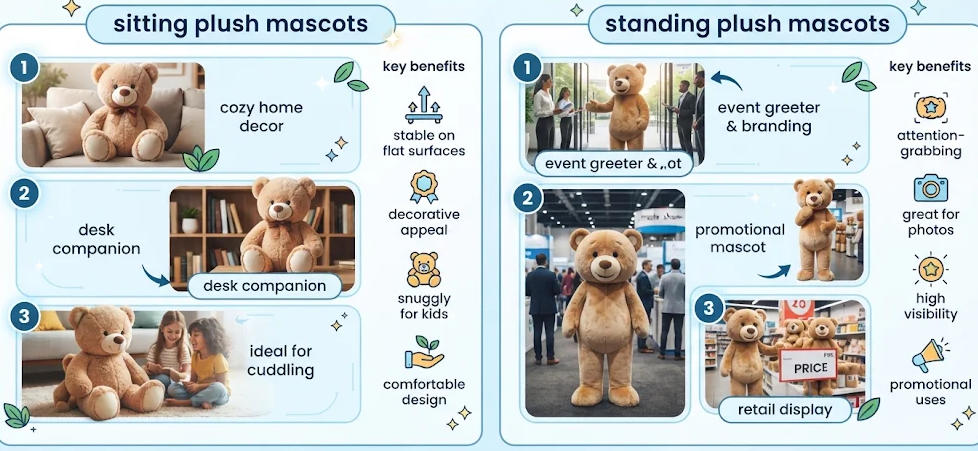
Sitting plush mascots can be placed in relatively smaller display spaces. They can be placed on desks, bookshelves, beds, sofas and retail checkout counters. Sitting mascots are great for personal collections, as they are small and easy to carry, and also ideal for marketing promotions.
Standing plush mascots can be placed in large display areas and retail spaces to show off the whole mascot. They are best for promotional displays, booths, branded display environments and exhibition spaces.
When considering the placement of mascots, companies must think of the available space and the desired impact.
6. Packaging and Transportation
Mascot postures can alter how you package and transport them.
Sitting mascots are usually easier to pack into smaller boxes and also tend to be easier to store and organize.
Standing mascots can be tall, especially with long legs and arms. Some designs can be adjusted or compressed, but care should be taken to ensure the mascot is not permanently damaged.
For larger orders, being smart with how you pack and ship your mascot designs can reduce your storage space and shipping volume.
7. Customization Possibilities
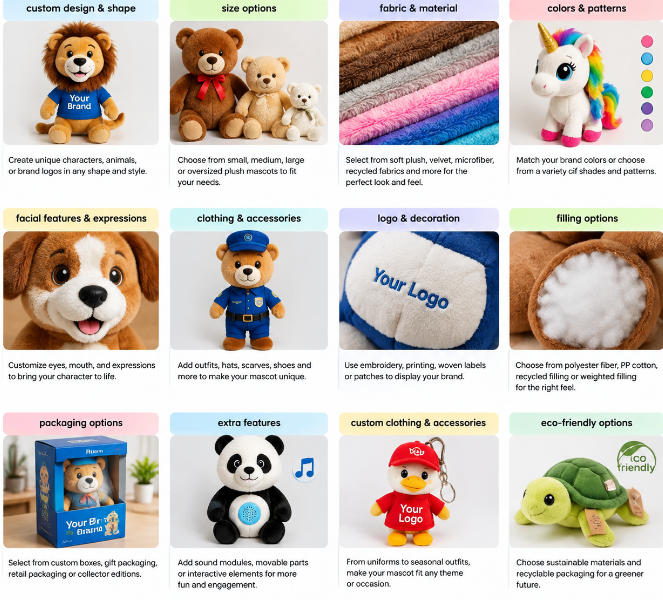
With all customization options for plush mascots, both standing and sitting designs are excellent choices.
For sitting mascots, facial features and smaller embroidered designs fit well with a more round and relaxed design.
For standing mascots, clothing, uniforms, and character accessories all fit well. This design style allows for a more active pose such as waving or holding items.
For both designs, the same options are available, such as color matching, embroidery, fabrics, stuffing, and packaging options.
8. Applications and Target Markets
The intended application is one of the most important considerations when choosing a mascot posture.
Sitting mascots are well suited to use in toys, promo gifts, character merchandise, collectibles and home decor due to their smaller footprint. They are suited to display on a regular basis.
Standing mascots are well suited to use for sports mascots, brand representatives, exhibition displays, promo merchandise, and character merchandise. Their standing posture helps to grab attention in a promotional setting.
Of course, both designs can work in other markets. Character design and target audience often determine the optimal design choice.
9. Cost and Production Considerations
The cost difference between sitting and standing plush mascots depends on several manufacturing factors.
Sitting plush mascot designs require a smaller level of complexity and thus reduce the cost to design and support the project.
Standing plush mascot designs often need larger design revisions to account for feet, legs, and other internal structural support to stand properly, which increases the overall cost of production for these designs, particularly if they are complex.
It is possible that a simple standing mascot is more affordable than a highly detailed sitting mascot with complicated accessories.
To ensure accuracy and consistency across quotations, businesses should fully outline all aspects of their custom orders, including designs, materials, sizes, quantity and customization needs.
Summary Comparison Table of Sitting and Standing Plush Mascots
| Comparison Factor | Sitting Plush Mascots | Standing Plush Mascots |
| Overall Appearance | Cute, relaxed, and friendly | Upright, energetic, and eye-catching |
| Body Structure | Compact body with folded or extended legs | Elongated body with clearly defined legs |
| Center of Gravity | Generally lower | Generally higher |
| Stability | Easier to maintain balance | Requires careful balance and support |
| Foot Design | Feet mainly contribute to appearance | Feet play an important role in supporting the body |
| Body Proportions | Often features a wider lower body and shorter legs | Usually requires longer legs and a balanced torso |
| Manufacturing Complexity | Generally simpler construction | May require more complicated pattern development |
| Stuffing Requirements | Focuses on maintaining a full, rounded shape | Requires careful stuffing distribution to maintain posture |
| Internal Support | Usually requires minimal internal support | May require additional support for larger designs |
| Display Space | Suitable for desks, shelves, beds, and sofas | Suitable for retail displays, exhibition booths, and floors |
| Packaging | Often easier to fit into compact packaging | May require taller or larger packaging |
| Customization | Suitable for relaxed poses, rounded shapes, and small accessories | Suitable for full-body clothing, uniforms, shoes, and dynamic poses |
| Typical Applications | Children’s toys, promotional gifts, collectibles, and home decorations | Brand mascots, sports merchandise, event displays, and promotional products |
| Visual Impact | Creates a soft, approachable impression | Creates a stronger full-body visual presence |
| Cost Considerations | May involve fewer structural requirements | May involve additional support and balance adjustments |
Which Plush Mascot Should You Choose
There is no universally better option between sitting and standing plush mascots. The right choice depends on the character design, application, target audience, size, display environment, and production requirements.
- Choose a sitting plush mascot when you want a compact, stable, cute, and relaxed character that works well for desks, shelves, children’s products, gifts, or collectibles.
- Choose a standing plush mascot when you want a full-body presentation, stronger visual impact, dynamic character expression, or a design intended for promotional displays and active characters.
Quick Selection Guide
| Project Requirements | Recommended Design | Main Reason |
| Cute and compact character | Sitting | Creates a rounded and friendly appearance |
| Desk or shelf decoration | Sitting | Requires relatively little display space |
| Children’s cuddly toy | Sitting | Offers a compact and approachable shape |
| Full-body character representation | Standing | Displays the complete character silhouette |
| Sports team mascot | Standing | Creates an energetic and active appearance |
| Promotional exhibition display | Standing | Provides stronger visual presence |
| Character with detailed clothing | Standing | Makes uniforms and accessories more visible |
| Large plush mascot | Depends on design | Requires evaluation of size, balance, and structural support |
| Collectible merchandise | Both | Depends on character identity and collector preferences |
| Budget-conscious production | Depends on complexity | Materials, size, details, and order quantity influence cost |
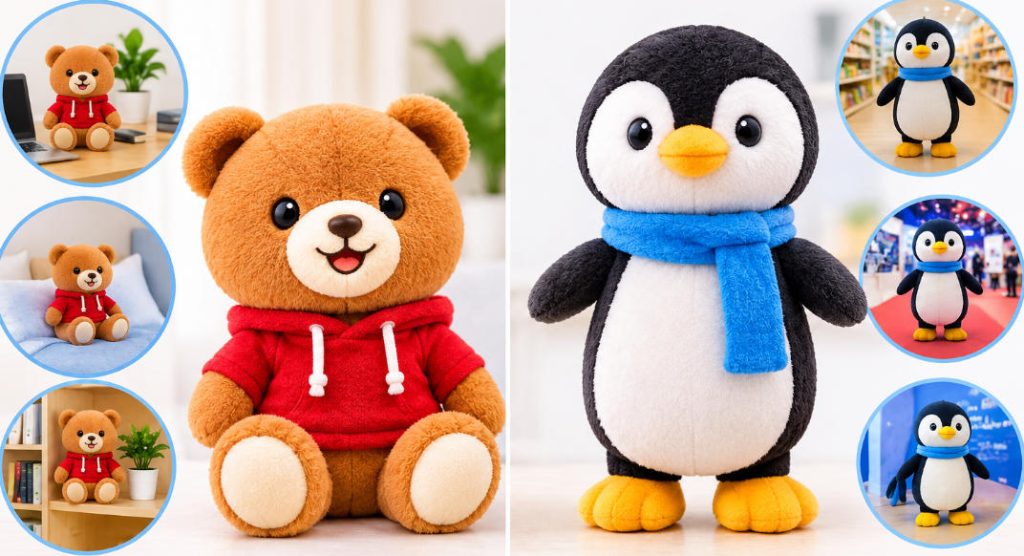
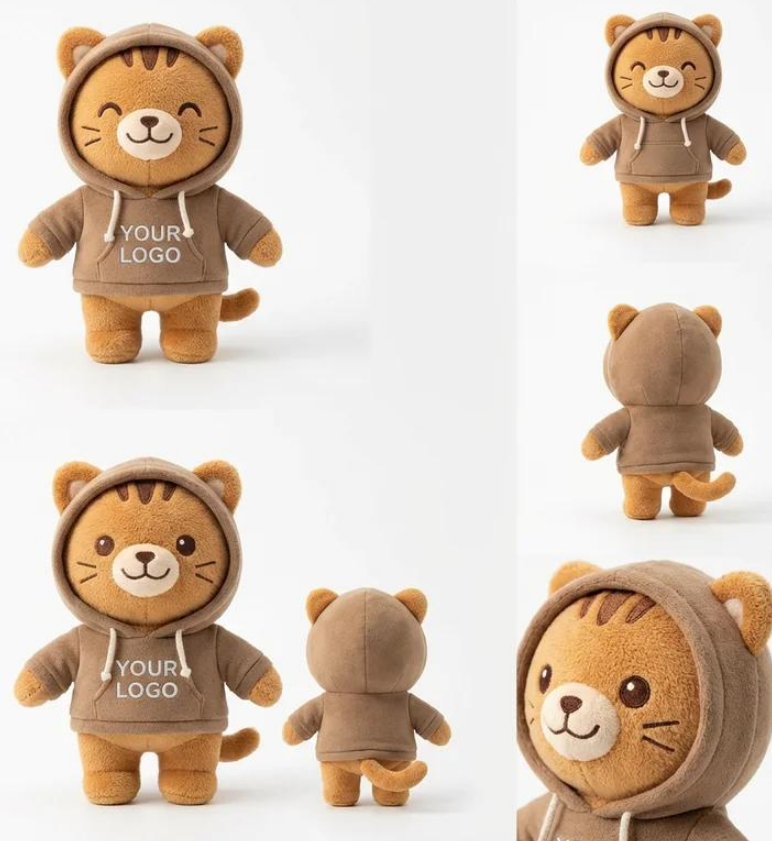
Creating dual prototypes is especially useful for custom mascot projects where character variations can be done with either posture. You can compare the character’s appearance, stability, complexity of production and packaging for each pose, and the overall impact for your brand prior to ordering full-scale production.
Final Thoughts
Sitting and standing plush mascots both have their distinct advantages. The best choice is not always the most attractive-looking design. You need to select a design that captures the character’s personality while maintaining stability, recognizability, and practicality.