
What Metal Are Keychains Made Of? A Sourcing Guide for Custom Keychains
When you’re planning a corporate giveaway or a promotional event, the first thing you need to figure out is what metal are keychains made of. Seriously, it’s not just about looks. It directly affects how long the product lasts and how much you’ll pay when ordering in bulk.
Most regular folks just see a shiny little accessory. But if you’re a purchasing manager, you have to look deeper. You need to know how different raw materials behave under real manufacturing conditions. So let’s break down your material options, the key production methods, and the right industry terms to use. That way, you can order branded merchandise that’s practically flawless.
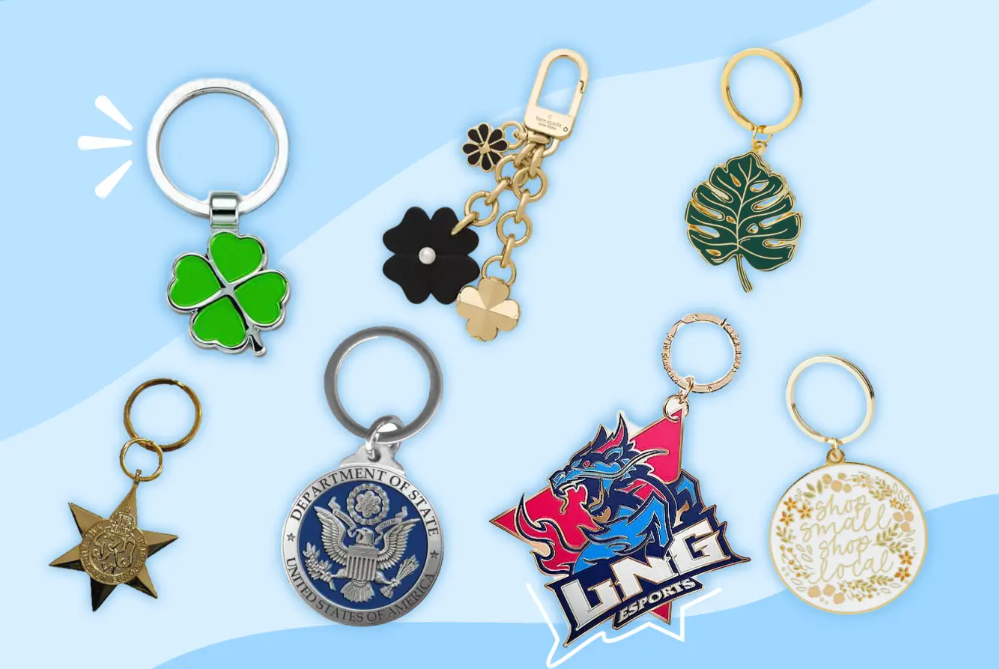
What Metal Are Keychains Made of Dictates Your Material Choice
The raw material you choose will shape your total budget, your mold cost, and how detailed your design can get. Most custom hardware factories rely on 7 core metals plus 2 popular non-metal alternatives. Each one strikes a different balance between durability and cost. Let’s go through them one by one.
1. Zinc Alloy
Zinc alloy is the absolute industry standard. It takes up more than 70% of the market for high volume promotional keychains. Why? Because when it’s melted, it flows like hot liquid chocolate into a cookie mold. It fills every tiny gap perfectly. That makes it ideal for complex 3D shapes, tiny mascots, or custom pendants with fine facial features. It’s naturally rust resistant, and the mold cost is low. The only downside? It doesn’t have the extreme structural strength of heavy duty steel.
2. Stainless Steel
Stainless steel is all about top tier durability. Even after thousands of rubs against your house keys, it never loses that cold industrial gray shine. And it never rusts. You don’t even need a protective plating layer. But here’s the catch: because stainless steel is so hard, factories can’t melt it and die cast it into complex curved shapes. It’s pretty much limited to flat, laser cut minimalist designs or high end business gifts.
Industry experience: Buyers can use the magnet test (just a simple way to check metal composition with a magnet) to verify bulk order quality. Good quality stainless steel usually has little to no magnetic pull. Cheap iron based blanks? They’ll snap right onto the magnet.
3. Iron
Iron is the go to for super high volume, low budget event giveaways. But be careful. If the plating layer gets scratched, moisture in the air will make it rust and turn black almost immediately. Iron keychains rely entirely on a very thin plated coating to keep moisture out. They feel heavy in hand, and the upfront cost is dirt cheap. Still, I’d only recommend them for short term promotions.
4. Brass and Bronze
Brass and bronze scream high end, vintage style custom merchandise. These metals get more interesting the longer you have them, kind of like an old watch that somehow looks better with age. They’re also really good at resisting deep corrosion. Plus, they react beautifully with chemical aging agents, so factories love using them for things like university logos, military challenge coins, or any vintage style product that calls for a deep, dark brushed finish.
5. Copper
Pure copper (red copper) is the noble choice for premium metal crafts. It’s one of the few metals that can survive extreme heat in a ceramic kiln. When factories make high end collectible badges, they have to use pure copper. Why? Because when you bake colored glass paste at 800°C, copper won’t melt or warp. You get unmatched heaviness and texture, but the price sits at the high end too.
6. Silver
Pure silver is the ceiling for retail jewelry grade custom keychains. Silver does tarnish and darken over time, that’s just what it naturally does. But the good news is, a quick wipe with a silver polishing cloth brings back that mirror like shine almost instantly. That’s why factories usually stick with solid silver or heavy silver plated options only for special runs, like limited edition corporate anniversaries, executive retirement gifts, or those fancy keychains that come with luxury car deliveries.
7. Aluminum
Aluminum gives you an ultra lightweight promotional solution. Honestly, it feels as light as an empty soda can, about one third the weight of iron or zinc alloy. It never rusts, and it takes electrochemical color bonding extremely well. That makes it perfect for functional, colorful multi purpose accessories, like a bright metal bottle opener you clip onto a hiking backpack.
8. PVC and Acrylic
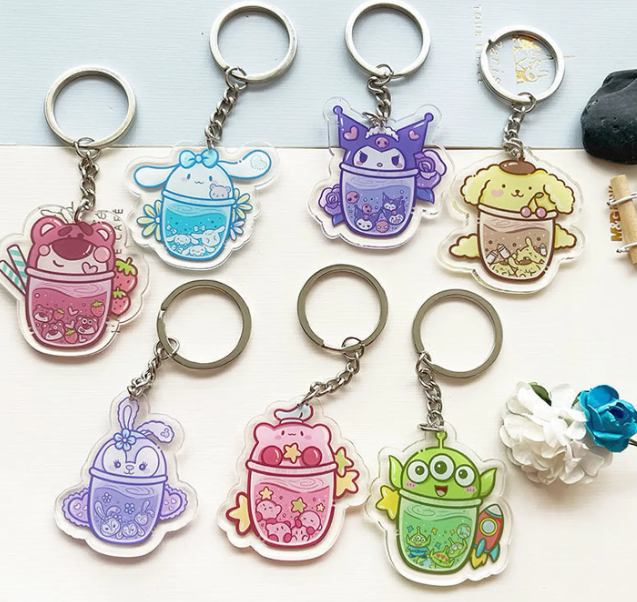
Zinc alloy gives you that premium 3D heft. But if you’re targeting anime fans or retail brands that want lightweight, vibrant colors, you might switch between solid hardware and custom acrylic keychains (you can search online) to mix up your display. Acrylic (Plexiglas) and soft PVC don’t need expensive heavy metal molds. They offer full color printing that pops. That’s a great choice for modern retail environments.
Custom Metal Keychain Manufacturing Techniques and Coloring Methods
Manufacturing processes turn raw metal ingots into polished branded merchandise. Factories have to match the right shaping method with the right coloring technique to get the look you want.
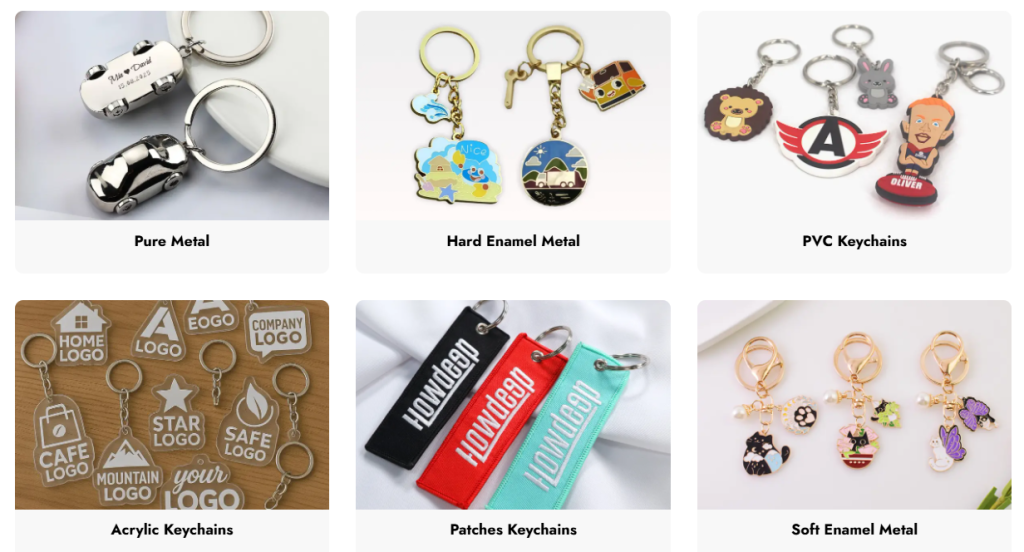
Die Casting vs. Stamping: Zinc alloy relies on die casting. That’s when you inject liquid metal under high pressure into a precision steel mold. Think of pouring batter into a waffle iron. You get thick, fully three dimensional shapes. On the other hand, iron and copper use stamping. A heavy press forces a sheet of metal into a mold to leave raised or recessed lines. This works great for flat designs, but you can’t make rounded 3D shapes.
Soft Enamel vs. Hard Enamel: Soft enamel is the most popular and cost effective method. Factories pour liquid paint into recessed metal areas and bake it at low heat. The paint sinks down, leaving a textured feel with raised metal lines, just like a stained glass window.
Hard enamel is a premium process. You fill those recesses with powdered glass, fire it at high temperature, and then polish everything completely flat. The result is a smooth, scratch resistant surface like a marble countertop. The metal lines and the enamel end up perfectly level.
2D vs. 3D Mold Design: 2D molds create flat designs with sharp, stepped levels, very much like a traditional coin. 3D molds allow factories to copy organic shapes. You can scale down a plush toy character into a tiny metal pendant that keeps all its rounded volume.
What Is the Metal Part of a Keychain Called in Sourcing Terminology
When you write a purchase contract or talk to a factory, using vague words like “that metal ring thing” can easily cause production errors. Professional buyers use exact terms for each component.
Split Ring: This is the main ring that actually holds your keys. It has to be made of high tension spring steel. Even after you twist it open hundreds of times to add new keys, it snaps back tightly without leaving a permanent gap.
Jump Ring: The jump ring is the critical connector between the decorative charm and the main split ring. In high volume production, factories must carefully close or weld this ring. Otherwise, a sudden pull could pop it open.
Chain Link: A short chain made of 3 to 4 small metal links adds physical length and swinging flexibility. It prevents a stiff metal charm from jamming between your keys inside your pocket.
Swivel Joint: The swivel joint stops your keychain from twisting into a knot. No matter how many times the keychain spins around inside your backpack, the swivel keeps the chain from tangling or snapping.
Lobster Clasp: The lobster clasp gets its name because its gripping action looks like a lobster’s claw. It has a spring loaded tab that lets the user clip the whole keychain onto a backpack zipper, a belt loop, or the fabric tag of a plush toy, all with one hand.
Custom Metal Keychain Durability and Plating Standards
Bulk production needs strict quality control. You want thousands of pieces to arrive with the exact same flawless finish. Factories focus on surface smoothness and chemical stability to eliminate common shipping defects.
Deburring: When raw zinc alloy parts come out of the high pressure steel mold, their edges have sharp, excess metal called flash. Factories have to run these parts through deburring. That’s a vibratory tumbler filled with abrasive media that knocks off all the sharp edges. The result? A keychain that feels completely smooth and won’t cut your customer’s finger.
Plating Layer Tolerances: Raw iron and zinc alloy will oxidize if exposed to air. Factories apply microscopic layers of protective metal through electroplating. Tight control over plating layer tolerances (measuring that protective coat in microns) is critical. If the coating is too thin, it acts like cheap spray paint. Moisture inside a humid shipping container will break through, and your bulk order will arrive covered in dark spots and rust.
When metal keychains come as accessories attached to plush toys, the surface anti-corrosion test (like salt spray testing) must match the highest customization options in plush toy manufacturing quality parameters. That way, neither material damages the other during long ocean freight. No metal rust bleeding onto fabric, no accessories falling off early.
Custom Metal Keychain Safety Standards and Customs Compliance
For commercial buyers, especially those ordering promotional items attached to children’s gifts or toy giveaways, environmental compliance is a serious legal hurdle. Metal keychains often face tough inspections from international customs officers.
Lead Free and Nickel Free Eco Plating: Standard commercial plating formulas usually contain trace amounts of lead and nickel. That lowers production costs and boosts surface shine. But here’s the problem: nickel is a common skin allergen, and lead poses serious risks to children’s brain development. Modern international safety regulations treat these metal accessories exactly like children’s toys.
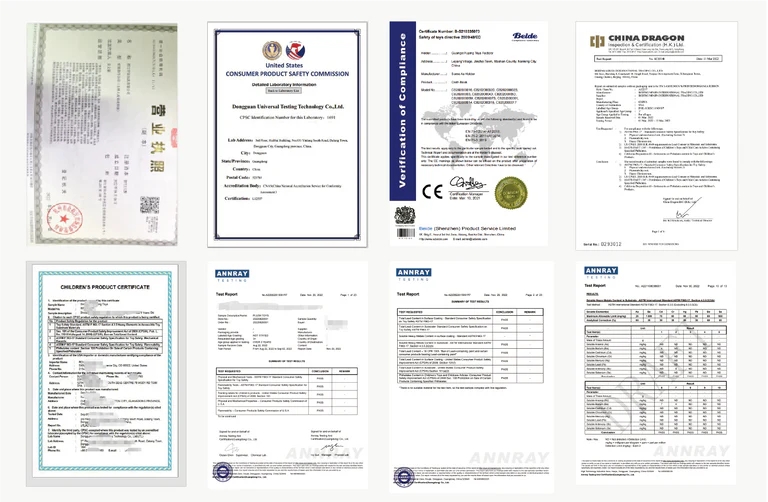
Global Toy Regulations: Bulk shipments entering North America or Europe must pass strict lab tests. Surface coatings have to comply with US ASTM F963 and European REACH standards. If you choose a factory that uses eco friendly, certified chemical plating baths, your bulk shipment will clear customs smoothly. No costly returns, no unexpected seizure risks.
Implementer: Custom Metal Keychain One-Stop Sourcing
Let’s be honest. Splitting your order between a hardware factory and a plush toy factory is often a nightmare for purchasing managers. You get inconsistent quality standards. The metal parts don’t match the fabric color. Sharp edges tear the textile. Or you have to play middleman between two suppliers, which delays everything.
Implementer offers a flexible minimum order quantity of just 100 pieces (MOQ: 100 PCs). We provide full service management from free design help all the way to door-to-door delivery with customs clearance.
Here are our core advantages:
Mixing Soft and Hard Accessories:
Our customization isn’t limited to pure metal. Beyond traditional split rings and lobster clasps, we’re good at combining metal parts with woven rope, embroidered patches, or even small stuffed sound parts that have built in voice boxes.
High Quality Materials and Craftsmanship:
We own advanced embroidery and printing machines. That means your artwork gets reproduced with top tier precision. We’re committed to faithfully delivering your design: rich, full embroidery and vivid, detailed full color prints.
One Stop Quality Control, Mold Making and Delivery:
All wholesale custom keychains are molded, deburred, and assembled under a single quality standard. You don’t have to be the go between for two completely different vendors. You get one dedicated account manager, free technical advice, and high quality finished products delivered to your warehouse on time, without any flaws.